Where renters have the most negotiating power right now


The national vacancy rate for multifamily properties currently sits at 7.9%, while asking rents have increased by 1.3% over the past year. As renters continue to search for affordable apartments across the country, understanding where they have the most negotiating power is more important than ever. After analyzing vacancy rates, absorption rates, rent concessions, and rent growth data, Apartments.com has identified some areas of the country that can offer renters more leverage than others.
According to the U.S. Census Bureau, these states had the highest vacancy rates in the second quarter of 2026:
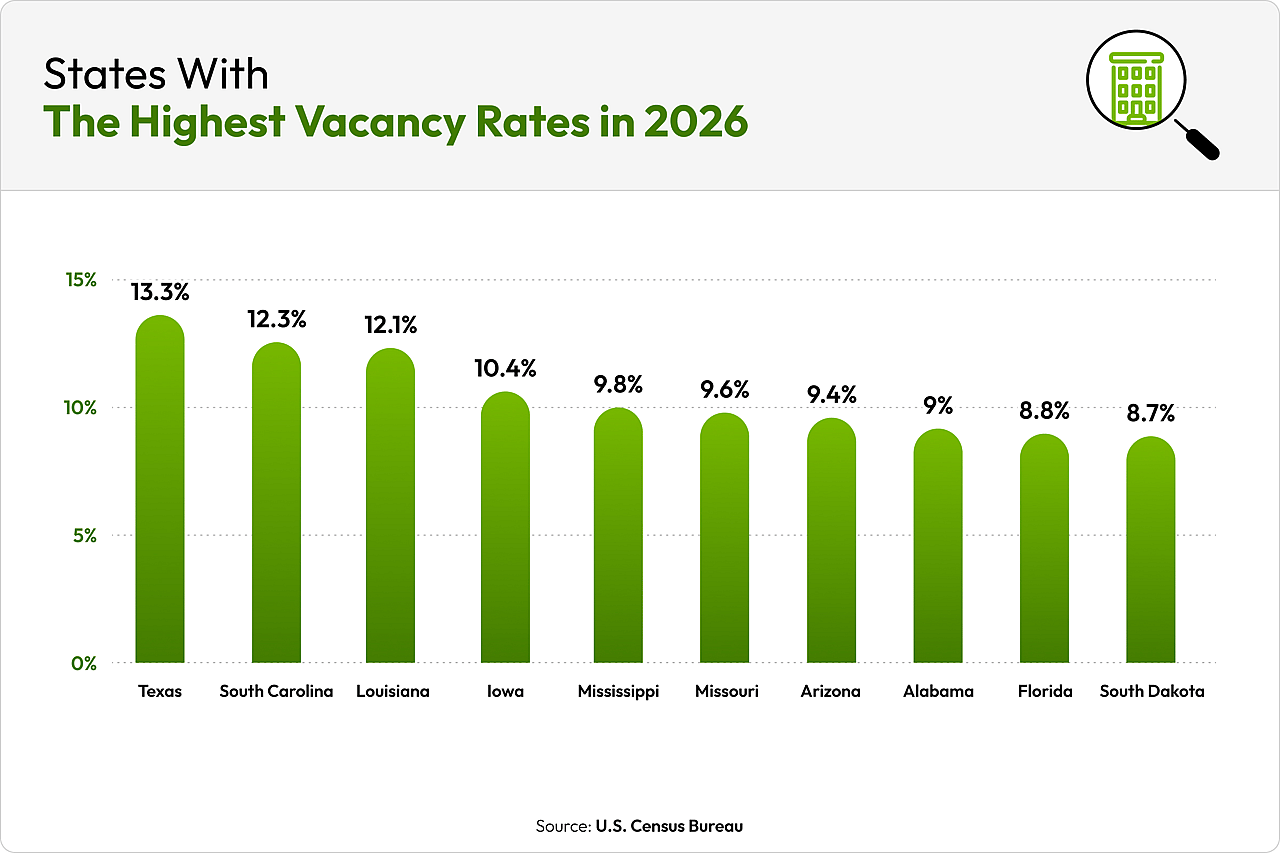
Vacancy rates can fluctuate because of several factors, including supply and demand, seasonality, and rising costs. As a renter, being aware of vacancy rates in the city or state where you want to live can help you better prepare for the rental market you’re entering. Although vacancies are usually viewed negatively by landlords and property managers, higher rates can signal increased leverage for renters searching for discounts or more affordable rent.
Why higher vacancies can help renters
Higher vacancy rates benefit renters because more units are available, rent concessions are more common, and landlords may lower rents to attract renters to their properties. When vacancies are low, there is more competition for units from the other renters in the market.
Periods of high vacancy present an opportunity for renters to negotiate with landlords on the monthly rent payment, move-in specials, or discounts. Because landlords want to fill vacant units, they will be more receptive to negotiation when vacancies are high.
How Absorption Rates Can Affect an Apartment Search
Absorption is the number of units sold compared to units available. Absorption rate is important to consider because the rate signals whether a market is absorbing units faster or slower. For renters, a market with a high absorption rate means you have less negotiation power, so a lower absorption rate is more favorable.
Below are the 10 markets with the highest levels of absorption so far in 2026. The absorption rate was calculated by dividing units absorbed by total inventory. This provides a more comprehensive view of which markets are absorbing units more quickly relative to their size.
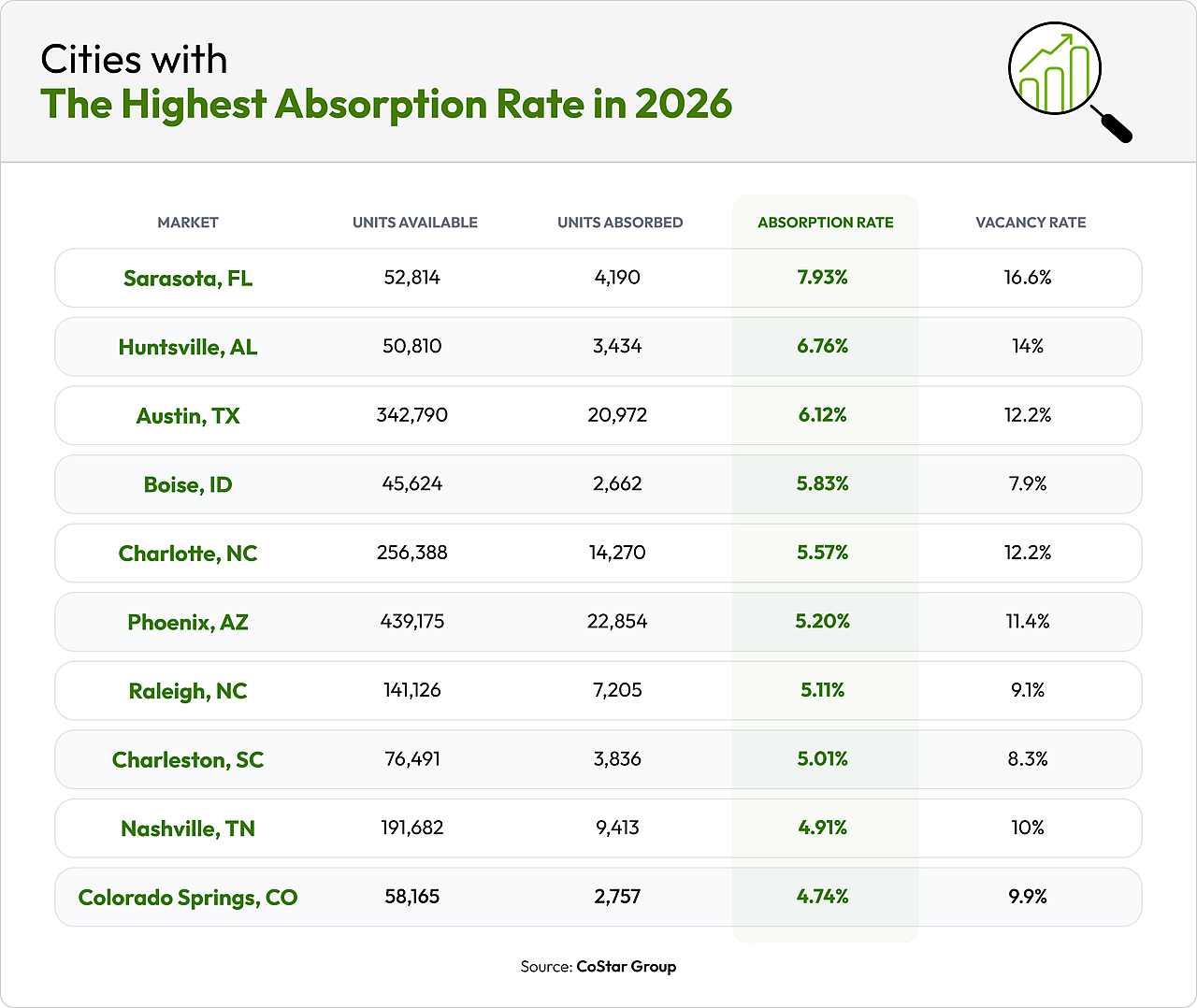
A number of these markets are located in the Sun Belt region of the United States. The Sun Belt experienced a surge in construction after the pandemic, leaving many units vacant and prompting landlords to decrease rent and offer concessions.
It’s important to note that all these cities have vacancy rates that are higher than the current national multifamily average. As renter demand catches up to supply in this region, this data suggests that renters are taking advantage of lower prices and moving to these areas, causing supply to tighten.
Why lower absorption can benefit renters
A lower absorption rate is better for renters because it means that units are not being absorbed as fast. When units remain available longer, landlords can be more open to negotiating rent or other incentives.
Absorption rate can be an important metric to consider when looking at a market, but it shouldn’t be the only factor guiding your negotiation strategy. Because smaller markets have less inventory overall, they can appear to have higher absorption even though more units absorbed can be attributed to seasonality or demand fluctuations. While it’s difficult to determine which markets are primed for renter negotiations solely based on absorption rate, looking at state vacancy rates and rent concessions data can offer a clearer picture.
Look for Rent Concessions
Rent concessions are discounts or financial incentives offered by a landlord to attract renters and encourage them to sign a lease. Rent concessions can come in all shapes and sizes, such as one month of free rent, waived fees, or a reduced security deposit. Renters searching for a new apartment often prioritize properties offering rent concessions, as these incentives can make the moving process more affordable.
Rent concessions are common in high-vacancy markets
Not only do landlords use rent concessions to attract new renters, but they also use these discounts to lower a property’s vacancy rate. Landlords use these financial incentives when demand is low to reduce vacancies and maintain rental income. In fact, Apartments.com found that in 2026 alone, 41.2% of multifamily properties nationwide are offering a rent concession, suggesting these incentives are popular among landlords and property managers.
Rent concessions can be helpful for renters searching for apartments in more expensive areas, as these discounts can reduce upfront costs and allow renters to save money for other expenses.
Top 10 markets offering the most rent concessions
Because some markets have a higher vacancy rate than others, rent concessions can be more common in certain areas of the country. According to CoStar Group, these are the 10 markets with the highest percentages of properties offering rent concessions right now:
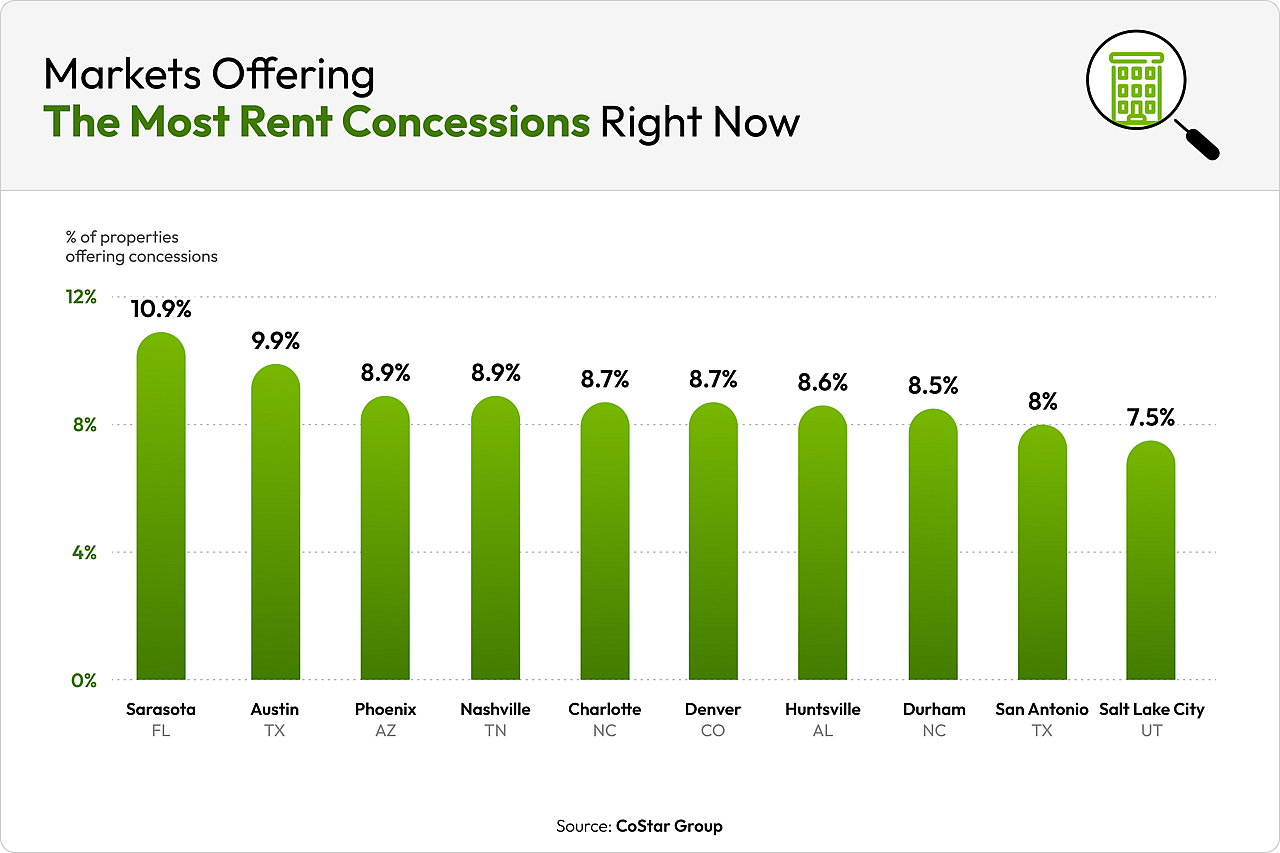
Several of the markets offering the most rent concessions right now align with those with the highest absorption rate. While a high absorption rate does not usually benefit renters, this correlation suggests that, because these markets are offering a higher percentage of rent concessions, some units are being absorbed because of the rent discounts and move-in incentives.
Where Rent Growth Is Rising and Falling
Rent growth data can give renters insight into whether rents in a certain area have increased or decreased over time. Typically, markets that experience higher year-over-year rent growth have higher monthly rents and stronger renter demand. Renters looking for more rent concessions and lower average rents may want to look in markets with declining year-over-year rent growth.
Five states where rent growth is decreasing
According to Apartments.com, these five states have seen the lowest levels of rent growth over the past year:
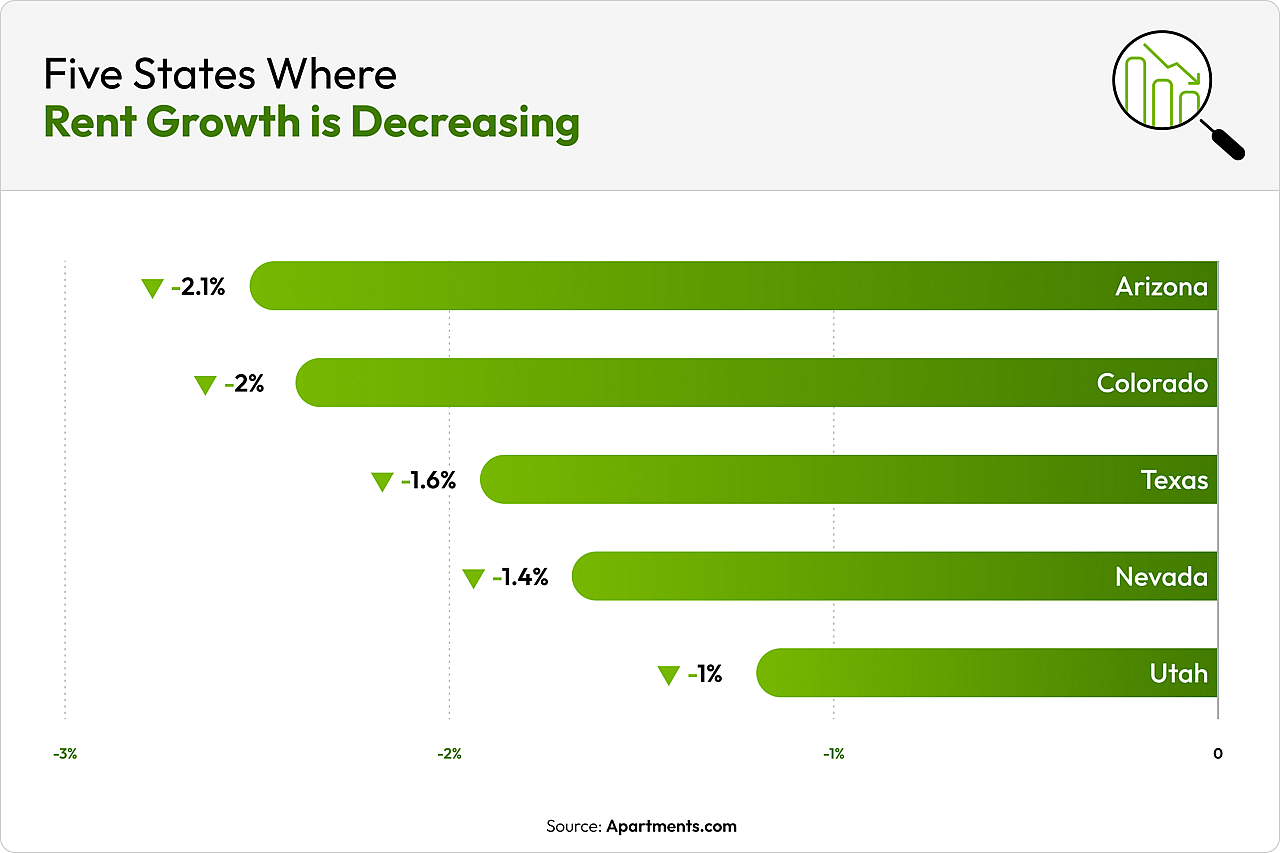
States with lower year-over-year rent growth can be more favorable for renters to negotiate. As growth decreases, landlords want to fill vacant units, so they are more open to negotiation. These five states have seen a high wave of oversupply coupled with lower demand, causing rents to drop and concessions to increase.
Several of these states lie in the Sun Belt, which could be contributing to slower rent growth. Because units have remained available, property managers may have lowered monthly rents to attract tenants.
Five states where rent growth is increasing
According to Apartments.com, these five states have seen the highest rent growth over the past year:
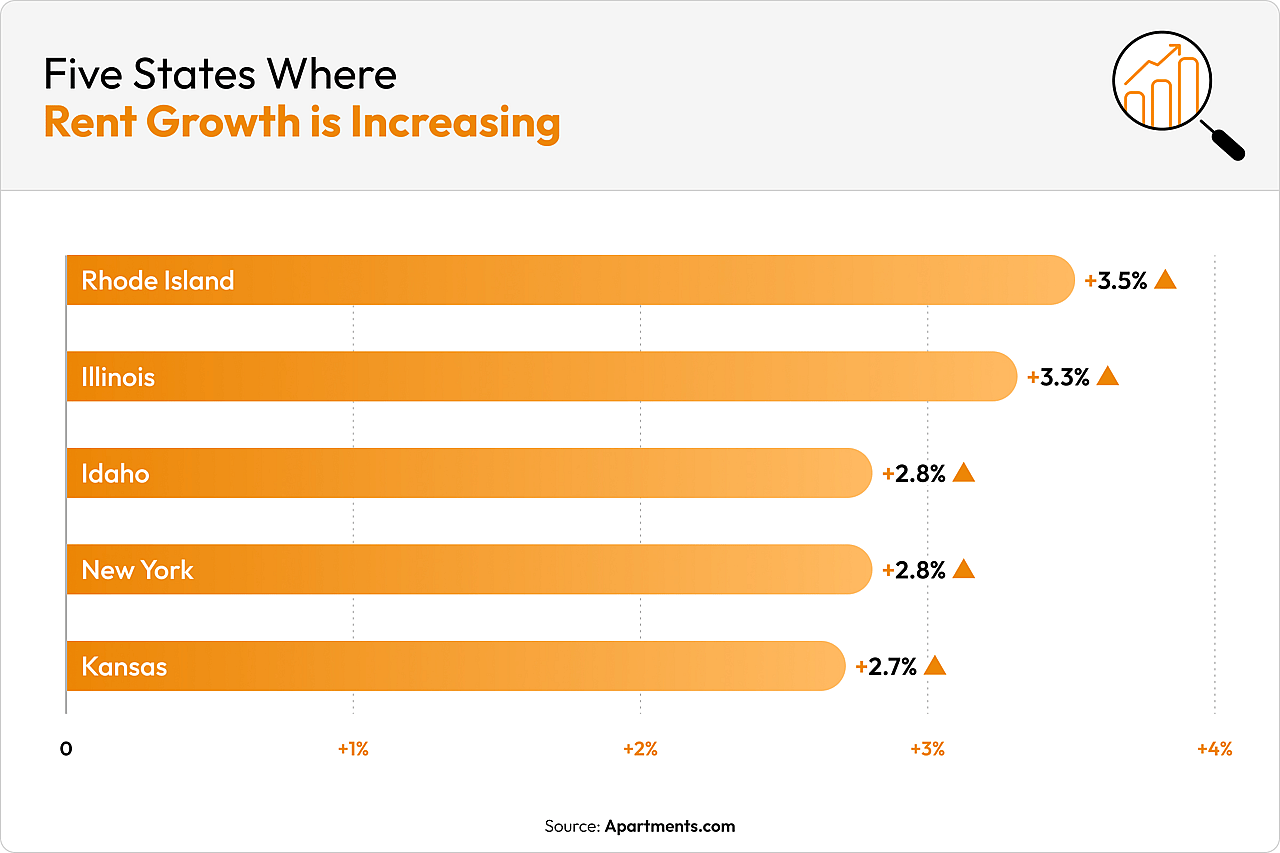
The states with the highest year-over-year rent growth are markets that didn’t experience the same construction boom as markets in the Sun Belt and may have a tighter rental supply with high demand. Because renter demand is high in these markets and the national average rent continues to increase, these markets must respond accordingly.
Being aware of these trends is important to understand where renters might find the best deals or concessions across the country.
Where Do Renters Have the Most Negotiating Power?
After analyzing vacancy, absorption, concession, and rent growth data, where do renters have the most negotiating power right now? These five states offer the strongest opportunities for renters to find concessions and negotiate rent with landlords.
1. Texas
- Vacancy rate: 13.3%
- Rent growth: -1.6%
- Average monthly rent in Texas: $1,245/month
Texas is one of the states where renters may have more negotiation power. With the highest vacancy rate in 2026 so far and a decreased year-over-year rent growth, renter demand is soft, and concessions can be more common. The average monthly rent in Texas is well below the national average, and cities like Austin and San Antonio report high levels of rent concessions, making Texas one of the most affordable states for renters.
2. Arizona
- Vacancy rate: 9.4%
- Rent growth: -2.1%
- Average monthly rent in Arizona: $1,326/month
Arizona has a high vacancy rate and reports the largest decrease in year-over-year rent growth, suggesting that renters will have an easier time negotiating in this rental market. Phoenix ranked third among markets offering the most rent concessions right now. The average rent in Arizona is lower than the national average, offering an affordable alternative to other sunny areas in the country.
3. Florida
- Vacancy rate: 8.8%
- Rent growth: -0.8%
- Average monthly rent in Florida: $1,698/month
Florida ranks third, with a vacancy rate of 8.8% in 2026, while rent growth has decreased by 0.8% year over year. Even though the average monthly rent is higher in Florida, Sarasota ranks first among the markets offering the most rent concessions, with 10.9% of properties offering a discount. Renters looking for move-in specials and a smooth apartment search should consider Florida.
4. Colorado
- Vacancy rate: 7.4%
- Rent growth: -2%
- Average monthly rent in Colorado: $1,577/month
Although Colorado doesn’t appear in the top 10 states with the highest vacancy rates in 2026, the state has seen one of the largest declines in rent growth in the past year. In addition to an average monthly rent below the national average, Denver ranks sixth among the markets offering the most rent concessions.
5. North Carolina
- Vacancy rate: 8.2%
- Rent growth: -0.8%
- Average monthly rent in North Carolina: $1,363/month
Finally, North Carolina combines a high vacancy rate with low monthly rents to give renters more negotiating flexibility. While rent growth has only slightly decreased in the past year, Charlotte and Durham both appear on the list of markets with the most rent concessions, suggesting that living in North Carolina can be more affordable than other parts of the country.
FAQs
What gives renters more negotiating power in a rental market?
High vacancy rates, low or negative rent growth, low absorption rates, and rent concessions can give renters more negotiating power. Landlords want to fill vacancies, so they may offer financial incentives or rent concessions to stay competitive and may be more open to negotiating with renters in these market conditions.
What states offer the most negotiating power for renters in 2026?
The states that offer renters the most negotiating power in 2026 are Texas, Arizona, Florida, Colorado, and North Carolina, according to Apartments.com research. These states combine factors such as higher vacancy rates, slower or negative rent growth, and rent concessions, which may give renters more leverage when negotiating.
Can you negotiate apartment rent when vacancy rates are high?
Yes, you can negotiate rent when vacancy rates are high. Landlords want to fill vacant units, so when vacancy rates are high, they may be more open to negotiating monthly rent or offering rent concessions to renters.
What can renters negotiate besides monthly rent?
Depending on the property and lease terms, renters may also be able to negotiate:
- Application or administrative fees
- Security deposits
- Parking
- Lease length
- Amenities
- Pet deposits
- Pet rent
Methodology
Absorption rate data was sourced from CoStar Group’s September National Multifamily Market Report and calculated by dividing the number of units absorbed by total inventory. The final five states were chosen based on a combination of vacancy rates, rent growth, and average monthly rents. All rent data was sourced from Apartments.com Rent Trends pages.
This story was produced by Apartments.com and reviewed and distributed by Stacker.
