Daisy Maldonado, candidate for Doña Ana County Commissioner District 1
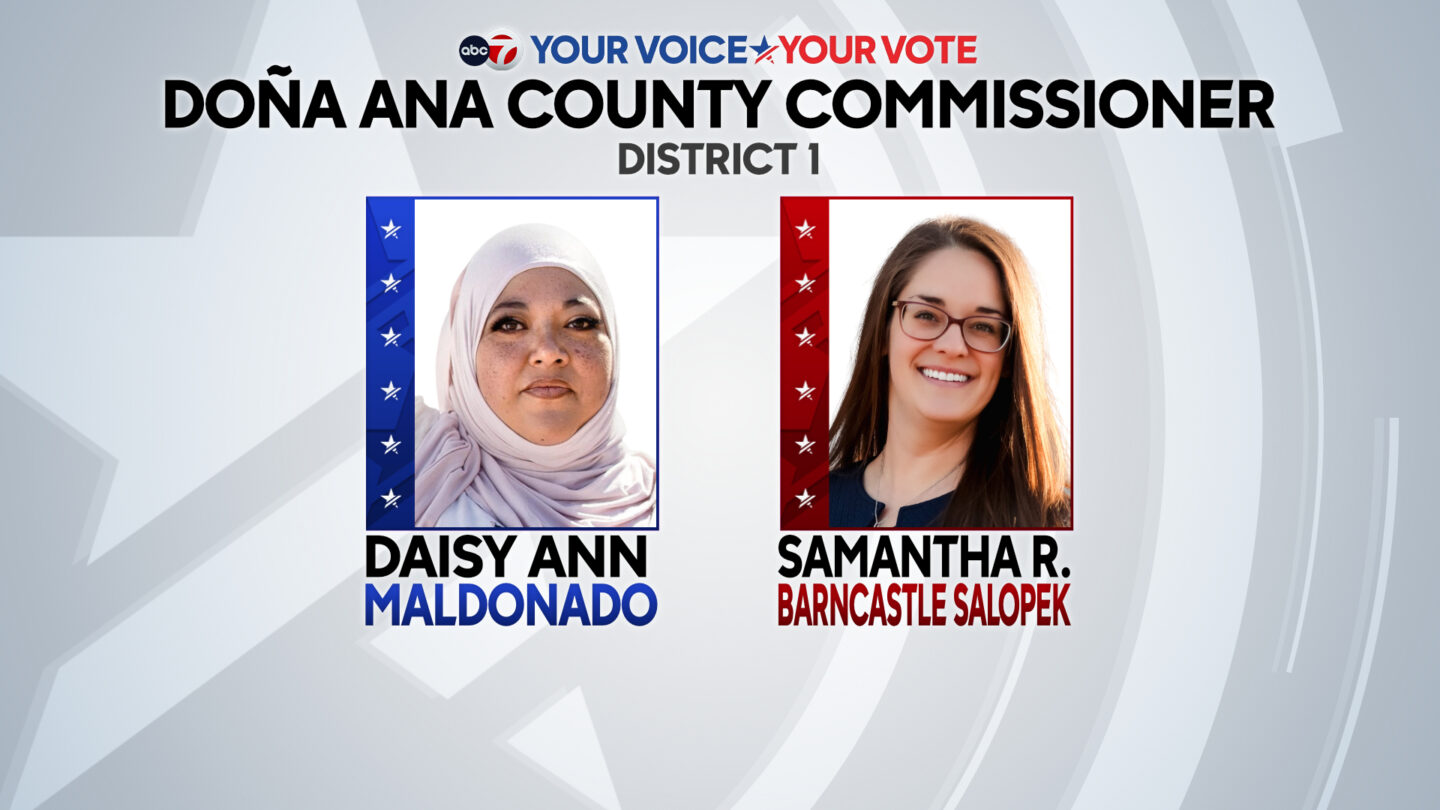


Name: Daisy A. Maldonado
Party: Democratic
Occupation: Community Organizer
Relevant Experience
I studied Government and have my master’s in Economics, but the strongest experience I have for this position is my time working at a grassroots level with the community. I know how to meet people where they are, actively listen to concerns without defensiveness, work collaboratively with community members to develop initiatives that properly address concerns, and just as importantly, ensure follow through on initiatives that prioritize people over special interests. I have experience conducting evaluations of policies and programs; this step is critical for continuous improvement and heavily involves constituent input. I am familiar with competing priorities within a landscape of limited funding, and even more familiar with standing firm in what community members voice as important. I have experience growing and managing a budget, overseeing staff and have extensive experience advocating with the community at the Doña Ana County Board of County Commissioners.
Personal
Daisy A. Maldonado was born and raised in the Borderlands and moved to Las Cruces, in 2003 to study at New Mexico State University. She graduated with a Bachelor's degree in Government and Communication Studies as well as Master’s degree in Economics. She has spent the last two decades serving the local community from being a sexual assault victim advocate, to engaging in interfaith work to most recently leading the Empowerment Congress.
She is a community advocate for environmental justice, public health, and climate preservation in southern New Mexico. She works alongside working class and colonia communities that have long faced environmental neglect, unsafe infrastructure, and limited political power. Her advocacy focuses on clean water, air quality, infrastructure equity, and ensuring communities most impacted by environmental harm have a meaningful voice in decision-making. Under her leadership, residents have organized to expand access to arsenic water testing, improve transportation safety, advance public health education, and challenge processes that limit public participation in land-use and development decisions. Daisy has recently played a leading role in opposing Project Jupiter, including the proposed large-scale data center and natural gas power plant in southern New Mexico. She has challenged the project by raising concerns about water use, air pollution, climate impacts, infrastructure strain, and the absence of meaningful community consent. Daisy’s leadership bridges environmental justice, climate advocacy, and civic power. Her work has been recognized by the US Center for Disease Control and Muslim Advocates and featured in regional media.
What is your position on data centers?
AI hyperscale data centers both extract local resources and exploit local labor and governmental entities. My position on data centers is informed by ongoing conversations with residents all over the county, especially those living in close proximity to the project. When we first heard about Project Jupiter, community members in Sunland Park and Santa Teresa were still recovering from a recent water crisis during which water that was not treated for arsenic was delivered for at least 18 months. AI data center build-out requires informed and measured environmental, economic, resource assessments and community engagement before any construction or zoning approvals ever take place. Community health and well-being needs to be prioritized before any large-scale industrial project is allowed to move into our county. And if it is determined that AI data centers, power plants or other large-scale industrial projects will negatively impact our community, they should not be approved for construction.
What would you do differently to reduce property taxes?
By and large, the amount of property taxes is determined by the state. I would work to transfer the tax burden onto large corporate businesses who can absorb it. Connect people to services and ensure property tax rebates are maximized. NM has “yield control” laws that raise and lower tax/mill rates to keep local gov revenues closely tied to inflation.
Commissioners can advocate for specific legislative changes at the state level.
The Commission could audit and cut unnecessary spending from the general fund during the annual budget approval process to intentionally request lower tax yield from NM DFA (Dept. of Finance & Administration). I will also launch aggressive public campaigns to ensure residents are getting the legal discounts they are already entitled to.
The Commission can pass formal resolutions to lobby the New Mexico State Legislature to increase the caps on these exemptions or to pass a "local option" bill allowing individual counties to expand property tax freezes for low-income seniors and disabled individuals beyond the current state limits.
Juvenile crime is still an issue in Dona Ana County. What will you do to address it?
When we talk about juvenile crime in Doña Ana County, we have to talk about the whole child and the environment that child is growing up in. Young people do not engage in violent behavior in a vacuum, young people engage in criminal acts when they grow up without economic opportunity, without stable housing, without mental health support, and without adults in their lives who have the time and resources to be present. The root causes of young people engaging in criminal behavior in Doña Ana County are the same conditions I see every day: poverty, housing instability, under-resourced schools, and a complete absence of paid pathways for young people to build skills and find purpose close to home. Accountability and public safety matter, but if we only respond after a young person commits an offense, we're missing the opportunity to address the conditions that can contribute to that behavior in the first place.
County government cannot solve this alone, but it can invest in youth programs, paid internships, support community organizations that provide mentorship and civic engagement programming in colonia communities and urban neighborhoods, and ensure that county behavioral health resources are accessible, adequately funded, and available to young people before they reach a crisis point. That means treating mental and behavioral health as part of our public-safety strategy. Young people need equitable access to counseling, substance-use treatment, trauma-informed care, mentoring, and family support—regardless of their family's income, ZIP code, language, or ability to navigate a complicated system.
My approach would be to build a stronger local continuum of care—from prevention and school-based services, to diversion and restorative programs, to intensive behavioral-health services when they're needed. If we want fewer young people entering the justice system, we have to make sure every child has a meaningful path to support before a crisis occurs. Our youth deserve a county government who will work to serve their needs, address resource gaps and leverage programming and funding from city, state and federal sources to collaboratively work toward developing a county where every child, youth, individual and family can thrive.
What are your plans to ensure transparency and make sure you are accessible to constituents?
I will be accountable to residents year-round by hosting regular town halls to timely share information and receive comments, address concerns, and answer questions. I will advocate for county commission meetings to be held at a time when working people can attend and all meetings should be streamed in central locations throughout the county, such as at community centers. Meaningful community consultation processes are essential and access to local government must be equitable. Any proposed development must follow rigorous standards for community involvement and timely information-sharing.
Now and during my time as commissioner I will honor every constituent I am elected to serve. I will not sign any non-disclosure agreements nor engage in any private dialogue with any company, industry or any party who will seek approval on a matter before the Board of County Commissioners. Thus, I will avoid even the appearance of impropriety in the work as commissioner.
I will work with the County Clerk and County Management to ensure all Inspection of Public Records Act (IPRA) requests will be fulfilled completely so that community members can trust the local government to follow rules and provide public information.
What makes you the best candidate?
My strong local roots have been shaped by two decades of experience, knowledge, education and meeting working families where they are to secure services and navigate systems that were not built with us in mind. I am ready to fully commit my time to the commission and my constituents. My time and experience serving on the New Mexico Economic Development Department Sustainable Economies Advisory Committee has provided me with unique insight into the different economic directions our state and county can take to support local projects and development. I work with county staff to diversify county revenue, protect agricultural heritage while inviting sustainable businesses here that benefit people locally. Use public financing to build brick and mortar and mobile medical centers/clinics, public transport, expand educational opportunities and ensure that safe and healthy infrastructure is prioritized across the county.
I have spent my life working with communities, with residents who’ve said no one had ever asked them before what they wanted to see our local government invest in. I continue to listen on the campaign trail and will not only listen when elected, but enact real change for everyday New Mexicans based on what they want and what they need.
