Samantha Barncastle Salopek, candidate for Doña Ana County Commissioner District 1
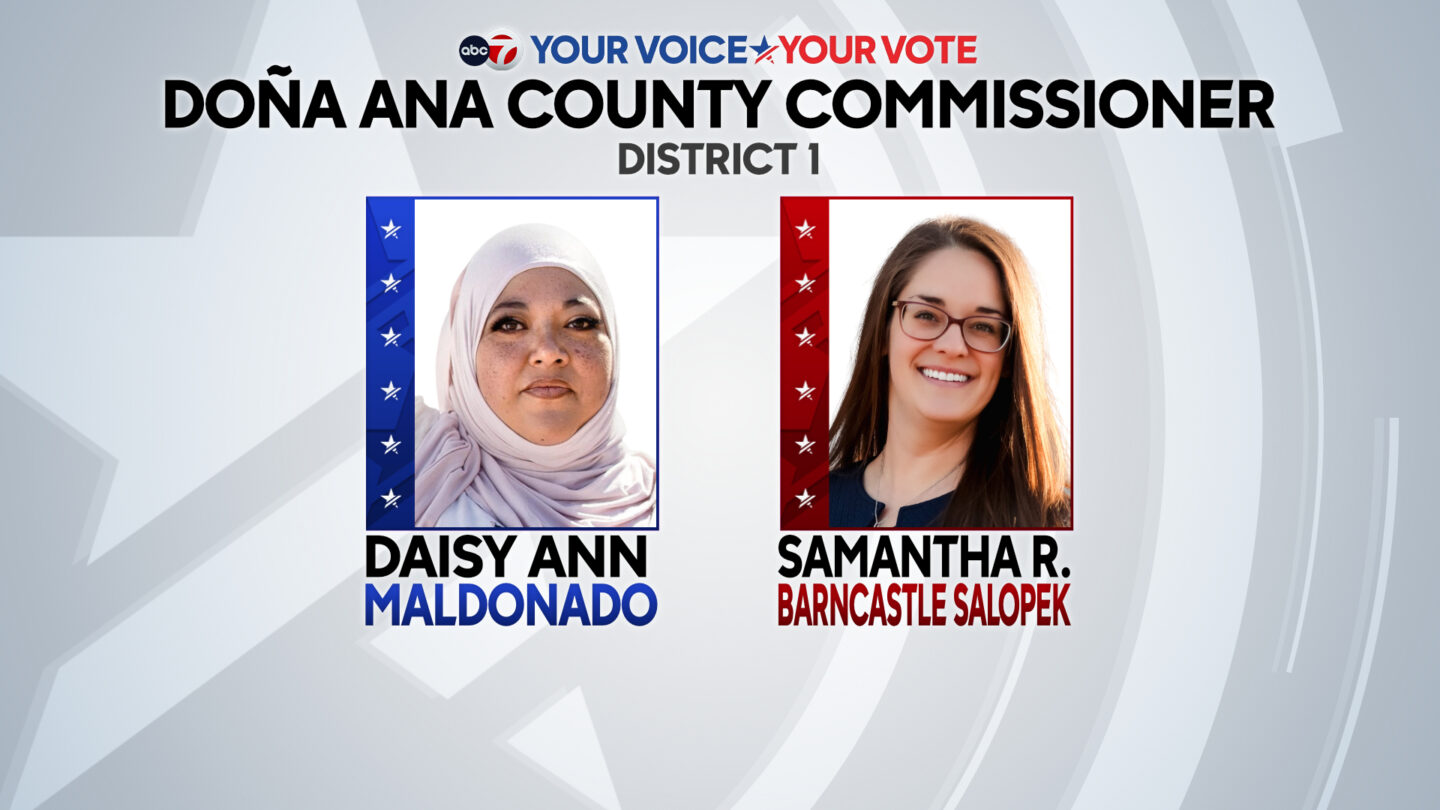


Name: Samantha “Sam” Barncastle Salopek
Party: Republican
Occupation: Water and natural resources attorney
Relevant Experience
I am a water and natural resources attorney with more than 15 years of experience working on complicated issues involving water, infrastructure, economic development, government agencies and competing public interests. I have represented farmers, municipalities, water agencies and reclamation districts, worked with state and federal agencies and handled complex litigation and policy matters at both levels of government. I have also spent my career working with people who do not always agree and finding a way forward. That experience is directly relevant to county government. A County Commissioner has to understand budgets and infrastructure, ask difficult questions, work across jurisdictions and agencies and make decisions that will still make sense 10, 20 and 30 years from now. I am also a lifelong resident of southern New Mexico, a seventh-generation member of a family that established itself in this area in the 1830s in the agriculture industry, I married a farmer, and I am a small-business owner. I understand both the opportunities and the challenges facing working families, farmers, and businesses here because I live them too.
Personal
I am Samantha “Sam” Barncastle Salopek, a New Mexico attorney with nearly two decades of experience in water, natural resources, agriculture, public policy advocacy, and complex litigation. I am a nonprofit executive, wife of a farmer, and a mother to two children including one special needs daughter with complex medical issues. I come from a multigenerational farming family with roots in this community dating back to the 1830s. Agriculture and water are not simply policy issues to me — they are part of my family's history and our community's future. I graduated with honors from New Mexico State University and received my law degree magna cum laude from the University of New Mexico School of Law. I clerked at the New Mexico Court of Appeals and before becoming General Counsel and Water Counsel to the Elephant Butte Irrigation District, during which time I represented the District before the U.S. Supreme Court in Texas v. New Mexico, the long-running Rio Grande water dispute.
After working for other law firms, I started my law practice in 2014 – clients have included farmers, ranchers, food processing and other local businesses, small municipalities, public and private water system, and elected officials. I currently serve as Executive Director of the Family Farm Alliance, a Western organization representing farmers, ranchers, irrigation districts and water agencies, while continuing my work as an attorney and managing my small law firm.
My husband is a farmer and specialty-crop producer, and together we are raising our children in the Mesilla Valley on his family’s farm. I am running for County Commission because I believe the community that raised me deserves local leadership that is prepared, accessible and willing to tackle difficult problems rather than pass them down to the next generation.
What is your position on data centers?
Datacenters, and more specifically right now, Project Jupiter, have made one thing clear: economic development cannot come at the expense of the people who already live here. Residents deserve to know what a major industrial project will mean for their water, roads, power, property values, public services, environment and quality of life — and residents need to have confidence that their elected officials have done their homework, understand the potential impacts, and are willing to protect the public interest.
To residents most directly affected by the project or other similar proposals, I would say this: your concerns deserve to be heard, documented and addressed with facts—not dismissed because a project is labeled “economic development.” The county should use every tool available within its authority to monitor compliance with existing agreements, make information public, enforce commitments that were made to the county and its residents and work with state and local agencies when an issue falls outside county jurisdiction. Meaningful oversight requires timely information, the right expertise at the table, measurable standards, and accountability when commitments are not met.
I also believe we need to learn from this Project Jupiter experience as a community and as elected leaders when evaluating future projects. Looking forward, I believe we need a clear and consistent framework for evaluating all large-scale industrial economic development proposals — not rules written around one particular company or project. Before approving a major project, the county should be asking: How much water will it require, where will that water come from and what happens in a drought? What demands will it place on roads, energy distribution/demand, emergency services, and other infrastructure? What are the anticipated jobs and tax benefits, and how do those benefits compare with the public costs? What are the environmental and quality-of-life impacts? Who bears the risks if projections change? What protections and enforceable commitments will be in place for neighboring residents? “Economic development” should never be a blank check. Before the county commits public resources or incentives to a major project, I would want a clear, public evaluation of at least the above listed items, and a more in depth look at many of them as the process develops through permitting proceedings at the State agency level.
I support economic development but believe we should be deliberate about what kind of development we pursue and on what terms. We can welcome investment and good jobs while protecting our water, natural resources, infrastructure and the quality of life of the communities where that investment occurs. The goal should be simple: bring investment to Doña Ana County, but make sure the benefits are real, the costs are understood and the public interest remains at the center of the decision.
As a water and natural resources attorney, I have spent my career sitting at the table for difficult, complicated issues where there are no easy answers and competing interests are very real. I know how to ask the hard questions, understand the technical and legal issues, and bring people together to find workable solutions. That is exactly the kind of leadership I would bring to the County Commission.
What would you do differently to reduce property taxes?
The first thing I would do is recognize that a County Commissioner cannot simply promise to lower someone's property tax bill with the stroke of a pen. Property taxes fund multiple layers of government and services, and the county has to be disciplined about the portion of that bill it controls. My approach would be to focus on the county's budget from the taxpayer's perspective: What are we spending? What does it cost to provide each service? Are we getting the results we should be getting? And are we asking taxpayers to fund programs that are no longer necessary or could be delivered more efficiently? I would prioritize core county responsibilities — public safety, roads, infrastructure, essential services and responsible economic development — and scrutinize spending outside those priorities. I also believe economic growth should help broaden the tax base rather than continually increasing the burden on existing homeowners and businesses. That means pursuing development that actually produces a sustainable fiscal benefit, while making sure the county accounts for the infrastructure and service costs that come with it. Taxpayers deserve both good services and discipline with their money. We should not promise everything to everyone and then send the bill to property owners.
Juvenile crime is still an issue in Dona Ana County. What will you do to address it?
Juvenile crime requires both accountability and prevention. We cannot simply wait until a young person has committed a serious offense and then ask the juvenile justice system to fix everything. The county needs to work closely with the Sheriff's Office, courts, schools, CYFD, behavioral health providers and community organizations to identify what is actually working and where the gaps are. New Mexico's juvenile justice system already emphasizes prevention, early intervention, diversion, mentoring and community-based services, so I would want the county to make sure local resources are being coordinated effectively and that we are measuring outcomes rather than simply funding programs. This requires real work, not simply throwing money at the problem – we also have to find people qualified to deploy the kinds of programs we want to see succeed. At the same time, there has to be accountability on both sides – government and the public. Young people and their families need to understand that criminal behavior has consequences, while young people who can be successfully diverted from the system should have meaningful opportunities to change course. As much as I would focus on workforce development and training to deploy programs that work with accountability on the government side, I would also focus on early intervention, mentorship, after-school and workforce opportunities, behavioral health resources and strong partnerships with law enforcement — while supporting appropriate consequences for repeat or serious offenses. Public safety and giving kids a second chance are not opposing goals. A good juvenile justice strategy should do both.
What are your plans to ensure transparency and make sure you are accessible to constituents?
Government should not be difficult to reach. If elected, I will maintain a publicly available phone number and email address, I will provide regular opportunities for constituents to speak with me outside formal commission meetings, including community meetings and accessible office hours. I would also communicate regularly about major county decisions, explain the reasoning behind my votes and make public information easier to understand. Transparency also means being willing to say, “I don't know yet.” On complicated issues, residents deserve accurate information rather than a talking point. I would rather take the time to get the facts and come back with a real answer than tell people what I think they want to hear. My legal career has taught me to read the underlying documents, ask questions and follow the money. I would bring that same discipline to county government. Most importantly, I don't believe accessibility means only talking to people who agree with me. I want to hear from homeowners, farmers, businesses, young families, seniors, rural residents and people who strongly disagree with me. The County Commission works for all of them.
What makes you the best candidate?
What sets me apart is the combination of professional experience and deep roots in this community. I am a lifelong New Mexican, a seventh-generation member of a farming family with roots in the Mesilla Valley, a wife, mother and small-business owner. I am also a water and natural resources attorney who has spent my professional career working on exactly the kinds of complicated issues that increasingly confront local government. I have a professional career built around water, natural resources, infrastructure, government and complex public policy. I understand how government works, how agencies make decisions and how to negotiate when the stakes are high.
I know this community because I have lived here, worked here, raised my family here and watched the opportunities and challenges facing our region firsthand. My family have also taught me the importance of service, responsibility and caring for the community around us. I know how to read the fine print, understand complicated water and infrastructure issues, scrutinize government decisions, manage competing interests and have difficult conversations without losing sight of the people affected by them. I know that good government requires both conviction and the willingness to listen.
I am not running to be a professional politician. I am running as someone who has deep roots here, understands what is at stake and has spent a career learning how to solve hard problems. I want to bring that experience home and put it to work for the people of Doña Ana County. Whether we are talking about water, economic development, property taxes, public safety or infrastructure, my approach is the same: get the facts, ask the hard questions, listen to the people affected and find a practical way forward.
I know how to have difficult conversations without making enemies out of everyone in the room. That matters in county government. We don't need more shouting across the table or in the commission chambers. We need someone who knows how to sit at the table, do the work, and get results – that is who I am.
