Parkinson’s Disease Is Consistently Linked to Pesticide Exposure. Farmworkers — and Nearby Communities — Are at Risk in Texas’ Rio Grande Valley.

By Daisy Yuhas
This story is part of a series by Public Health Watch and MyRGV.com. Puente News Collaborative is a partner in this collaboration.
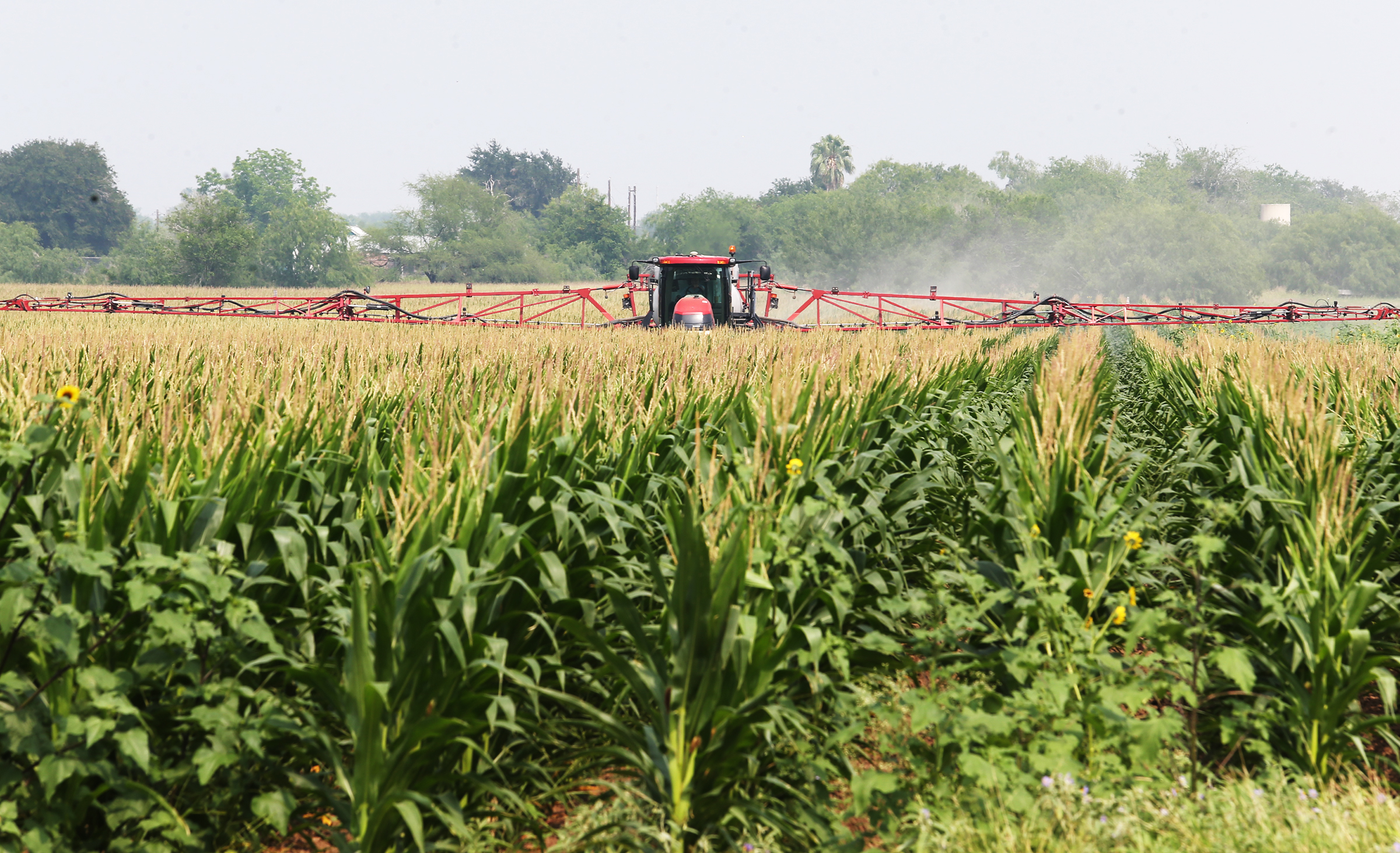
MCALLEN, Texas — When neuroscientist Kelsey Baker hears the low buzz of planes over her home in the Rio Grande Valley, she grabs her dog and hurries indoors. The drone means the crop-dusters are back, spraying pesticides over the citrus, melon and other crops that surround her planned community.
Baker is an assistant professor and assistant dean at the University of Texas Rio Grande Valley. The city of McAllen, where she lives, and neighboring Edinburg, where she works, sit in the middle of one of the state’s most productive agricultural regions, covering more than 4,000 square miles and fed by the Rio Grande.
Baker moved here in 2018, expecting to continue her research into stroke and spinal cord injury. But as she sifted through medical records, she was struck by how many people had Parkinson’s disease, a progressive, neurological condition that has been linked to pesticides and other environmental toxins for at least 30 years. Research shows that more than 80 percent of Parkinson’s cases have no genetic links and are likely explained by environmental factors. Studies have also shown that people exposed to pesticides have a greater risk of the disease.

Credit: Miguel Roberts
There is no cure for Parkinson’s. As the disease progresses, its most common symptoms — tremor, slow movement, stiffness and unsteadiness — can be accompanied by depression, difficulty concentrating and bowel and urinary problems. The disease is the world’s fastest growing neurological disorder, with more than 25 million people likely to be affected by 2050.
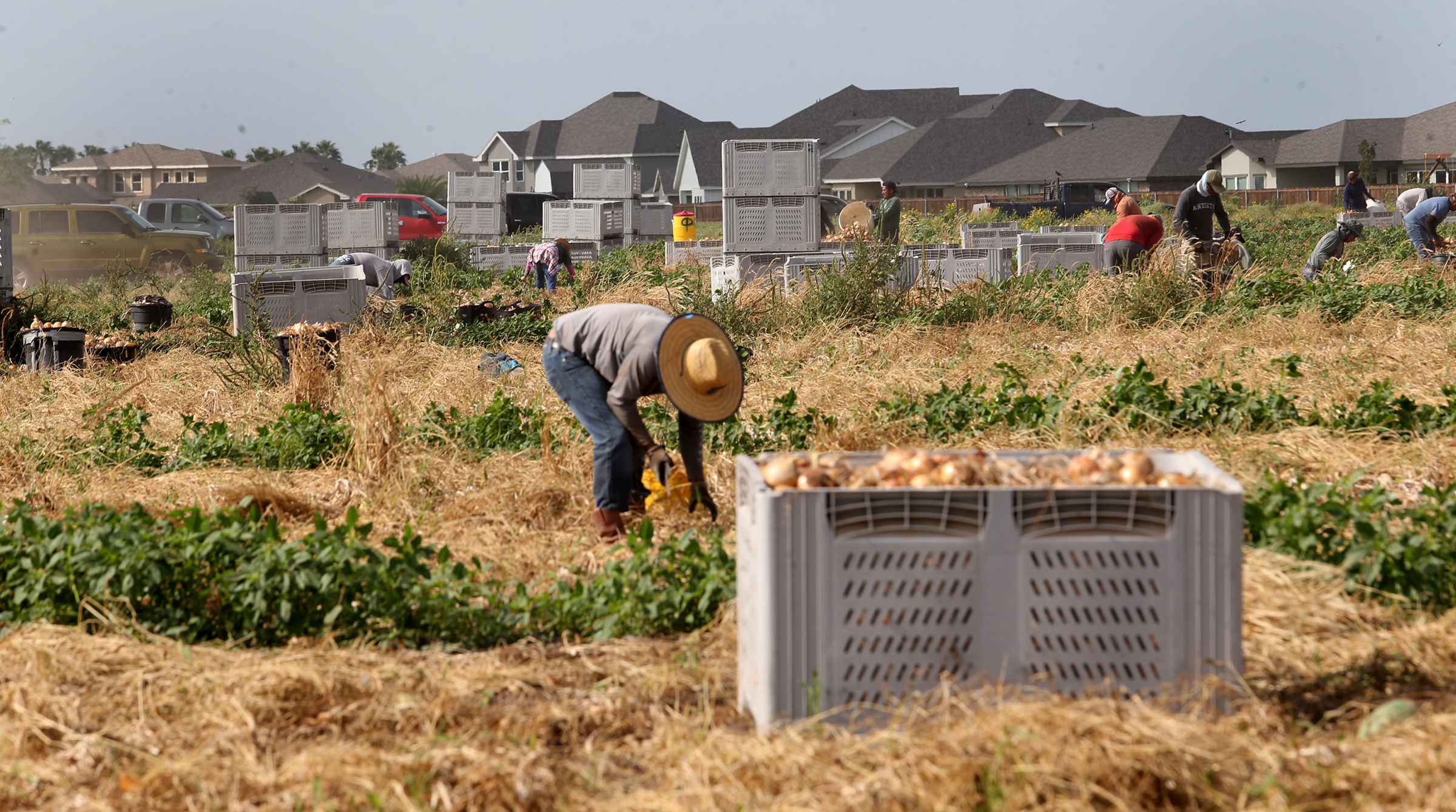
A biomedical engineer by training, Baker started poring over maps of the Valley and found something striking. Homes and schools were often boxed in on all sides by crops, something she hadn’t seen in farming areas in other parts of the country where she had lived. Farmworkers are at special risk for Parkinson’s, because the fields where they work are frequently doused with pesticides. But people like Baker, who simply live near farms, are also in danger.
A recent U.S. Environmental Protection Agency (EPA) analysis of paraquat, a weedkiller with some of the strongest links to Parkinson’s, showed that it might travel so far in the air that anyone within a 20-square mile area of its application could be exposed to unsafe levels. Although paraquat has been banned, phased out or withdrawn in at least 74 countries, its use has increased in the United States, in part because so many weeds are resistant to other herbicides.
“In hindsight, would I have chosen where I live if I knew as much as I know now?” Baker told Public Health Watch. “Probably not.”
Tracking how many of the Valley’s 1.4 million residents have Parkinson’s is almost impossible. Two to 3% of those enrolled in Medicare and Medicaid there have the disease, but those figures don’t include the one in four Valley residents who are under 65 and don’t have any health insurance at all. It also excludes the area’s many undocumented workers, who aren’t eligible for state or federal health benefits.
In 2022, Baker set out to answer a question that has particular relevance for the Valley: Do the brains and bodies of Parkinson’s patients who have been exposed to pesticides look different than the brains and bodies of those who haven’t?
What Baker found in that small preliminary study inspired her to begin a bigger, more definitive project. Not only did imaging show more abnormalities in the brains of those with more pesticide exposure, but there were also greater differences in how their brains and bodies communicated.
Dr. Ray Dorsey is director of the Center for the Brain and Environment at the Atria Health and Research Institute in New York. He also co-authored The Parkinson’s Plan, with Dr. Michael Okun, national medical advisor of the Parkinson’s Foundation. Their book makes the case that Parkinson’s is a largely manmade disease, driven by exposures that society can take steps to reverse.
Dorsey compares research linking Parkinson’s with environmental toxins to early research linking cigarettes with cancer: The scientific evidence connecting one with the other is so strong, he said, that action needs to be taken.
“It’s preventable, needless suffering,” Dorsey told Public Health Watch. “People are being robbed of being able to spend time with their grandchildren and their children because of exposures to certain chemicals in our food, water, and air that are contributing to the disease.”
Leo Armando Ramirez, Sr. learned he had Parkinson’s in 2022, twenty-nine years after he was the first Hispanic high school educator to be named Texas Teacher of the Year. He was 71 years old when he got the diagnosis and had already watched three of his family members — his mother, uncle and eldest brother — suffer from the disease.
Ramirez was born in Mission, Texas, a small town in the Valley known as the “Home of the Ruby Red Grapefruit.” When he was five he began spending his summers in the fields, working with his family. The money they earned helped pay for his school supplies.
Ramirez loved school, especially math. He also loved helping people. In elementary school he was chastised for talking too much — until his teacher realized he was coaching his classmates in arithmetic.
Ramirez was valedictorian of his high school class, graduated from University of Texas-Pan American in Edinburg (now part of the University of Texas Rio Grande Valley) and taught math at one of the Valley’s biggest high schools, McAllen High. Many of his students went to prestigious colleges. All three of his own children attended Stanford University.

Credit: N+ Univision San Antonio
In an interview with Public Health Watch in September of 2025, Ramirez struggled to raise his voice above a whisper. He spoke from an armchair at his apartment in Austin, Texas. His body was curled gently in upon itself, shoulders pinched forward and limbs bent. His wife, Rosa Esthela, sat beside him, prompting him with a comment when he seemed to lose his train of thought.
“Everything has become smaller,” Ramirez said. “I take smaller steps. When I walk, I lose my balance. My speech has gotten smaller and softer.”
Genetics could play a part in the medical tragedies the Ramirez family has suffered. But so could the pesticides they were exposed to.
Ramirez remembers how chemicals sprayed on neighboring fields sometimes drifted over his family as they worked. “But I never, never would picture that I would one day be telling you that it did affect me in a negative way,” he said.
The Ramirez family doesn’t know which chemicals they were exposed to. DDT (or dichlorodiphenyltrichloroethane) could have been used to control weevils on farms where they picked cotton. DDT, which has been linked to Parkinson’s disease, was used from the 1940s until the United States banned it in 1972. Paraquat, which was introduced in 1964, could have been applied during Ramirez’s last summers in the fields.
The family also lived near two Superfund sites, where a pesticide-processing plant and storage facility handled DDT and at least two other chemicals linked to Parkinson’s: dieldrin and chlordane. Both sites have been linked to serious illnesses in the community.
In January of this year, Ramirez moved into a nursing home after he fell and broke his arm. He has good days and bad days. When Public Health Watch interviewed him there in March, he whispered a hello, then was silent. On that visit, Rosa Esthela did most of the talking. They’ve been married 53 years, and she said it’s hard being without him in their apartment. She takes comfort in the fact that his move to the nursing home gives him more access to speech and physical therapists and brings more structure to his days.
Esmeralda “Myla” Garza, a retired nurse in McAllen, Texas, also worked in the fields as a child. Born in Tamaulipas, Mexico, her family was part of the Bracero Program, which provided short-term guest worker contracts to Mexican citizens. They picked fruits and vegetables in Washington, Oregon, Minnesota, Illinois and Texas.
Like Ramirez, Garza remembers crop dusters dropping pesticides and fertilizers over the fields where she worked. “They would just show up and spray,” she recalled. “And we were so innocent. We didn’t think it was bad. We thought, ‘It’s helping the crop.’ We trusted the growers.”
In 2019, a friend noticed that Garza’s hand was trembling and said it looked like Parkinson’s. Garza, who was 59 at the time, mentioned it to her psychiatrist, who referred her to a neurologist.
The Rio Grande Valley only has about 30 neurologists, half the number expected for a region with its population, based on data collected by the American Academy of Neurology. None of them are “movement specialists,” a type of neurologist with additional training to treat Parkinson’s and other movement disorders. To access that specialized care people must make an hours-long drive to San Antonio or Houston. According to the International Parkinson and Movement Disorder Society, the Valley’s closest movement specialist, as the crow flies, is in Monterrey, Mexico.
Parkinson’s can be challenging to diagnose. There is no definitive blood test or brain scan for identifying the disease, so clinicians often make a determination largely based on symptoms. Misdiagnosis is common.
Garza’s neurologist in the Valley sent her to a movement specialist in San Antonio. Over the years she has seen three neurologists and a psychiatrist, who helps her deal with the emotional challenges of living with the disease.
Garza retired in 2025, after she was hospitalized with a serious urinary tract infection. She’d begun to fall and was struggling with basic tasks, like taking notes. Just getting ready for work could take two hours, she said, because bathing and dressing were so difficult.
Today Garza walks with a cane and sometimes a walker. Her hands shake so much that she struggles to send texts or use a computer. Her body and face have changed, which she said hurts her self-esteem and confidence.
Still, she keeps going. Once a month, she drives herself to a Parkinson’s support group run by the South Texas Health System, where she learns new exercises and trades tips with others.
“I thank my family, colleagues, doctors, nurses and God, who helped me through this journey,” Garza said. “I’m not going to give up. I’m a fighter. I don’t give up easily.”
Dr. Beate Ritz, a professor of epidemiology and neurology at the University of California, Los Angeles, has been studying the link between pesticides and Parkinson’s for almost three decades in California’s Central Valley. The region produces a quarter of the country’s food and has the greatest concentration of farmworkers in the United States.
Because testing toxic chemicals directly on humans is unethical, Ritz has used large datasets to search for spikes in the disease in communities where these products are used. Among her findings: people have a 90% greater risk of developing Parkinson’s if they work or live within a quarter mile or so of an area where paraquat has been applied over many years.
Paraquat has also been tied to Parkinson’s in laboratory experiments on rodents, rabbits and other animals. When rodents inhale paraquat, scientists see changes in their brains similar to those seen in humans with Parkinson's disease.
Dorsey, the co-author of The Parkinson’s Plan, says the evidence is so overwhelming that the EPA should ban paraquat.
“What more than that could you want?” he asked. “Unless you want us to take five-year-old kids and randomize them to get exposed to paraquat…I don’t know what additional evidence you could ask for.
“The benefit of the doubt should go to the people, not the chemical. We should stop trying to tie ourselves into pretzels to rationalize why we keep a weedkiller that’s been around for 60 years, that China, England and 50 other countries have decided is unsafe for their public.”
In 2011, the EPA began a 15-year review of dozens of pesticides, including paraquat. The goal was to determine whether they meet current legal standards for safety and effectiveness.
A decade later, the agency released an interim decision on paraquat. The document said “the weight of evidence was insufficient to link paraquat exposure from pesticidal use of U.S. registered products to PD [Parkinson’s disease] in humans.”
The response from groups that have been working for years to ban the pesticide was swift and fierce. Farmworker advocates — including the Farmworker Association of Florida, Farmworker Justice, Alianza Nacional de Campesinas, and California Rural Legal Assistance Foundation — joined the Michael J. Fox Foundation, Pesticide Action Network, Center for Biological Diversity and Toxic Free North Carolina to sue the EPA, saying it hadn’t adequately reviewed the evidence linking paraquat and Parkinson’s disease. They were represented by the environmental law nonprofit Earthjustice.
The EPA asked for more time to examine the evidence, and the lawsuit was paused. In 2025, the agency released new calculations showing that the pesticide could drift much farther than previously thought. Those calculations, known as a volatilization screen, were based on new data from Syngenta, one of world’s largest paraquat manufacturers and the primary supplier in the United States.
In response to questions submitted by Public Health Watch, the EPA press office said the agency now must confirm those results with tests in real-world conditions. Those tests will take up to two years, the office said, and the agency will then need time to review the findings.
Earthjustice attorney Jonathan Kalmuss-Katz said the EPA should halt the use of paraquat until the study is complete. “Workers are being left exposed to an unacceptably dangerous pesticide,” he said, “and they’re being left exposed to increased risk of Parkinson’s disease and other severe harms.”
The EPA press office said the agency can suspend the use of a pesticide if it determines it is “an imminent hazard.” But “EPA has not made that determination for paraquat at this time,” the email continued.
Credit: Delcia Lopez
“It is misleading to insinuate that simply because the vapor pressure of a chemical is greater than previously thought, it necessarily presents a risk of concern,” the agency’s email said. “The volatilization screen intentionally relies on worst-case conditions for modeling and therefore predicts air concentrations that would likely exceed those under typical environmental conditions and application practices.”
As the EPA considers its deliberations, The Michael J. Fox Foundation, the Parkinson’s Foundation and other advocacy groups have been urging states to take action. In May, they had their first victory: Vermont is now the first state in the nation to ban the sale or use of paraquat.
Since 2017 Parkinson’s patients and their families have filed more than 8,000 lawsuits against Syngenta and Chevron, which distributed paraquat in the U.S. for about 20 years. Court documents suggest the companies knew as early as the 1960s that the weedkiller produced tremors and movement problems in rodents and rabbits and damaged the brains of other mammals.
In April, Syngenta announced that it will stop producing paraquat in June. When Public Health Watch asked if the decision was related to the new volatility data, a company representative said in an email that the decision “was made solely for commercial reasons, reflecting significant competition from generic producers around the world.” Eighteen other companies are registered to sell or distribute paraquat, or products containing paraquat, in the United States, so the pesticide will likely continue to be used on American farms.
While the debate continues over whether paraquat should be banned, people who live near or work in agricultural communities must fend for themselves.
The EPA sets safety requirements for each pesticide it approves, including recommended methods of application and the use of gloves and other protective equipment. One study found that people working with paraquat who used gloves and practiced certain hygiene practices — even if they directly handled the chemical — had a much lower risk of Parkinson’s than people doing the same work without those protections.
But the EPA relies on states to enforce its safety rules and enforcement is inconsistent.
In 2019 the U.S. Department of Labor reported that 57 percent of the nation’s farmworkers hadn’t received mandated pesticide safety training from their employer in the last year. Investigations by the nonprofit Environmental Working Group found that farm owners in California and Pennsylvania aren’t following EPA’s paraquat safety rules. When Univision Noticias tracked farmworkers in Florida, North Carolina and Michigan, it found that some were exposed to pesticides that were banned for the crops they were handling.
Texas has some 230,000 farms and ranches, more than any other state. But the state Department of Agriculture told Public Health Watch it has 25 inspectors to check on farmers, pest-control companies and anyone else licensed to use paraquat and other restricted pesticides.
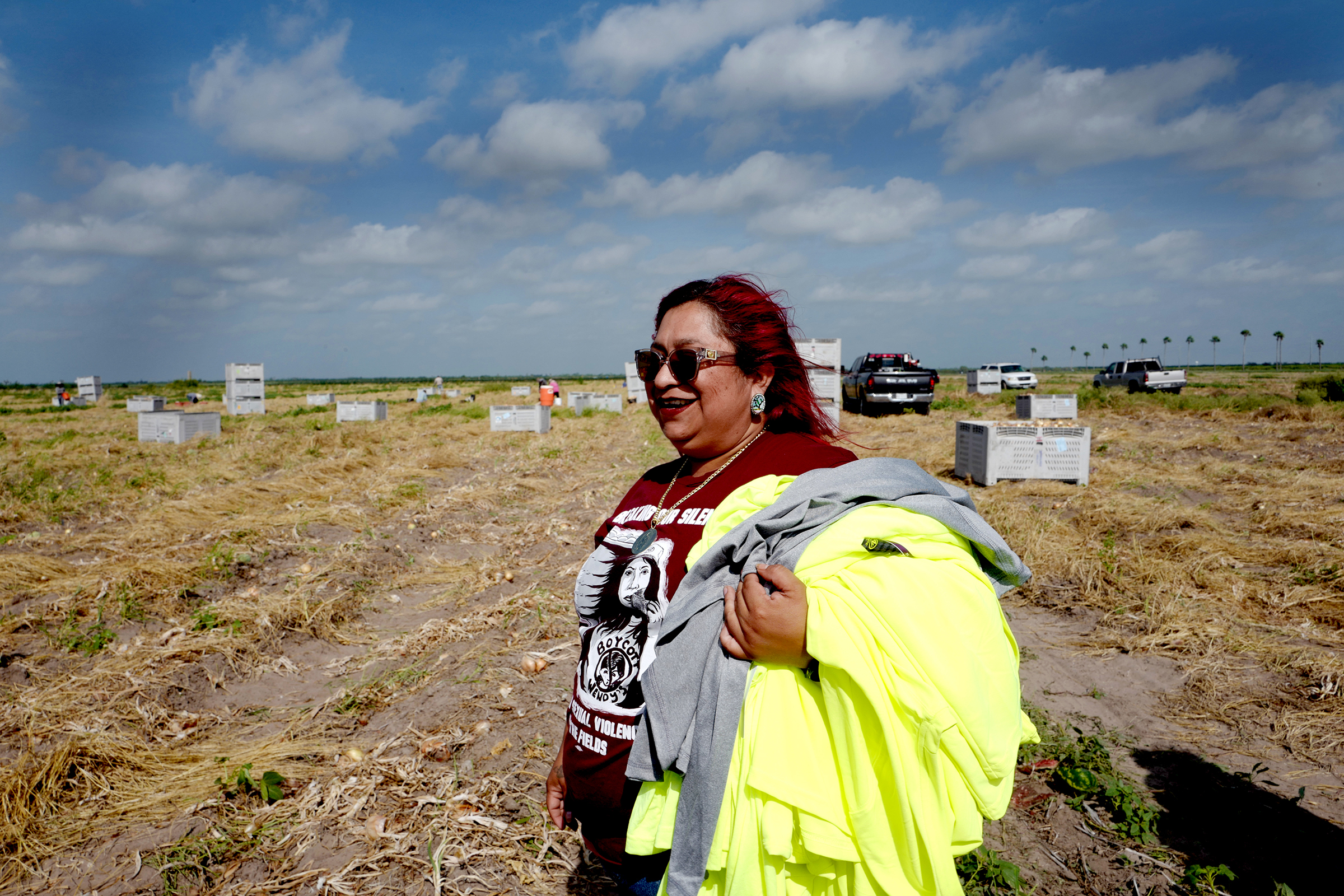
Elizabeth Rodriguez, a social worker and director of advocacy for the National Farm Worker Ministry, said workers she meets in the Valley often lack basic equipment, including gloves. They worry about pesticides, she said, but don’t know how to protect themselves. Pushing back against a supervisor or asking for a day off to seek medical care could result in losing their livelihood. Undocumented workers are often afraid to seek treatment, even at free clinics.
Rodriguez’s own family works in the fields and has been touched by tragedy. Her cousin’s son died at the age of 25, after he spent a field season in Iowa sleeping in a room where pesticides were stored. First, his legs became numb, she said, then he had trouble moving. He refused to go to a hospital, she said, because he wanted to keep working until pay day.
The young man, who was born in McAllen, died in Iowa, in his father’s arms, two days before the end of the harvest. Rodriguez said an autopsy revealed that his body was full of toxins but did not conclude which one led to his death.
As part of her job, Rodriguez visits workers in the fields. It was on one of those trips, a few years ago, that she experienced, firsthand, the sense of helplessness they often describe to her.
The incident happened on a blustery day, as Rodriguez and a colleague were driving between two fields outside Edinburg. In one field, people were pulling weeds. In the other, a tractor looked like it was being readied to spray pesticides.
Credit: Delcia Lopez
Rodriguez was surprised that anyone would even consider spraying. “The wind was so strong that you could feel the car move a little bit,” she said.
The tractor stayed put. But as Rodriguez and her colleague watched, a crop duster appeared and began lowering itself over the field.
The farmworkers in the field across the street hurried away, and Rodriguez quickly turned the car around and closed the windows and vents. But she said the chemical odor was so strong that she and her colleague could taste it. A few miles later, Rodriguez pulled off the road and got out of the car. She felt dizzy, she said, and needed to breathe fresh air.
Former Public Health Watch reporter Raquel Torres and MyRGV.com senior reporter Francisco E. Jimenez contributed to this article.
