Christa Pike in critical condition ‘receiving life-saving medical care’ after botched execution, attorneys say

She appeared to still be breathing when witnesses were escorted out.
By Meredith Deliso, Darren Reynolds, and Jack Moore
TChrista Pike, the only woman on Tennessee's death row, is in critical condition at a hospital and receiving "life-saving care" after a botched execution attempt Wednesday night, her attorneys told reporters at an online press conference on Thursday.
"Christa is alive right now. We don't have a sense of her prognosis or much update on her health at the moment, but we do know that she is alive right now and receiving life-saving medical care," said attorney Randy Spivey, an attorney with the Tennessee Office of the Post-Conviction Defender, adding that the attorneys have been told she is in critical condition.
Pike's legal team called on Tennessee Gov. Bill Lee to commute Pike's death sentence.

"The state of Tennessee has shown us again that they are not capable of carrying out an execution consistent with basic human dignity," Spivey said. "Last night was not just inefficient. It was cruel, and it was torturous.
Lee has ordered a "third-party review" and a temporary halt to scheduled executions after the execution attempt.
"So far as we know, the Department of Correction followed exactly the protocol as outlined," Gov. Bill Lee told reporters on Thursday. He said the state needs to know "why the outcome is different this time than ever before."
"There is no one that wanted what happened last night to happen. It shouldn't have happened," Lee said.
The governor did not provide a health update for Pike.
"There are very few answers this morning. ... The people of our state deserve to have those questions answered, and that's what this investigation is for," he said.
The governor said in an earlier statement that the "remaining scheduled execution will not be carried out this year."
Witnesses to the execution of Pike -- the first woman the state planned to execute in 200 years -- said late Wednesday that authorities appeared to administer two rounds of lethal pentobarbitol but that the convicted murderer appeared to still be breathing an hour later when witnesses were escorted out of the chamber.
"I've witnessed five executions in Tennessee. Nothing about today was normal, typical -- at all," said reporter Tori Gessner with ABC Nashville affiliate WKRN, who was one of several journalists who witnessed the proceedings.
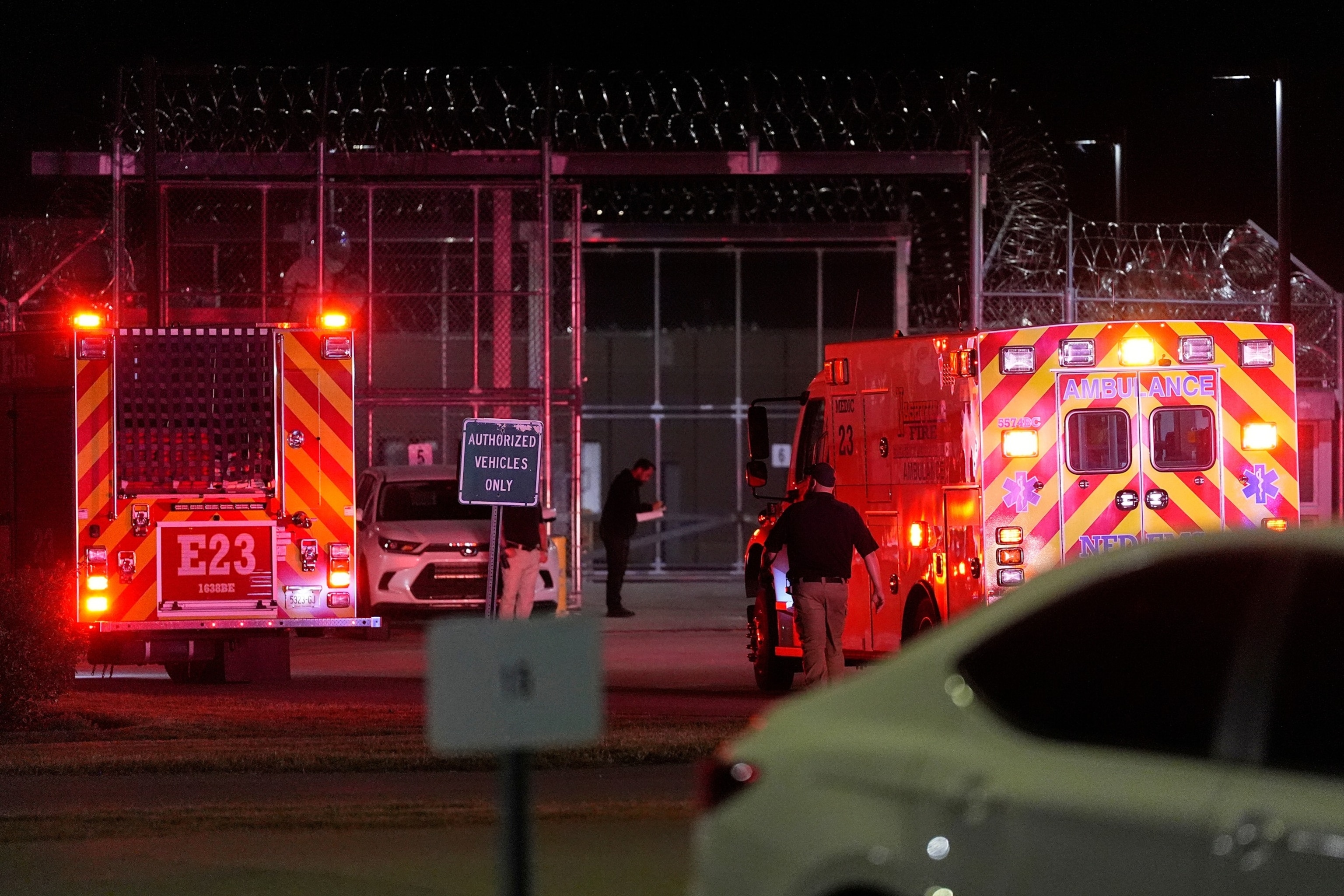
While the witnesses were speaking outside Riverbend Maximum Security Institution in Nashville, an ambulance was seen with flashing lights leaving the facility.
In a statement, attorneys for Pike with the Tennessee Office of the Post-Conviction Defender said she was being treated at a nearby hospital and said they had not been informed of her condition.
"Tonight the State of Tennessee once again failed to carry out a lawful execution," attorneys Randy Spivey and Kelly Gleason said. "We take no pleasure in being right, but the concerns raised by Ms. Pike proved to be true: difficult vein access, blown veins, degraded pentobarbital, no emergency medical care available when things inevitably go wrong, all under a protocol that remains veiled in secrecy."
The Tennessee Department of Corrections has not yet confirmed Pike's condition.
Multiple witnesses said they could hear Pike breathing and snoring very loudly after the drugs were administered, even after the curtains were closed on the execution chamber.
Glessner said when witnesses were escorted out at 8:53 p.m. local time, Pike was still heard snoring.
The attempted execution came after a series of last-minute legal challenges.
In an order issued earlier Wednesday, the U.S. Supreme Court, in a 6-3 decision, allowed Pike's execution to proceed, granting Tennessee's request to lift a lower court's stay of execution, allowing the state to proceed with the administration of Pike's death sentence before the warrant expired at midnight local time.
The court's majority did not explain its decision, which came hours after a federal appeals court paused the execution at the 11th hour to review the capital case. The state subsequently asked the U.S. Supreme Court to vacate the appeals court's stay.
The three liberal Supreme Court justices dissented to vacating the U.S. Court of Appeals for the Sixth Circuit's stay of execution.
"The Court's decision to vacate that stay interferes with the Sixth Circuit's routine administrative handling of a capital case and unnecessarily prevents that court from giving due consideration to Pike’s claim," Justice Sonia Sotomayor wrote in the dissent, which was joined by Justices Elena Kagan and Ketanji Brown Jackson. "Worse, the Court grants such extraordinary relief solely to allow the State to execute Pike before litigation over her conviction has properly run its course in the lower courts. I see no reason to short-circuit the ordinary process of appellate review, particularly in light of the grave consequences of an erroneous decision."
Pike, 50, was scheduled to be executed by lethal injection on Wednesday at 10 a.m. CT. She was sentenced to death after being convicted of the 1995 murder of 19-year-old Colleen Slemmer.
In a 2-1 decision issued within two hours of the scheduled execution, Judge Jane Branstetter Stranch of the U.S. Court of Appeals for the Sixth Circuit wrote that a stay is necessary in the "interests of justice and the finality of Pike's impending execution" in order to review whether her allegations of sexual abuse and rape as a child were fully considered before Pike was sentenced to death. The execution was stayed "until further order of this court," the order stated.
In his dissenting opinion, Judge Richard Allen Griffin called the matter "another last-ditch meritless effort to delay a lawful execution."
In an application asking the Supreme Court to vacate the stay, Tennessee Department of Correction Warden Kenneth Nelsen argued that Pike is not likely to succeed because her claim was "already unsuccessfully presented." The state's "strong interest in finality and the surviving victims' right to closure" also require the high court to vacate the stay, he argued.
Members of Slemmer's family -- including her mother, stepfather and father -- planned to attend Pike's execution, according to Nelsen's filing.
"It is far past time for Colleen's family to receive the closure they seek," the filing stated, asking the Supreme Court to vacate the stay of execution to "avoid rewarding Pike's abusive delay tactics" and "prevent further trauma to Colleen's family."
In a June court filing challenging her execution, Pike argued that due to her history of rape and sexual abuse, being "the lone female in a vulnerable position surrounded by male corrections officers during the last days of her life will trigger her PTSD and result in a torturous execution or mental decompensation to the point she will be incompetent to be executed."
The Tennessee Supreme Court rejected her claims. She subsequently filed an application for stay of execution, requesting that the U.S. Supreme Court review her claims alleging the method of execution would inflict cruel and unusual punishment because of her PTSD from childhood rapes and abuse. The Supreme Court denied that request on Tuesday.
Later that day, Pike filed a motion seeking to review her claim that her trial counsel provided ineffective assistance at sentencing and failed to introduce evidence of her history of child sexual abuse.
In a statement on the stay of execution, Pike's attorney, Stephen Ferrell with the Federal Defenders Services of Eastern Tennessee, said, "The court has stayed this recognizing the serious concerns about Christa's scheduled execution."
In 1996, Pike was found guilty of first-degree murder for beating, torturing and killing Slemmer, a fellow Jobs Corps worker from Knoxville, in a remote area of the University of Tennessee Agricultural campus.
Pike, who was 18 when she committed the crime, had told a friend she planned to kill Slemmer because she "just felt mean that day" and admitted to committing the crime with her then-boyfriend, Tadaryl Shipp, according to court filings. Shipp was also convicted of first-degree murder for his role in the killing and sentenced to life in prison with the possibility of parole.
While incarcerated, Pike was convicted in 2001 of attempted first-degree murder in the assault on an inmate, according to the Tennessee Department of Correction.
ABC News' Michael O'Keefe contributed to this report.
