Nathan Johnson, candidate for Texas Attorney General
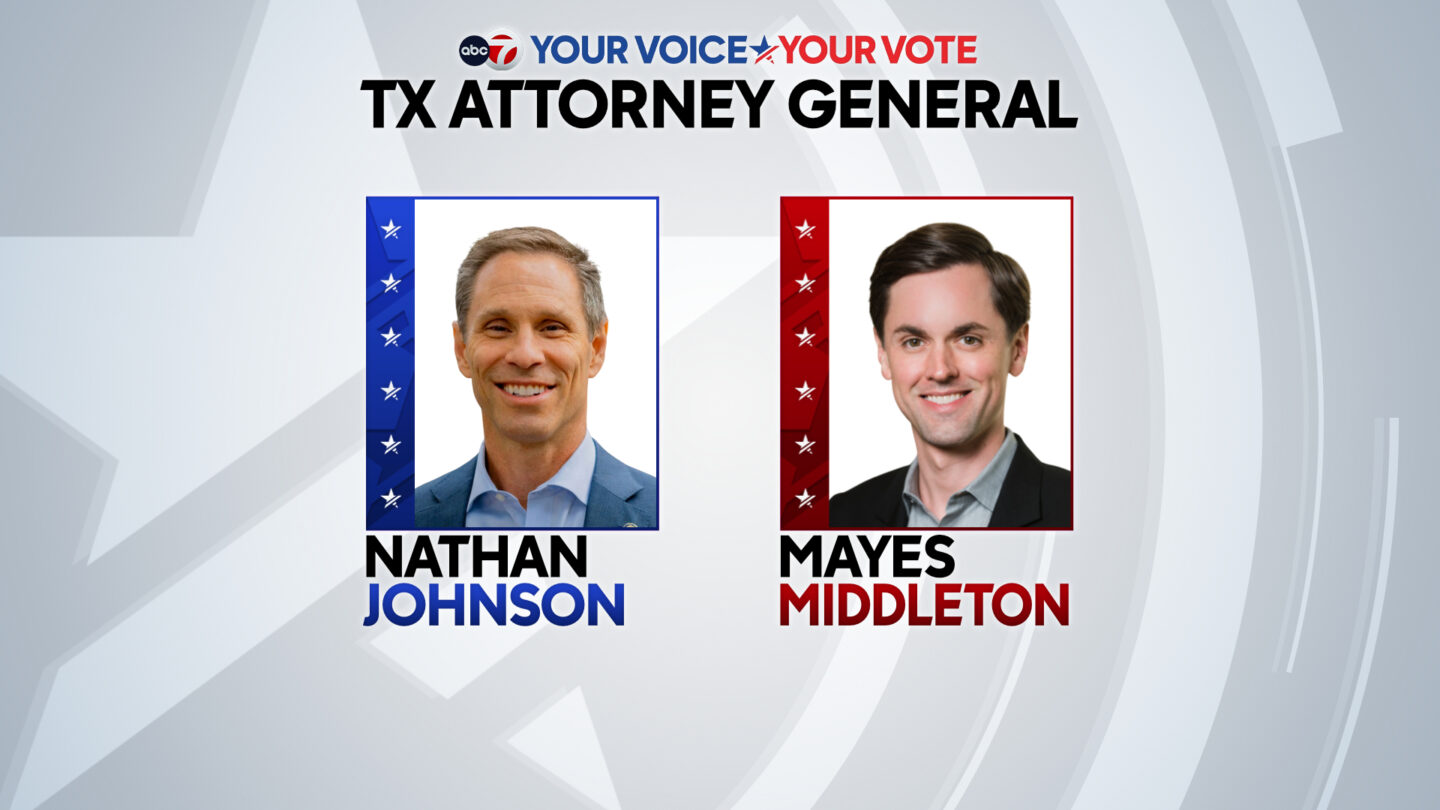


Name: Nathan Matthew Johnson
Age: 58
Party: Democratic
Occupation: Member of the Texas State Senate
Relevant Experience
I’ve worked multiple decades as a commercial litigator and more recently as a mediator, in matters across a wide range of industries. I know the litigation world. Legal training and experience are, of course, a functional prerequisite to leading the OAG effectively. But lawyer experience is not much of a differentiator here.
The office of attorney general is, unavoidably, a political position that requires political skill. It steers public policy, ensures competitive markets, affects justice and safety and consumer welfare, protects the environment, upholds civil and political rights, advises agencies, and much more. To be effective the AG must be able to navigate a complex political environment, build coalitions, work with AGs from other states, and work both against and with the opposing political party.
My eight years of service in the state Senate have afforded me skills, knowledge and perspective that will allow me to effectively lead the OAG in the public interest.
Personal
First elected in 2018, Senator Nathan Johnson has built a reputation for tackling the hard issues, bringing thoughtful leadership and practical solutions to complex problems. He holds a B.S. in physics from the University of Arizona and a law degree from the University of Texas at Austin. A litigator and mediator in the Dallas office of Thompson Coburn LLP, he has also composed musical scores for the hit anime series Dragon Ball Z. He is the proud father of three adult children, and enjoys swimming, reading boring books, and making peanut butter.
Since taking office in 2019, Senator Johnson has authored approximately 433 bills and passed 134 into law. His legislative portfolio affects virtually every aspect of public policy in Texas, including electrical power and grid growth, workforce development, banking, construction, housing, artificial intelligence, environmental issues, water supply and quality, public education, physical and mental healthcare, as well as law enforcement and criminal justice.
If you are elected, what are your priorities for Texas?
One: End the corrupt use of the office, where public power has been used for private interests. This includes terminating use of the office as the publicly-funded law firm for one faction of one political party. Key will be re-building an agency (the OAG) by hiring great people.
Two: Elevate consumer protection and enforce market competition laws (state and federal antitrust and other laws governing business practices). Both have received insufficient attention over the past several decades, and the federal government is all but shutting them both down. The AG combats unethical business practices such as market consolidation, predatory pricing, fraud, and all kinds of scams (I passed legislation allowing for prosecution of AI scams by the AG). This will help with cost of living, too.
Place greater emphasis on technological advances that businesses and e-criminals may use to warp markets, prey on consumers, and get around existing law. For example, when Texas legislators wrote consumer protection, employment, and fair competition laws, they could not have foreseen a marketplace rife with generative AI, algorithmic pricing, and synthetic voice scams. The laws designed to protect Texans must keep pace with advances in technology and marketing innovation: the commercial tools – particularly those driven by AI – that enable dominant industry players to evade the intent and spirit of the law. In my first month as Texas Attorney General, I will conduct a systematic and comprehensive audit of existing consumer protection, fair competition, and employment laws, to determine where the law falls short of what’s needed to protect vulnerable people from crime, consumers from predatory business practices, markets from manipulation, and workers from exploitation. I will then work with legal teams and the Legislature to craft and pass new legislation that fills in the identified gaps in the law.
Three: Make government work: (i) protect our rights as people and as a state, which will mean, among other things, suing the Trump administration whenever they break the law or violate the constitution, both of which, alas, occur with frequency; (ii) routinely partner with district attorneys to actually improve public safety while promoting just and effective law enforcement; (iii) work with agencies and the Legislature and with businesses to make certain that everybody has a better understanding of the rules, follows the rules, operates equitably, and gets in trouble if they break the rules.
What are your plans to ensure transparency and make sure you are accessible to constituents?
Start with consistency in application of the law. AG Paxton has a history of interpreting open records laws narrowly when he or other Republican leaders want to hide information from public view, and broadly when he goes hunting for information to advance right-wing narratives and persecute political opposition. The “transparency” in his approach to public information access is one-way.
I would apply the law consistently and without bias, and work within the bounds of the law to ensure public access to public information. As a state senator, I have filed seven bills aimed at making government offices more responsive to public information requests (and passed one of them).
Incidentally, during the 89th Regular Session I filed SB 1294 to codify a Public Information Act hotline, to make it easier for the public to communicate with the OAG.
What makes you the best candidate?
We have different approaches to the Attorney General’s office. I will use the power of the Office as it was intended by the framers of the Texas constitution: to serve as a check against the abuse of power by anyone, anywhere, in the private sector and the public. My opponent has promised to use it as a tool of partisan warfare.
Under my leadership, the AG’s office will be dedicated to rooting out corruption, working with DAs and law enforcement to improve public safety, elevating consumer protection at a time when the federal government is abandoning it, and reinvigorating antitrust enforcement at a time of mass consolidation and anti-competitive business practices. It also means challenging the federal government’s illegality and overreach that occurs with such frequency these days.
My opponent, in contrast, claims that the job of the AG is to “defeat the left” and he pledges to use “every resource and tool” of the office to ensure that Donald Trump can enact his agenda. He condoned abuse of power in the AG’s office, by voting to acquit Ken Paxton of all 16 counts of impeachment. That by itself is disqualifying. He calls separation of church and state “a lie”, maintains that the 2020 presidential election was “stolen”, and that we don’t live in a democracy, and routinely authors and supports unconstitutional bills – including ones that illegally try to strip and take over the constitutional powers of the judicial branch of government. Voters who are exhausted by the overtly partisan use of power will be off-put by his express pledge to use the office for partisan political purposes.
Of immediate concern is how my opponent’s politics has already harmed, and would harm, the rights of local communities to regulate and influence the development, siting, operation, land and water and electricity use, and tax treatment of data centers and other mass-scale industrial development.
