Feds pausing Big Bend border construction while CBP commissioner visits the park

by Gabby Birenbaum, Uriel J. García and Kayla Guo, The Texas Tribune
August 17, 2026
WASHINGTON — U.S. Customs and Border Protection Commissioner Rodney Scott announced that his agency is pausing construction work in Big Bend National Park while he conducts an “on-the-ground evaluation,” reversing course after heavy machinery had begun moving dirt.
In a video posted to X on Monday, Scott announced that he was en route to the park and had ordered a construction pause Sunday night.
“I put a pause on all activity in that park, as far as construction goes, until I can get down there and do a personal evaluation, talk to some stakeholders, talk to some local law enforcement in that area,” Scott said. “More to follow this week.”
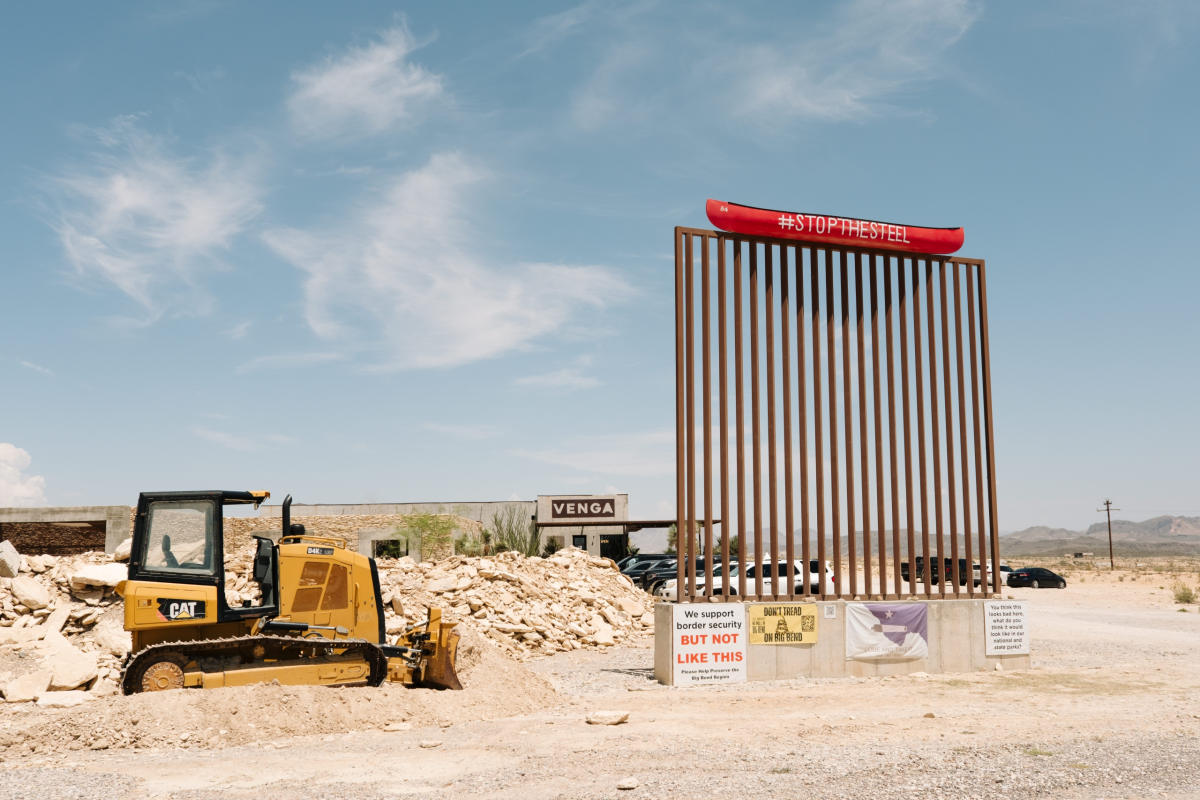
Scott’s announcement comes amid massive outcry from local residents, businesses and law enforcement officials. Many have derided plans to build border infrastructure in the parklands and called for CBP officials to engage with their concerns.
It was not immediately clear how long CBP plans to implement the pause.
The federal government plans to build an access road and vehicle barriers in the park, a treasured spot for generations of Texans. Bulldozers arrived in Big Bend earlier this month to begin what CBP says is survey and design work.
The onset of construction has yielded bipartisan frustration. Texas Democrats have stood against the project for months, maintaining that the effort to build border infrastructure in the park is unnecessary, damaging and an affront to Texas’ sovereignty. And both candidates for Texas’ 23rd Congressional District, which contains the Big Bend region, oppose the wall effort.
More elected Republicans have begun to make noise in recent days. Sen. John Cornyn, R-Texas, asked Homeland Security Secretary Markwayne Mullin in an Aug. 7 letter to halt construction until he or a designee consults with stakeholders — a request Scott now appears to be heeding.
In a statement, Scott said he and a small team will “evaluate the terrain and listen to local leadership, community members and stakeholders to ensure that we secure our borders while simultaneously protecting BBNP for generations to come.”
Terrell County Sheriff Thaddeus Cleveland, a retired Border Patrol agent who has argued that a border wall in the Big Bend region is unnecessary, said he has been in communication with Scott, a friend dating back to their days as Border Patrol colleagues in the 1990s.
Cleveland told the Tribune that he and other sheriffs in the Big Bend area, including his counterparts in Brewster, Hudspeth and Jeff Davis counties, are meeting with Scott in Alpine Tuesday afternoon.
Gov. Greg Abbott, during an unrelated news conference in Waco on Monday, said he spoke to Mullin, who “committed to me that they will not be building a wall or a fence in Big Bend National Park.”
“I was told by the secretary that there would be no construction of any type of barrier in Big Bend National Park,” Abbott said. He said that Scott’s announcement on Monday “seems to be a consequence of my conversation with the secretary this weekend.”
He added that federal officials can use technology such as drones to secure this part of the Texas-Mexico border “without undermining the beauty of the national park.”
CBP has said it does not plan to build a 30-foot wall or place stadium lighting in the park. In a statement Thursday, the agency said it is working to maintain visitor access and preserve the landscape, but that the construction is necessary for border security.
“These improvements will help our agents detect illegal crossings, respond faster, and assist visitors in danger,” Scott said. “As we strengthen the border across the southwest, we will not leave Big Bend as an opening for cartels to exploit by shifting their routes and tactics.”
Local officials and park advocates have maintained that the 1,000-foot cliffs along the riverbank in the park are “God’s walls” — a natural deterrent for migration — and that any construction would irreparably damage the park’s unique ecology and the local tourism and outdoors industries. CBP’s Big Bend sector is geographically large yet quiet, account for just 1.3% of apprehensions along the southern border in fiscal year 2025.
U.S. Rep. Chip Roy, R-Austin, who has said that the administration needs to make its intentions in the park clear to the public and called a 30-foot bollard fence in the park unnecessary, thanked Scott for his announcement.
“We can secure Big Bend while protecting its God-given scenery,” he wrote on social media.
Park advocates celebrated the pause but pushed for a more permanent answer.
“This temporary pause proves how much non-partisan public pressure is mounting in West Texas and across America to stop the irreversible destruction unfolding in this crown jewel national park,” said Laiken Jordahl, a national public lands advocate with the Center for Biological Diversity. “It’s welcome news, but construction at Big Bend is likely to resume at any moment. We’re not resting until these contracts are canceled, these workers are sent packing, the waivers are rescinded and every wall plan for the greater Big Bend region is scrapped for good.”
CBP had previously described its actions in the park as “survey and design work — NOT construction of a wall through the park.” Scott’s description of the activity as “construction” today underscored advocates’ frustrations with the work federal contractors have already done in the park.
“It’s a win that he’s looking at the park, but it also is a real statement of the irresponsibility of unleashing bulldozers before you take a look at something,” said Billy Bartko, the owner of Far Flung Outdoor Center in Terlingua.
Various groups have launched legal efforts to force CBP out of the park. State Sen. Roland Gutierrez, D-San Antonio, filed a petition seeking a temporary restraining order to prevent construction in the park until the case can be adjudicated.
Gutierrez said the pause is a “good thing, for sure” but that opponents should continue to press for a full stoppage. He accused CBP of misrepresenting the activity it has already taken in the park as simple surveying.
“That’s not what has happened here,” Gutierrez said. “It has been complete clear-cutting of the countryside, of hills and mountains — Mariscal Mountains and beyond — right along the Santa Elena Canyon, destroying vegetation [and] archaeological sites without any care in the world. We need to stop this.”
Uriel J. García and Kayla Guo contributed to this report.
This article first appeared on The Texas Tribune.
