Lindsay Clancy’s triple-murder trial nears its end as defense attorney rests his case

By Nicki Brown, CNN
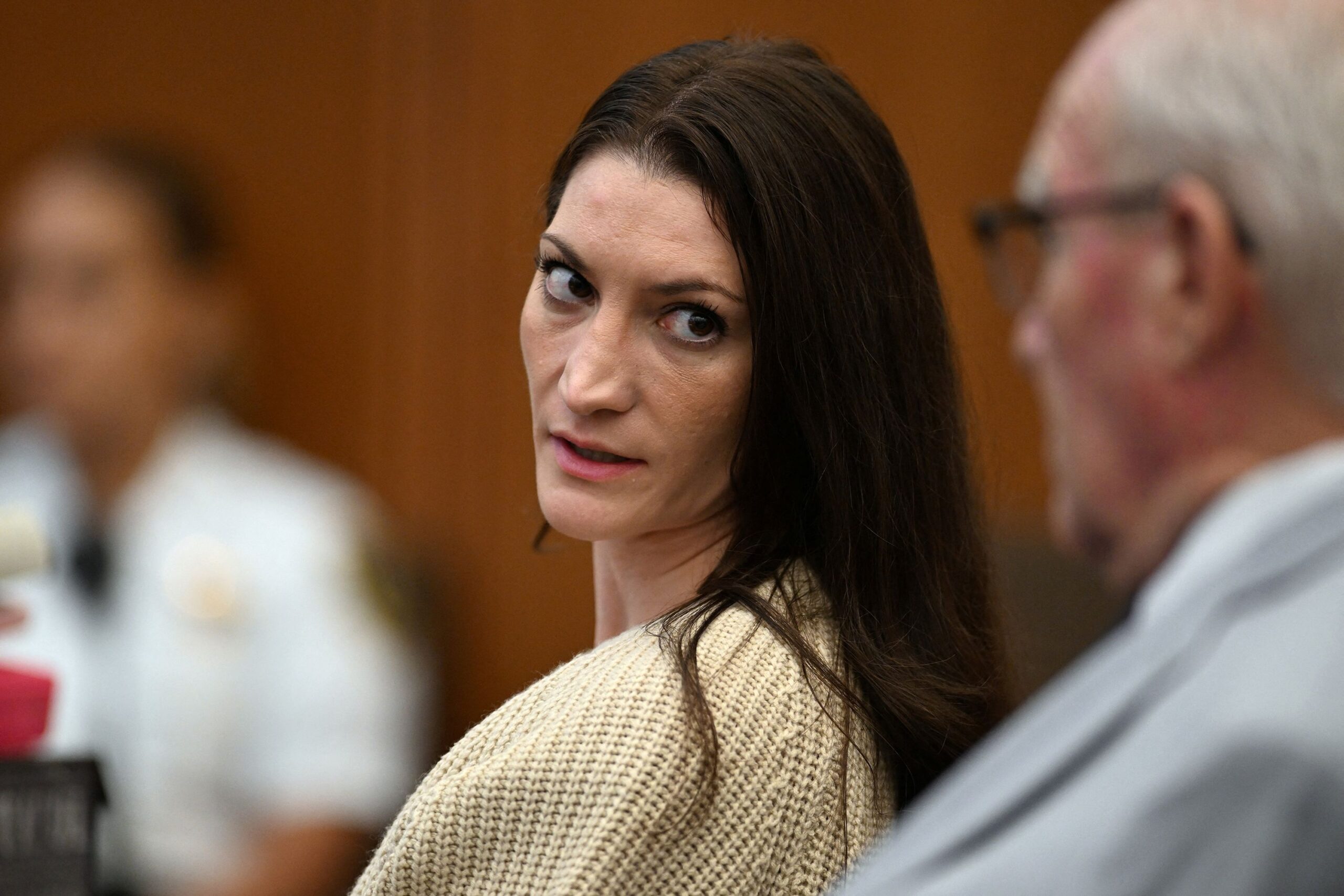
(CNN) — The defense rested Friday in Lindsay Clancy’s triple-murder trial, as the case – which has ignited conversations about postpartum mental health and the controversial “insanity defense” – nears its conclusion after four weeks of testimony.
Prosecutors are now presenting rebuttal witnesses and are expected to continue their case Monday before the parties deliver their closing arguments.
While presenting his case over the last week, Clancy’s defense attorney called 10 witnesses, including mental health professionals who testified the Massachusetts mother was in the throes of a mental health crisis when she fatally strangled her three children and then attempted suicide, leaving her partially paralyzed.
The defendant did not take the stand.
Clancy, 36, does not deny she killed her children – Cora, 5; Dawson, 3; and 8-month-old Callan – in the basement of their Duxbury home in January 2023. But her attorney argues she should not be held criminally responsible for their deaths because she was suffering from postpartum psychosis, a rare mental condition, after months of purported failures by her medical providers to adequately treat her.
The defense’s final witness, the forensic psychiatrist Dr. Phillip Resnick, testified Friday that Clancy was “frankly psychotic” the day of the killings and offered support for the defendant’s claim she heard a voice that ordered her to kill the children and herself.
“Not only did she hear a command, but she felt that her body was taken over by an external force where she was in a dream state and did not have control of her own body,” said Resnick, who has been involved in multiple high-profile filicide cases. “It was almost like she was a puppet and someone else was pulling the strings.”
The Plymouth County District Attorney’s Office, however, argues the former labor and delivery nurse murdered her children “deliberately and meticulously” and was not in a state of psychosis when she did so. Though prosecutors acknowledge Clancy had mental health issues, they contend she manipulated her providers and constantly changed treatment plans as she sought a “quick and easy fix.”
The prosecution’s first rebuttal witness, a psychiatrist who met with Clancy in April 2026, testified she was able to discern right from wrong when she killed her children – a key element for Massachusetts prosecutors to prove Clancy is, indeed, criminally responsible.
Clancy, who has pleaded not guilty to three counts of murder, could face life in prison if convicted. If jurors find she cannot be held criminally responsible, the court will likely begin the process of having her committed to a psychiatric hospital.
Clancy could not discern right from wrong, psychologist says
The defense’s case relied heavily on mental health professionals who offered their opinions on Clancy’s mental health conditions and treatment – testimony key to the defense’s argument.
Paul Zeizel, a clinical and forensic psychologist who met with Clancy in early February 2023, said he believed Clancy was experiencing psychosis when she killed her children and could not understand right from wrong. Zeizel and Resnick both testified Clancy had bipolar disorder and experienced postpartum psychosis.
“She was unable to conform her behaviors to the rule of law, and she had no appreciation for the wrongfulness of her act,” Zeizel said.
The psychologist first met Clancy in the hospital 11 days after the killings at the request of Kevin Reddington, Clancy’s defense attorney, whom he referred to as his “friend.”
Clancy expressed concern for her family and wanted to speak with her then-husband, Patrick Clancy, so the psychologist let her call him on his phone. Lindsay Clancy left him a voicemail before she spoke with him two days later.
“She told Patrick that she loved him very much. She was unable to express a lot of emotion but she expressed love for him,” Zeizel said. “She had said that she heard a male voice ordering her, telling her, that she didn’t have any choice but she had to kill her children and then kill herself.”
Clancy felt she had to obey the instructions, Resnick testified. In that moment, she believed killing her children was morally right based on her “psychotic beliefs,” the psychiatrist said.
“In her mind she believed that she would be doing her children a favor by having them float to heaven with her rather than remain on earth without her doing the mothering,” he testified. “Her mind was very distorted like that.”
Zeizel testified auditory hallucinations are common symptoms of psychosis – a condition which another psychologist, Dr. Donald Condie, defined as “a lack of understanding of what’s real opposed to what is not.”
The psychologists outlined the symptoms Clancy experienced in the months before the killings, including insomnia, a loss of connection with her baby, an inability to emote and dissociation – each a sign of postpartum depression or psychosis, Condie said.
Clancy reported intrusive thoughts telling her that her brain was irreparably damaged and she should kill herself, Zeizel said, as well as derealization – a condition where someone doesn’t believe the things around them are real.
Clancy was also concerned people could hear her thoughts, the psychologist testified, and feared the government would take her children from her.
Zeizel explained people with psychosis have intermittent symptoms and can perform routine tasks even while suffering psychosis.“They can function fine one day and the next day they can be hearing voices,” he testified.
During their cross-examinations, prosecutors emphasized Clancy never reported hearing a man’s voice aside from the day she killed her children and didn’t tell her medical providers about any thoughts to harm them.
Condie said there were reasons the mother of three may have tried to minimize her symptoms before the killings.
“Ms. Clancy reported she was worried that her children would be taken away from her – perhaps by the Department of Children and Families – if she reported very severe symptoms,” he testified.
“For a person who’s begging for help, wouldn’t it be important to be honest with the providers about what you’re feeling, seeing, and hearing?” Assistant District Attorney Shanan Buckingham asked the psychologist.
“It should be, but that’s not always what doctors find,” Condie said.
During her cross-examination of Zeizel, Buckingham underscored the more than 35 hours he spent evaluating the defendant – which the psychologist said was atypical – and questioned whether he could be impartial.
Zeizel acknowledged he cared about Clancy, but maintained his medical opinion was based on facts and he did not cherry-pick information.
Clancy was ‘begging for help,’ mother-in-law testified
Several of Clancy’s loved ones testified, describing her as a dedicated nurse and mother whose mental health deteriorated in the fall of 2022 despite her best efforts to seek treatment.
A former co-worker described her as a compassionate labor and delivery nurse who would often get emotional when helping her patients deliver children.
“She would cry and she just say ‘that was so beautiful,’” Margaret Hamp said. “You could just tell that she really loved being in that setting.”
Hamp recalled a day early in Clancy’s career when the two discussed postpartum mental health after their unit treated a pregnant patient planning to harm herself.
“I asked (Clancy) if she had ever heard of the Andrea Yates case and she hadn’t,” the nurse testified, referring to the Texas mother who in 2006 was found not guilty by reason of insanity in the drownings of her five children – a case with obvious parallels to Clancy’s.
“I explained that to her and she cried,” Hamp said. “And she said: ‘How could a mother hurt her children?’”
Clancy always dreamed of having a big family and was happy in the weeks after her third child, Callan, was born in 2022, said her mother, Paula Musgrove. But Musgrove said her daughter’s mental health began declining that fall, prompting her to seek an extended leave from her job.
Over the coming months, Clancy met with multiple clinicians as she sought treatment for anxiety, insomnia and other mental health issues. Her former mother-in-law testified Clancy was “begging for help.”
Clancy’s mental health providers prescribed her various medications, which were changed frequently as she reported side effects, according to medical records detailed in court.
By the end of the year, Clancy had called a suicide crisis center twice and visited several medical facilities, according to medical records referenced in court. She had also told her mother and her then-husband she had thoughts of harming the children, Musgrove testified.
After a multiday stay at a psychiatric facility in early January 2023, Clancy appeared to improve, her sister said.
But Musgrove said Clancy lost a lot of weight during that time, struggled with her memory and became paranoid about illogical things.
“She would say to me, ‘This isn’t me, I’ve never been like this before,’” her mother testified. “And I would agree, because she wasn’t.”
Clancy has ‘bad days and worse days,’ speaks of children often
Clancy frequently speaks about her children to this day, a chaplain testified, and mentioned them when she first met with the clergy member a week after their deaths.
“She said to me as I held her hand to comfort her: ‘I am so glad my children are safe,’” Sheila Cavanaugh, a chaplain at Brigham and Women’s Hospital, said.
The chaplain responded the children were safe in heaven with God, she testified, and the two women prayed for them.
In the same conversation, Clancy referenced hearing a persistent male voice the day of the killings, Cavanaugh said. The voice told her, “if she did not follow the command, neither she nor her children would be safe.”
Clancy carries “immense grief,” according to Cavanaugh, who has met with the defendant more than 200 times at Tewksbury Hospital, where she is currently held.
Prosecutors read records from the facility describing Clancy’s largely routine actions on her children’s birthdays and the anniversaries of the killings. But Zeizel, the psychologist, and the chaplain both testified Clancy speaks about her children regularly.
“She really loves them and misses them and thinks of them every single day – almost every moment of the day,” Zeizel said.
Clancy has “bad days and worse days,” the psychologist testified, and she is constantly monitored in the hospital to ensure she doesn’t attempt suicide.
“She’s in good hands at the moment, but there’s always a concern that sits directly below the surface,” Zeizel said.
Rebuttal witness testifies Clancy suffered major depressive disorder
Dr. Avram Mack, a psychiatrist called as the Commonwealth’s first rebuttal witness, testified he believed Clancy was suffering from a major depressive episode in January 2023 but retained the capacity to understand right from wrong and control her behavior.
Clancy told the psychiatrist she said, “Go to God,” as she strangled her children, Mack testified, adding he believed the statement indicated an awareness her actions were wrong.
“My understanding is that the sentiment ‘Go to God’ is a way of distilling or thinking about the children as innocents, as ones who hadn’t done wrong, while what she was doing was the opposite, was wrong,” he said.
Hospital records indicate Clancy was horrified about the incident when she woke up in the hospital, Mack testified. Again, the psychiatrist said Clancy’s reaction illustrated an understanding her actions were wrong.
The “methodical” ways Clancy strangled her children and attempted suicide demonstrate that she was able to control her behavior, he said.
This story has been updated with additional information.
The-CNN-Wire
™ & © 2026 Cable News Network, Inc., a Warner Bros. Discovery Company. All rights reserved.
CNN’s Eric Levenson contributed to this report.
