Wildfires could displace you for months. Is your insurance ready?


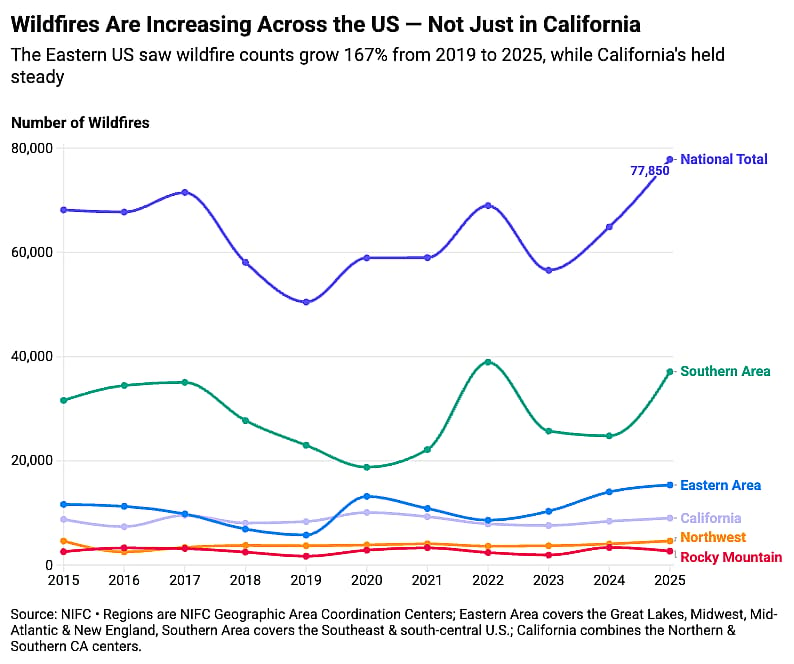
Catastrophic wildfires have dominated headlines over the past few years, most prominently the Southern California fires in early 2025 that decimated over 6,800 homes and damaged nearly 1,000 more. But it isn’t just Golden Staters and homeowners who live near forests and mountains who are at risk. Since 2025, wildfires have destroyed hundreds more residences in blazes from Oklahoma and Nebraska to Florida and Georgia and, in recent weeks, Oregon.
Wherever you live, it’s crucial to have homeowners insurance that covers the costs of rebuilding or repairing your dwelling and replacing your possessions if a fire destroys them. Your policy should also provide loss of use coverage, also referred to as additional living expense (ALE), which pays you back when you have to pay out-of-pocket for things like temporary housing and food while you are displaced.
The problem is, your ALE coverage may not be sufficient or clearly understood when you need it most. TheZebra.com took a closer look at why and what you need to ensure you and your family are properly covered.
Alarming Statistics
As of Sept. 4, firefighters have responded to 52,939 wildfires that have burned more than 8.2 million acres across the United States this year, according to the National Interagency Fire Center. That means 2026 has already reached 125% of the 10-year average for fires in one year.
What Loss of Use Coverage Actually Is (and Isn’t)
ALE coverage helps pay for additional expenses you incur after your home becomes unlivable. This can include costs like a hotel or Airbnb stay, restaurant meals, transportation to work and school, and even pet boarding while your home is being rebuilt or repaired.
“Most policies cap ALE as a percentage of the dwelling coverage limit, usually somewhere in the 20% to 30% range, although some carriers structure it as a separate flat limit instead,” explained Beth Swanson, insurance analyst with The Zebra. “ALE coverage generally kicks in once a covered peril makes the home uninhabitable, not simply inconvenient to live in. And time limits tend to be tied to a reasonable time to repair or rebuild, rather than a strict calendar cutoff, although some policies do include caps in the 12- to 24-month range.”
Brandi Richard Thompson, a former Federal Emergency Management Agency official who now educates families about emergency preparedness, cautions that ALE is not a second income or a rent-free check.
“It pays the difference between what your life cost before the fire and what your life costs after it, which means your ordinary grocery bills and utility bills aren’t covered – only the increase is,” Thompson explained.
In other words, ALE only covers the extra expenses directly caused by your displacement. Normal, ongoing bills and costs remain your responsibility.
When You Overextend Your Stay
Displacement due to a fire can complicate ALE matters. That’s because the process of scoping (inspecting) a major fire loss by an adjuster (the professional assigned to investigate and resolve the insurance claim on behalf of you or your carrier) can often take several months, not including the time it takes to repair or rebuild.
“Let’s say you have $500,000 in dwelling coverage and $50,000 in ALE coverage that’s capped to last 12 months,” said Jennifer Taylor, a public adjuster and CEO/founder of Claim Ready. “If your additional living expenses and costs to stay at a hotel total $5,000 per month, that $50,000 will only last 10 months. But if it takes eight months to agree on the scope and final rebuild estimate before reconstruction even starts, you may have already used a significant portion of your ALE. A major rebuild could take many months beyond that.”
Once your ALE coverage expires or you’ve exhausted the maximum dollar cap, you’re responsible for paying all ALE-related expenses.
The Mortgage Misconception Nobody Mentions
Many homeowners are also surprised to learn that ALE protection won’t cover your mortgage payments, even though you won’t be living in your home during this time.
“This can put your family in a tough spot because you may have to keep paying your mortgage while also covering a hotel or rental,” said Joy Aumann, a Southern California real estate agent who has represented families displaced by wildfires. “You may also have to pay certain costs out-of-pocket first and then get reimbursed by your insurance company later.”
What Happens to Your Stuff
Your clothes, furniture, portable consumer electronics, and other belongings are typically protected under your policy’s coverage C (personal property), which is an entirely separate limit from ALE that often runs 50% to 70% of your dwelling coverage. Fortunately, spending down your ALE won’t affect this coverage.
If your possessions are damaged in a fire, the amount you will receive depends on which option you chose, as listed in your policy: actual cash value (ACV) or replacement cost. The former pays what the item was worth the moment before it burned, meaning replacement cost minus depreciation for wear and age; the latter pays what it costs to purchase a comparable new item today, which is why it’s preferred.
“An ACV policy can leave a family tens of thousands of dollars short on contents alone,” Thompson added. “Let’s say you bought a sofa for $2,400 eight years ago. If you have ACV and your sofa is destroyed by fire, you might be reimbursed only $600 due to depreciation.”
When Wildfire Smoke Makes Your Home Uninhabitable
Imagine your home is completely spared from the flames but still suffers serious smoke and ash damage, making it unsafe and unlivable. That could lead to a dispute with your carrier over whether this qualifies as direct physical loss.
“This is a tricky area because smoke and ash damage can be particularly complicated to evaluate,” Taylor noted. “How those losses are handled can depend heavily on the facts of the claim, the policy language, the adjuster, and the carrier.”
ALE coverage in this scenario is commonly triggered when the home is uninhabitable from a covered peril, not by whether flames actually touched your house.
“Many policies contain civil authority coverage that pays living expenses when a mandatory government evacuation order prohibits access to your home, but it is usually capped tightly, commonly two weeks to 30 days,” Thompson said. “Other deciding factors are habitability determination based on contamination, and medical necessity – documentation from a physician that a specific household member cannot safely occupy the residence.”
What to Check Before Disaster Season Ends
To safeguard your financial interests, it’s best to be proactive now, before a potential fire may occur. The experts recommend these tips:
- Review your policy carefully. “Spend a few minutes reviewing your declarations page and loss of use section. Check your ALE limits and whether your belongings are covered at ACV or replacement cost,” Aumann advised. Then, increase coverage limits as needed, such as by opting for an extended ALE endorsement.
- Understand how your policy defines “uninhabitable.” Find the actual sentence in your policy, which may state something like the residence premises are “not fit to live in.” “Then, ask your carrier three questions,” Thompson said. “Does a mandatory evacuation order by itself trigger ALE, and for how long? Does smoke or ash contamination without structural burn trigger ALE, and what evidence do you require? And who makes the habitability determination, and will you accept an independent industrial hygienist’s assessment?”
- Know your fire risks. “If you’re in a high-risk area, or you know a disaster is bearing down, that’s a good moment to call your agent and ask them to walk through your ALE language in your specific policy,” Swanson suggested. “Ask questions about anything you don’t understand.”
The Bigger Picture: Wildfire Risk Is Spreading
The takeaway here isn’t just about the fires making headlines. Wildfire activity has picked up well beyond the regions most people associate with it, which means your ALE coverage is worth a second look no matter where you live. The chart below shows how wildfire counts have shifted across U.S. regions over the past decade — and it’s not just California driving the trend.
This story was produced by The Zebra and reviewed and distributed by Stacker.
