How the conservative Supreme Court has rewritten the rules for the midterms

By John Fritze, CNN
(CNN) — Voters will pick the winners of next month’s midterm elections, but it is the conservative Supreme Court that has set the rules.
Long before early voting got underway to decide control of Congress, the court exerted an unusually profound impact on the election with a series of decisions that have reshaped redistricting, campaign finance regulations, efforts to identify noncitizen voters and mail voting – frequently in a way that has benefited Republicans.
Some of those decisions received little attention, like the court’s ruling this month that cleared the way for political parties – and particularly, Republicans – to pour millions more into television advertising in tight races. Others were more notable, like the 6-3 ruling in April that effectively gutted the Voting Rights Act’s power to protect minority voters, and prompted a new round of redistricting in Republican-led states.
Various rulings have exposed tensions among the justices that spilled into public view.
“The court has kind of blinded itself to the very deleterious effects of their rulings on how the political system works and has created a democracy that does not work as well as it should,” Justice Elena Kagan said at an event on Tuesday in a remarkably frank critique of the court’s actions.
Not all of the court’s decisions have backed the Republican position. Both conservative and liberal justices have been skeptical of efforts by President Donald Trump and his allies to alter mail ballot systems, for instance.
Despite Trump’s evidence-free claims of widespread voter fraud, the court in September notably rejected the president’s push to give the US Postal Service the unprecedented power to withhold potentially millions of mail ballots. In June, a 5-4 majority upheld state laws that permit mail ballots to be received a few days after Election Day. Even as he has fixated on alleged problems with mail voting, Trump himself has frequently cast a ballot by mail.
Trump nominated three of the court’s nine justices during his first term. None of the three dissented from the court’s USPS decision.
“Justice Kagan is wildly off base, as are claims that the Supreme Court’s recent record in election cases has favored Republicans,” Jason Snead, executive director of the Honest Elections Project, told CNN. “Her claims that the court has somehow undermined democracy are little more than political spin.”
If polls indicating that Democrats are poised for a victory next month are correct, then many of the Supreme Court’s recent election rulings may have only a negligible impact on the bottom line. But those following the long game say the impact of the Supreme Court’s decisions over the past year will be felt far beyond November.
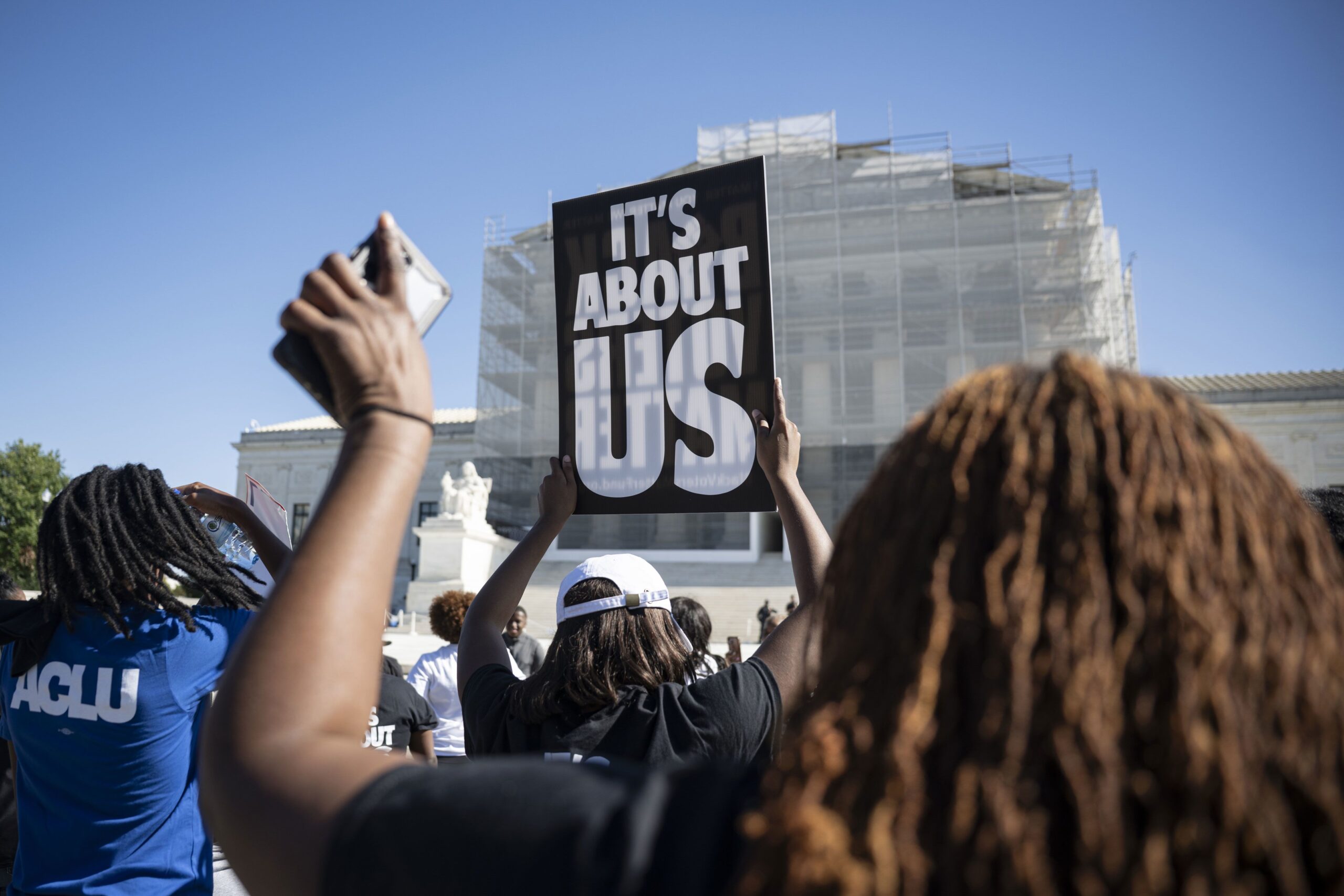
“It’s critical to look beyond the partisan implications of the court’s decisions related to voting rights and to focus on how the court has undermined the very foundations of our multi-racial democracy,” said Samuel Spital, associate director-counsel of the NAACP Legal Defense Fund. “In a series of decisions over the last 13 years … a majority of unelected judges on the Supreme Court have dismantled the heart of the Voting Rights Act and put our multi-racial democracy in serious danger.”
What Snead described as “wildly off base,” Spital called “clear eyed.”
Kagan’s rare criticism of fellow justices
The timing of Kagan’s warning, just two weeks before the November 3 election, was notable.
“The people of America look around at this political system and think that all this money chasing all these political candidates is a nightmare,” Kagan said at the Catholic University law event last week. “And they’re right.”
Named to the Supreme Court by former President Barack Obama more than 16 years ago, Kagan is often viewed as the member of its three-justice liberal wing who is most receptive to compromise with her conservative colleagues. That often manifests in subtle ways, such as her decision not to join particularly pointed dissents written by the court’s other two liberals.
But when it comes to election disputes, Kagan has been unsparing both in her dissents and in public appearances.
Earlier this year, it was Kagan who wrote the dissent in the hugely important 6-3 decision gutting the Voting Rights Act, warning that the consequences would be “far-reaching and grave.” Asked last year about her favorite opinion she has authored, Kagan pointed to her dissent in another high-profile redistricting case from seven years ago.
Speaking at Princeton University in early 2025, Kagan used similarly stark terms to describe that case, in which the court’s 5-4 decision took federal courts out of the business of deciding challenges to partisan gerrymanders. In that decision written by Chief Justice John Roberts, the court concluded even extreme line drawing for political advantage is “beyond the reach of the federal courts.”
“What the court did in that case, I thought, was just a real mistake,” Kagan told her alma mater last year. “The foundation of our democracy is voting, and if the voting rights aren’t equal then how does a system of democracy work?”
Kagan noted then that she had written “a lot of voting rights dissents” and that it is “an area that I really care about.”
Mapmaking, noncitizens and money
The court’s most significant election decision this year came in April in a case called Louisiana v. Callais. With the conservatives aligned against the liberals, the court held that Louisiana’s decision to draw a second Black and Democratic district into the state’s overwhelmingly Republican delegation amounted to an unconstitutional racial gerrymander.
That decision set off a series of subsequent emergency rulings in which the court allowed both Louisiana and Alabama to quickly redraw their maps for this election in a way that targeted Democratic-held seats. Those decisions boosted Trump’s unprecedented mid-decade redistricting drive. When the dust settled, Republicans had gained an advantage in nine seats.
When Justice Ketanji Brown Jackson, a liberal, suggested in May that the court was rolling over its “principles” in pursuit of influencing the November election, conservative Justice Samuel Alito called the insinuation “insulting.”
“What principle has the court violated?” Alito wrote. “The principle that we should never take any action that might unjustifiably be criticized as partisan?”
Not all of the redistricting decisions went Republicans’ way. The court three times rejected an effort by Missouri Republicans to draw a Democratic congressman out of his seat. And back in February, with no noted dissent, the court allowed California to use a Democrat-friendly map for this year’s election.
Some of the court’s other election decisions have drawn less fire but will nevertheless have an impact.
Over a dissent from the three liberal justices, the court last month allowed the Department of Homeland Security to provide citizenship verification to states based on a database critics say is riddled with errors. Trump has fixated on unfounded claims of widespread voting by noncitizens. The administration’s latest litigation on that front, challenging votes cast by some 20,000 Californians the administration believes could be noncitizens, is potentially on a path to Supreme Court review before the election.
And the Supreme Court on Thursday allowed New Hampshire officials to limit when voters may use a student ID to receive a ballot, agreeing that a lower court ruling that blocked enforcement of the policy was too close to Election Day. A recent CNN poll found that Democrats enjoy a 31-point advantage over Republicans among younger adults.
The court last week backed a Republican effort to lower television campaign ad rates for political parties, rejecting an appeals court decision that would have subjected the Federal Communications Commission to faster judicial review of its decision making. In a related decision in June, the court erased limits on how much political parties could coordinate with federal candidates.
Together, the decisions likely incentivized a move this week by the Republican National Committee to unload over $50 million to help midterm candidates. Kagan blasted the decision in June, noting in dissent that it overruled a 2001 precedent and predicting it would flood more money into campaigns.
“For those who think there is too much of it in this country — for those who would prefer even more money to be pumped even more easily into politics despite the danger of corruption,” she wrote, “this overruling is for you.”
The-CNN-Wire
™ & © 2026 Cable News Network, Inc., a Warner Bros. Discovery Company. All rights reserved.
