Abdul El-Sayed and Haley Stevens haven’t campaigned together — or spoken — in recent months

By Edward-Isaac Dovere, CNN
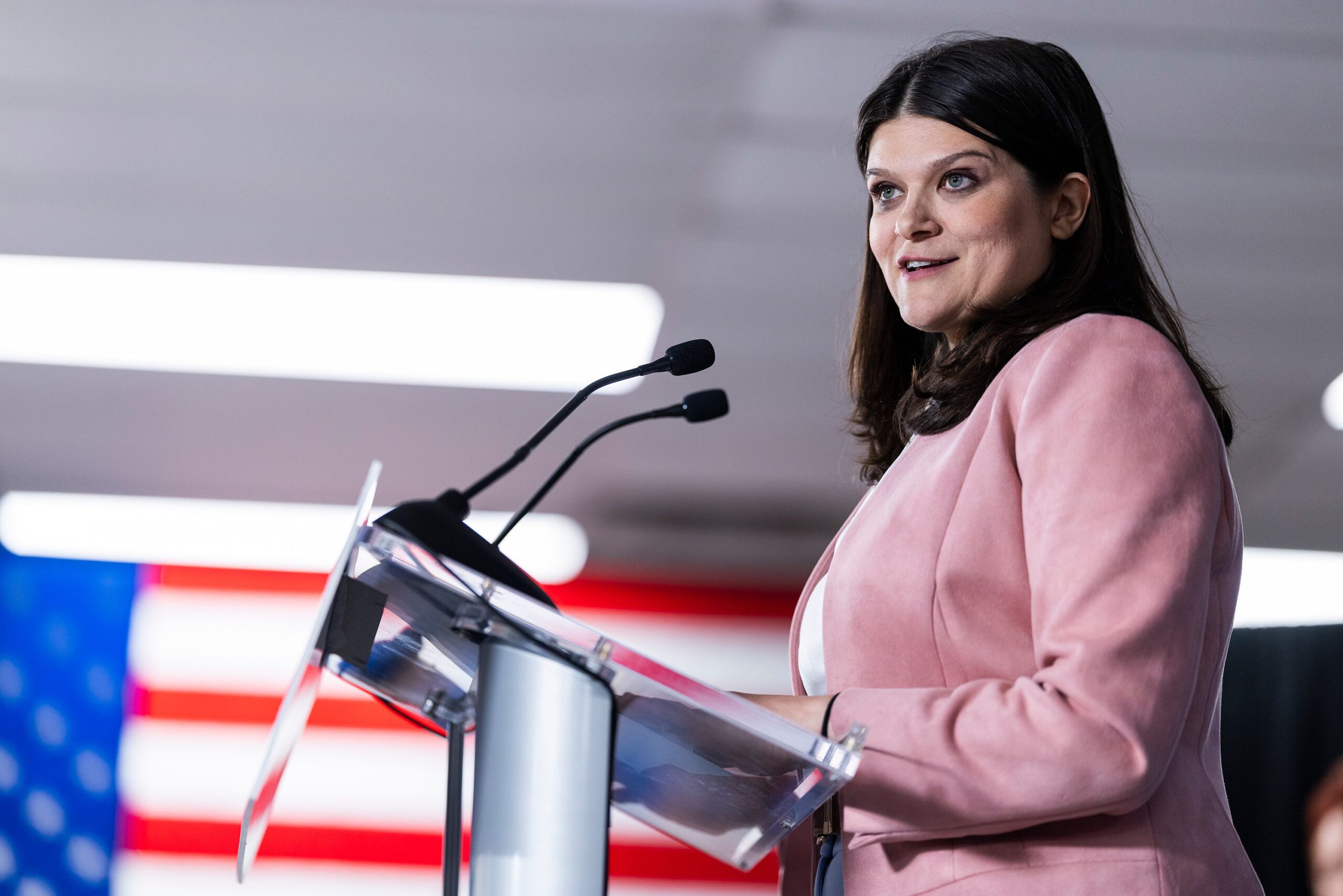
(CNN) — With under a week to go in what many polls are showing as a still tight Senate race in Michigan, Abdul El-Sayed hasn’t called his former primary opponent Rep. Haley Stevens in months — and there are no plans for that to change before Election Day.
Stevens narrowly lost to El-Sayed in August after polls showed him far ahead. She appeared with him at unity events in the days immediately after, including a hug at a state party unity breakfast, but conversations quickly dried up after.
Stevens has been doing some traveling, including to Israel as well as India as part of a congressional delegation trip, but even while back in Michigan, she’s been focused on the House and other races. And while she has offered to help and El-Sayed’s campaign has absorbed some of her former campaign staff, they have not been directly in touch, according to four people familiar with the matter.
Though Stevens joined Democratic gubernatorial nominee Jocelyn Benson for a bus tour in the state just this past weekend, she is not scheduled to make any joint appearances with El-Sayed between now and Tuesday — including the day before the election, when he is expected to headline an event in her home base of Oakland County.
Stevens has not participated in any of El-Sayed’s previous eight events in Oakland County or anywhere else in the state.
Tensions between former primary rivals aren’t unique in this year’s midterms. In Texas, Rep. Jasmine Crockett has not campaigned with James Talarico after he beat her for the Democratic Senate nomination. But El-Sayed is still trying to motivate core Democratic constituencies despite running in a state that hasn’t elected a Republican senator in 30 years — and as his opponent, Mike Rogers, directly appeals to “Haley Stevens Democrats,” notably Black and Jewish voters who favored her.
Both exchanged bitter and personal attacks during the primary — El-Sayed said Stevens was controlled by pro-Israel interests and “literally the least capable candidate in America,” while she said of him, “Everyone in America understands you want to blame all of your problems on Jewish Americans.” Neither made much effort to build the relationship afterward.
Earlier this month, El-Sayed told CNN’s Laura Coates that he hadn’t appeared with Stevens because of her “extremely busy schedule,” adding “the best use of all of our time is to touch as many people simultaneously as we can.”
Asked on Sunday by CNN’s Dana Bash if she was still fully behind El-Sayed, Stevens replied, “Look, I’m on the Democratic ticket. I can’t say that I agree with everything that’s gone on.”
An El-Sayed campaign spokesperson said, “the Abdul and Haley campaign teams remain in close communication.”
Stevens declined comment.
Frustration is flowing both ways.
Privately, multiple people who are backing El-Sayed told CNN that they think he’s lucky to be running in what appears to be such a favorable national environment for Democrats, given the shortcomings they see in his campaign. But they also reflect a sense from multiple Stevens primary supporters who told CNN that they feel El-Sayed did not do enough to reach out after his narrow primary win, and that to them he seems unwilling to move past the intra-primary Democratic fight, either rhetorically or in relationships.
Then there’s David Kramer, a top Democratic fundraiser in Michigan who chaired Stevens’ primary campaign and was also the finance chair for Sen. Elissa Slotkin’s campaign against Rogers in 2024. On Tuesday, he announced that instead of his initial plan to skip the Senate race on the ballot, he’s voting for the Republican former congressman.
“The decision has not been easy,” Kramer said in a statement shared with CNN. “I have deep disagreements with Congressman Rogers on a great many policies, and I worry about a Republican senator’s allegiance to Donald Trump for the next two years. But I do believe that Mike Rogers is committed to keeping Jews safe in Michigan and in the United States and to clearly distinguishing between American enemies and allies, including our ally Israel.”
Two prominent Oakland County Democrats who wanted Stevens to be the nominee said that they’ve reached out to El-Sayed to offer help and not heard back. Others say they are skipping voting in the Senate race because while they will not support Rogers, the Republican nominee, they will not go with El-Sayed.
Oakland, in the suburbs of Detroit, is home to 1.3 million voters. In 2024, the county went for Democratic presidential nominee Kamala Harris by 10.5 percentage points, but not by as much as Joe Biden won there in 2020. Stevens beat El-Sayed in Oakland County by seven points.
“I don’t think he can win without Oakland County. I think he will win Oakland, but the question is by how much,” Dave Coulter, the Oakland County executive who is the first Democrat elected to that position and who endorsed El-Sayed after the primary, told CNN.
This all comes as some Democratic operatives around the country are quietly fuming that the race for what they believe should be a reliably blue seat is still in play and costing millions, even as the overall national political mood has been enough to buoy hopes of winning Senate seats in typically red states like Alaska, Kansas, Texas and Iowa.
Rogers continues to appeal to Jewish voters, noting a statement for which El-Sayed has apologized after an antisemitic attack at a synagogue. The Republican’s allies — notably President Donald Trump — have accused El-Sayed, who would be the nation’s first Muslim senator if elected, of being a “jihadist.” And Rogers has argued El-Sayed has links to extremist groups, allegations El-Sayed has denied and dismissed as Islamophobic.
Michigan has a straight-ticket voting option in the state that allows voters to select all the candidates from a party at once, and the state Democratic Party’s “One Michigan” coordinated campaign effort is promoting El-Sayed in Oakland County and all over the state along with other candidates.
“Democrats are coming home,” Mari Manoogian, a former state representative from Oakland County, told CNN after knocking on doors in West Bloomfield in recent days, “even with all the handwringing.”
State Sen. Mallory McMorrow, whose district includes part of Oakland and who ran against both Stevens and El-Sayed before suspending her campaign, said she’s seeing many organizers around and excitement bubbling from PTA meetings to a watch party she attended for Barack Obama’s rally with El-Sayed and Benson in Detroit on Saturday.
“If I had concerns, I would raise them, but I don’t,” McMorrow said. “It feels like they’re running the campaign they need to run.”
This story has been updated with additional information.
The-CNN-Wire
™ & © 2026 Cable News Network, Inc., a Warner Bros. Discovery Company. All rights reserved.
CNN’s Jeff Zeleny contributed to this report.
