Israel’s election ended in deadlock. Here are four ways out

By Tal Shalev, Kara Fox, Andrew Carey, Henrik Pettersson, Soph Warnes, CNN
Jerusalem (CNN) — Israel faces weeks, possibly months, of political limbo after final results show there’s no clear winner in its elections.
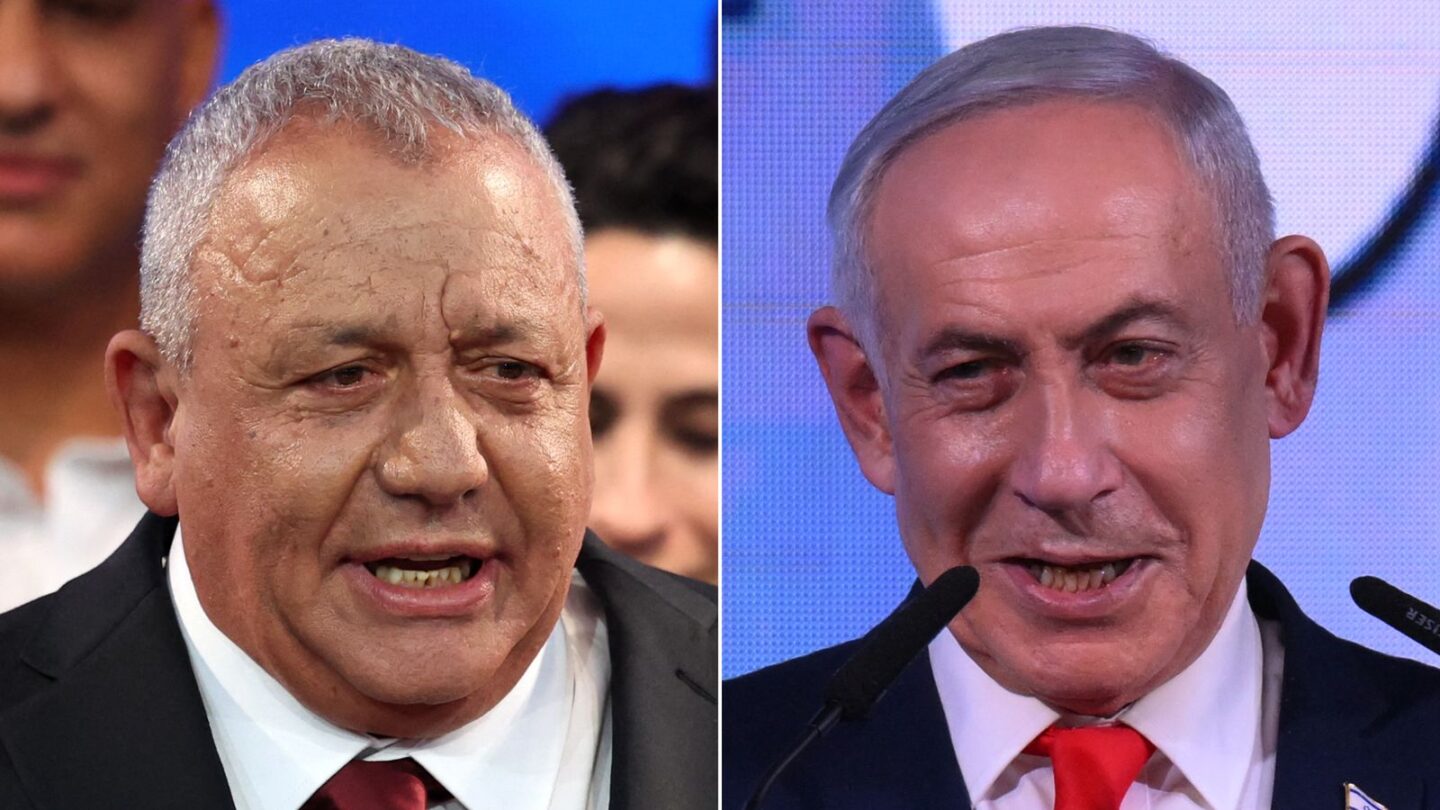
Neither of the two main blocs – one led by Prime Minister Benjamin Netanyahu’s right-wing Likud party, the other led by the centrist Yashar party of his main rival, Gadi Eisenkot – have reached the required 61-seat majority to form a government in Israel’s 120-seat parliament.
So how could a new government be formed?
Certainly, it does not look easy, with deep-rooted political and ideological divisions making any seemingly straightforward coalition almost impossible.
Still, it can be done, even if the result is a tenuous alliance that survives little more than a year or so in office. If party leaders are unable to figure it out in the 12 weeks they will have available, then Israelis will be back at the polls.
Here’s some potential scenarios that could avoid that.
Scenario 1: An opposition government
On paper, the opposition’s surest path to unseat Netanyahu is built on Jewish-Arab cooperation. And that is its biggest obstacle.
Two of the opposition bloc’s right-wing party leaders, former Prime Minister Naftali Bennett and former Defense Minister Avigdor Liberman, oppose any government that depends on the two Arab parties in parliament – the Joint List and Raam – whether it’s from inside the coalition, or as outside supporters of a minority government. The two leaders have hardened their positions since the Hamas-led attack of October 7, 2023.
Only one government in Israel’s history has enjoyed the full participation of an Arab party. Raam was part of an eight-party coalition that succeeded in ousting Netanyahu in 2021, but it collapsed just after a year in office.
Even without forming a government, the opposition parties could still work together and leverage their parliamentary majority to replace the Knesset speaker, along with other key positions, and thereby constrain Netanyahu’s caretaker government as it continued in power. But the prospects of assembling a coalition to replace him as Israel’s leader remain highly complicated and politically charged.
Scenario 2: A national unity government
Another option would see the implosion of the two blocs in favor of a unity government. Netanyahu’s Likud party would certainly be involved, along with some of his existing coalition partners, as well as – crucially – at least one party from the opposition bloc.
Netanyahu, in this case, is believed to be willing to part ways with his far-right National Security Minister Ben-Gvir – but not from far-right Finance Minister Bezazel Smotrich and the ultra-Orthodox parties.
Eisenkot, however, has ruled out sitting with Netanyahu, and it would be seen by many Israelis desperate to see the back of ‘Bibi’ as an act of betrayal if he were to change his mind.
Scenario 3: A Netanyahu bloc government with defectors
Another scenario could see Netanyahu encouraging defections from opposition parties or individual lawmakers.
But all four opposition bloc party leaders – Eisenkot, Bennett, Liberman and Yair Golan – have declared they will not sit with him. And with Netanyahu’s bloc a full eight seats short, persuading eight individual defectors sets a high bar.
Scenario 4: Another election
While all these possibilities are being discussed in the background, Israeli President Isaac Herzog will hold a very public round of consultations with the leaders of the parties that have made it into parliament.
Once he has solicited their opinions, he will task one of those leaders with the job of trying to form a government. Arab parties are expected to voice their support for Eisenkot, so the Yashar leader could be asked to go first.
Whoever gets the nod will have 28 days to complete the job, with a possible 14-day extension if needed.
If it all comes to nothing, the president will ask a second leader to have a go. They get 28 days only to sort it out.
After that, a majority of Knesset members could ask the president to task a third candidate, who then has 14 days to build a coalition.
If none of these produce a breakthrough, there will be another election.
The person who appears best-placed to navigate this timetable is Netanyahu. As caretaker prime minister, he can afford to wait: If main rival Eisenkot gets the first shot – and fails – the mandate is likely to pass to him. And if he fails as well, the political deadlock seems certain to lead Israel to another round of elections – with Netanyahu remaining caretaker for months, until another government is formed.
A repeat election – which would happen no earlier than next spring – is a real possibility, as these results look set to return Israel to a state of political paralysis and what would be the seventh general election in eight years.
The-CNN-Wire
™ & © 2026 Cable News Network, Inc., a Warner Bros. Discovery Company. All rights reserved.
