‘We just have to bother the crap out of these people’: How the GOP is confronting its voter enthusiasm deficit

By Steve Contorno, CNN
(CNN) — For Republicans, the midterm alarm bells are increasingly coming from inside their house.
In Georgia, Rick Jackson, the GOP nominee for governor, has expressed concerns that rural voters had grown complacent. Florida Gov. Ron DeSantis described turnout in his state as underwhelming and said, “Republicans have some work to do.” And in Texas, Bo French, the conservative firebrand running to be the state’s powerful railroad commissioner, has taken to social media to call out Republicans – especially men – in the counties he says are lagging behind Democrats.
“Get off the bench,” French wrote this week. “The other side is showing up.”
Across the country, in blue states and red, in marquee races and down-ballot contests, Republicans are confronting an unsettling reality: Democrats are showing a surge in enthusiasm their own party has struggled to match.
A recent CNN/SSRS survey found 61% of registered voters who are leaning Democrat this year are extremely motivated to vote, up significantly from 34% four years ago. Meanwhile, Republican enthusiasm has barely budged since the last midterm election. CNN/SSRS polls in the battleground states of Texas, Kansas, Michigan and Maine found Democrats hold a significant edge in likely voters that are highly motivated.
Republican voters are also less likely than Democrats to say it matters which party wins the House of Representatives in November, according to Pew Research polls. And while they were more attuned to the election than Democrats four years ago, the sentiments have flipped heading into November.
One Republican National Committee official acknowledged the uphill climb facing the party. The official, who asked not to be named to discuss the midterm strategy, said Republicans have a tougher task than Democrats. They must sell voters on President Donald Trump’s accomplishments amid intensifying economic concerns, while also convincing them a Democratic takeover of Congress would be worse.
“That’s harder than saying, ‘Orange man bad,’” the official said.
Christina Crosby, chairwoman for the local Republican Party in Durham County, North Carolina, said Republicans in Washington haven’t adequately communicated the president’s accomplishments to voters in her state, where a US Senate seat is up for grabs. With just days remaining until the votes are counted, she said the outcome remains “hard to read” but she senses a broader weariness among the public.
“There’s a fatigue across America with this political divide and I feel like there are people on both sides who are saying they’re throwing up their hands at all the texts and ads and saying, ‘I don’t want any more of this,’” she said. “It’s making it harder to get people out to the polls across the board. But the uneducated voter is the most dangerous thing.”
The challenge mobilizing Trump’s coalition
From the moment Trump returned to the White House, Republicans have maneuvered to overcome the historical headwinds that face the party in power and the challenge of keeping his voters engaged without him on the ballot.
Trump’s political operation and Republican fundraising gave the party an unprecedented financial edge over Democrats. Meanwhile, Trump and his advisers ignited a mid-decade redistricting war intended to boost their chances of keeping the House.
But those efforts now confront a political climate far more hostile than Republicans anticipated. An unpopular war, high gas prices, widespread economic unease and Trump’s sinking approval rating have threatened to overwhelm the advantages created by hundreds of millions of dollars of ad spending and a favorable electoral map.
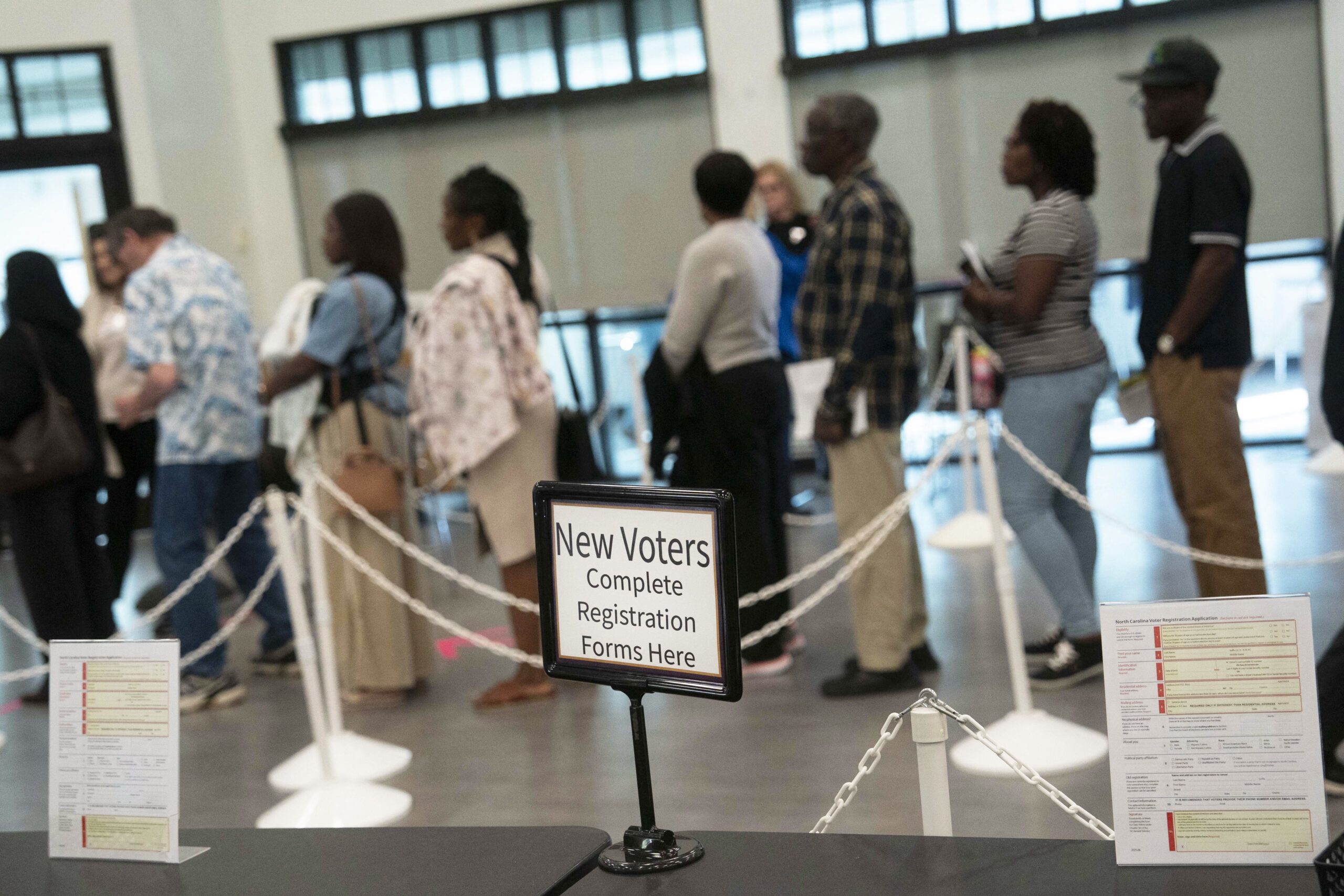
Perhaps the clearest evidence of the enthusiasm gap presenting itself at the ballot box so far is Democrats’ success turning out voters who might otherwise sit out a midterm election. In Kansas and North Carolina, for example, Democrats have opened large leads among voters who didn’t vote in one or both of the last two elections, according to a CNN analysis of early voting data.
If that advantage holds — far from a guarantee — it could prove a consequential reversal of two years ago when Trump won every battleground state and the popular vote in part by picking up new support from Americans who rarely participate in elections.
Hilario Deleon, chairman of the Republican Party in Milwaukee County, said his organization has spent much of the last two years focused on reaching the new voters that Trump turned out. While he believes they’ve made headway, he also acknowledged that many remain unaware of the stakes this November and why their involvement is even needed.
“Politics is secondary and I don’t blame them for turning on a sports game to get a break from the world,” Deleon said. “It’s not necessarily that they’re angry at the president. But you’re going to find most people just don’t understand why it’s so important to show up in a midterm cycle.”
It’s relatively new for Republicans to have to hound people on their side to cast ballots. Trump’s unique appeal in communities that tend to vote blue or not at all has transformed the party’s coalition, but it has also left Republicans struggling to replicate his success outside of presidential elections. Groups like Turning Point USA, the organization founded by the late conservative activist Charlie Kirk, have recalibrated to create large ballot chasing operations to track down these irregular voters, but it remains a work in progress.
“We’ve had several cycles to learn how to do it and there’s definitely a learning curve,” said Danedri Herbert, the GOP chairwoman in Kansas, the site of an unexpectedly competitive Senate race. “Democrats have been good at that for a long time, but we’re catching up to them.”
The RNC official said the challenge can be as basic as informing voters when the election is taking place.
“We just have to bother the crap out of these people to get them to vote,” the official said. “We’re talking 5, 6, 7, 8, 9, 10 times to get them to action.”
Rays of GOP hope
Despite the troubling early indicators, some Republicans see reason for optimism heading into the final days.
Herbert said any angst she felt looking at early voting returns a week ago has largely subsided and given way to confidence that the math is on her side. In Kansas, there are nearly 400,000 more registered Republicans than Democrats and she believes there are already indications they are making their presence felt.
Republican gains in voter registration in recent years, particularly in key battlegrounds, have strengthened the party’s position heading into the midterms, offering a potential counterweight to the Democrats’ enthusiasm advantage.
“Republicans are coming home, and they’re coming home fast,” she said. “I definitely feel a vibe shift.”
Republicans are also counting on Trump’s aggressive travel schedule to help mobilize their side. For months, Trump has urged Republicans to vote as if he’s on the ballot. (Democrats, for their part, have long argued that Trump also motivates their voters wherever he goes.)
Doug Deeken, chairman of the Wayne County Republican Party in Ohio, said voters in his northeast corner of the state are responding to the message. Trump and Vice President JD Vance have made multiple visits to the state as Republicans face exceptionally competitive races for Senate and governor.
“If the president only had time to visit Michigan and Texas, maybe that would have worried me,” Deeken said. “But they’re spreading the love around.”
Deeken said Republicans in his county are outpacing their 2022 performance. To him, it’s a sign that the polls are missing quiet Republican voters and that conventional wisdom about midterms may not apply to an election as unusual as the second midterm of a norm-busting president serving nonconsecutive terms.
“Every time we think we know how politics works, especially in the era of Donald Trump, it changes,” he said. “People are trying to apply old rules to a new day.”
The-CNN-Wire
™ & © 2026 Cable News Network, Inc., a Warner Bros. Discovery Company. All rights reserved.
CNN’s Edward Wu and Ariel Edwards-Levy contributed to this report.
