Centrist Democrats warn party leaders not to ‘go too far’ after midterm wins

By Sarah Ferris, CNN
(CNN) — Democrats just won what could be their largest House majority in decades but some battle-tested centrists are already warning their party not to lose it in 2028.
Those now-emboldened Democrats, who have long competed in battleground districts, are now urging party leaders to stick to this fall’s core promises on affordability — or risk a backlash in the next election.
Privately and publicly, these Democrats are urging leaders to focus on kitchen-table issues and avoid culture-war fights they believe could divide the party and invite Republican attacks, according to nearly a dozen lawmakers and aides.
For many, that means steering clear of transgender issues and policing reform bills they fear Republicans would weaponize. They also want to avoid left-wing priorities such as ending US support for Israel or abolishing Immigration and Customs Enforcement.
Several Democrats also called for restraint in the party’s oversight agenda, warning that talk of impeaching President Donald Trump or his Cabinet should not overshadow that focus.
“We’ve got to be very careful that we don’t go and do everything,” Rep. Henry Cuellar, a battleground Democrat who’s survived previous red waves, told CNN. “I just hope that we don’t get carried away, get caught up in these fringe issues.”
“It’s like a rubber band, it’ll snap back,” he recalled telling then-Speaker Nancy Pelosi’s team roughly two decades ago as he argued that issues like cap-and-trade climate change legislation could contribute to a 2010 wipeout.
Centrists like Cuellar had been in retreat since the end of the Biden era, watching their party move left in primary after primary. Many expected next year’s Democratic caucus to be the most liberal in history, with an insurgent wing of democratic socialists wielding power.
Now, Democrats in purple and red seats insist they will be the most powerful bloc in next year’s House. The party will have to defend more than 50 Democrats in seats Trump won — compared with a far smaller number this cycle.
That sets up a potential clash with an equally emboldened far left — which just saw its strongest-ever election cycle, ousting a slate of Democratic incumbents this year.
Several of the most progressive House members, including Reps. Ro Khanna and Delia Ramirez, are already calling to “abolish ICE” and “block the bombs” next year. Rep. Ayanna Pressley has added to that list: “Don’t just talk about racial justice—pass reparations NOW.”
“We are going to try to govern, progressives are going to try to make a point,” one Democratic aide working for a centrist member told CNN. “This is not the time to show how progressive we can be. People need to see us fighting.”
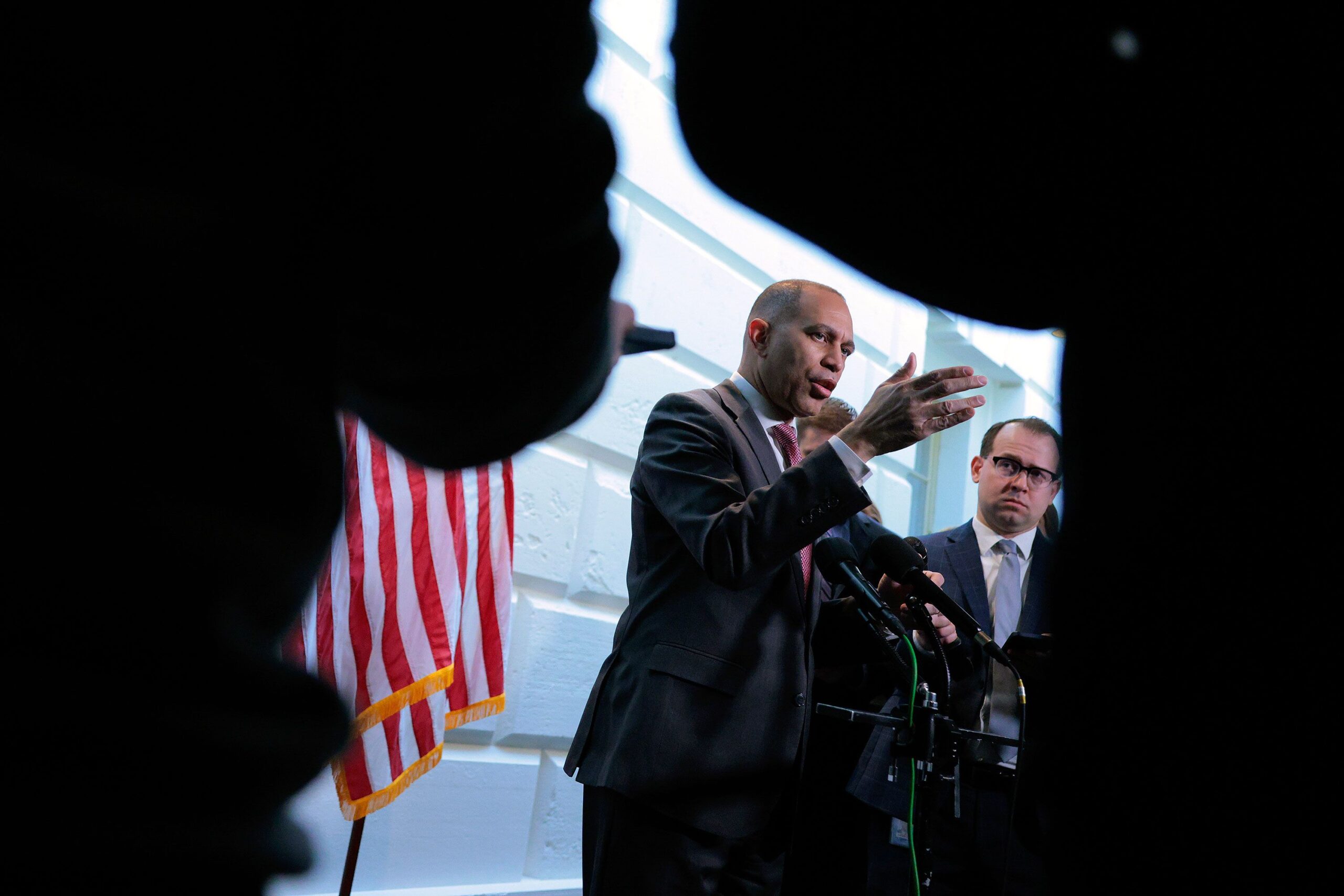
Balancing those factions will fall to House Democratic Leader Hakeem Jeffries, who is on a path to become the next speaker.
Centrists believe Jeffries understands his mission: deliver on affordability and protect his new incumbents in battleground seats in two years. At the same time, members such as Khanna are pressing him to hold key floor votes on priorities such as Medicare for All.
Many also believe liberal Democrats in Jeffries’ orbit, including Congressional Progressive Caucus Chair Greg Casar of Texas, share that focus. In a post-election memo to his members, Casar wrote: “Our top priority will be passing populist policies that deliver on Democrats’ promise to end the affordability crisis,” according to a copy obtained by CNN.
Rep. Greg Stanton of Arizona, a senior member of the centrist New Democrat Coalition, said voters gave Democrats control of Congress to do one thing: lower the costs of food, housing, health care and energy.
“If we get too far afield from those things, we could lose trust with the American people,” said Stanton, whose name is sometimes floated as a contender to be the next House campaign chief.
“Democrats dominated this election and yet we still need to govern with the humbleness of knowing that the election was a reaction to people being pissed off at Trump and House Republicans. We still need to earn the trust of the American people if we want a durable majority.”
Centrist Democrats are also urging caution in the push to hold Trump and his administration accountable. Many of these members fear there could be a rank-and-file push to impeach a new Cabinet secretary every few weeks. Some are unsure they would go beyond impeaching Defense Secretary Pete Hegseth, according to multiple people familiar with internal discussions.
“They need to be very thoughtful and deliberate on what sort of impeachment investigations strategy is pursued,” said Phil Gardner, a senior adviser for the moderate campaign group Blue Dog Action, which helped double the number of moderate Blue Dog Democrats in the House next year.
“There is so much corruption, so many things to be outraged about, that it could very quickly end up consuming the entirety of the caucus if we’re not careful,” Gardner said, adding: “Impeachment is a very grave decision.”
The looming ‘Medicare for All’ fight
One of Jeffries’ biggest challenges next year will be defining the party’s health care agenda, as even some Democrats in red seats advocate Medicare for All.
Democrats agree on Jeffries’ early goals: vote to restore billions of dollars in Obamacare subsidies and prevent steep Medicaid cuts next year.
Beyond those goals, pressure is mounting for party leaders to embrace the left’s push for universal health care, despite widespread unease in the caucus. Populist Democrats such as Sam Forstag in Montana and Bob Brooks in Pennsylvania ran on issues such as Medicare for All — and won.
“I think everybody in this country should have the choice to join Medicare,” Forstag said in an interview with CNN days after he won. He added that seniors in his district have only a single provider to choose from for Medicare Part B plans, while people with private insurance have only two choices — both of which just dramatically raised rates.
“I am, and we should all be, very angry that the last time Democrats had unified control of our government, they made tiny piecemeal incremental changes, and they applied Band-Aid solutions instead of actually fixing our healthcare system,” Forstag told CNN, summing up his push for big change.
Jeffries has distanced himself from the left’s signature Medicare for All bill, aggravating his more liberal members.
But that has reassured many moderates who want to avoid a major intraparty fight over healthcare reform, particularly with Trump in the White House. They recall how poorly the debate ended for them in 2010.
“He doesn’t need to swing for the fences on day one in the way that some might demand,” one moderate Democrat told CNN. “If we go too far, we lose the House in 2028.”
The-CNN-Wire
™ & © 2026 Cable News Network, Inc., a Warner Bros. Discovery Company. All rights reserved.
