Bank of America fined $1.2 billion by Treasury Department for anti-money laundering and sanctions laws violations

By Samantha Delouya, CNN
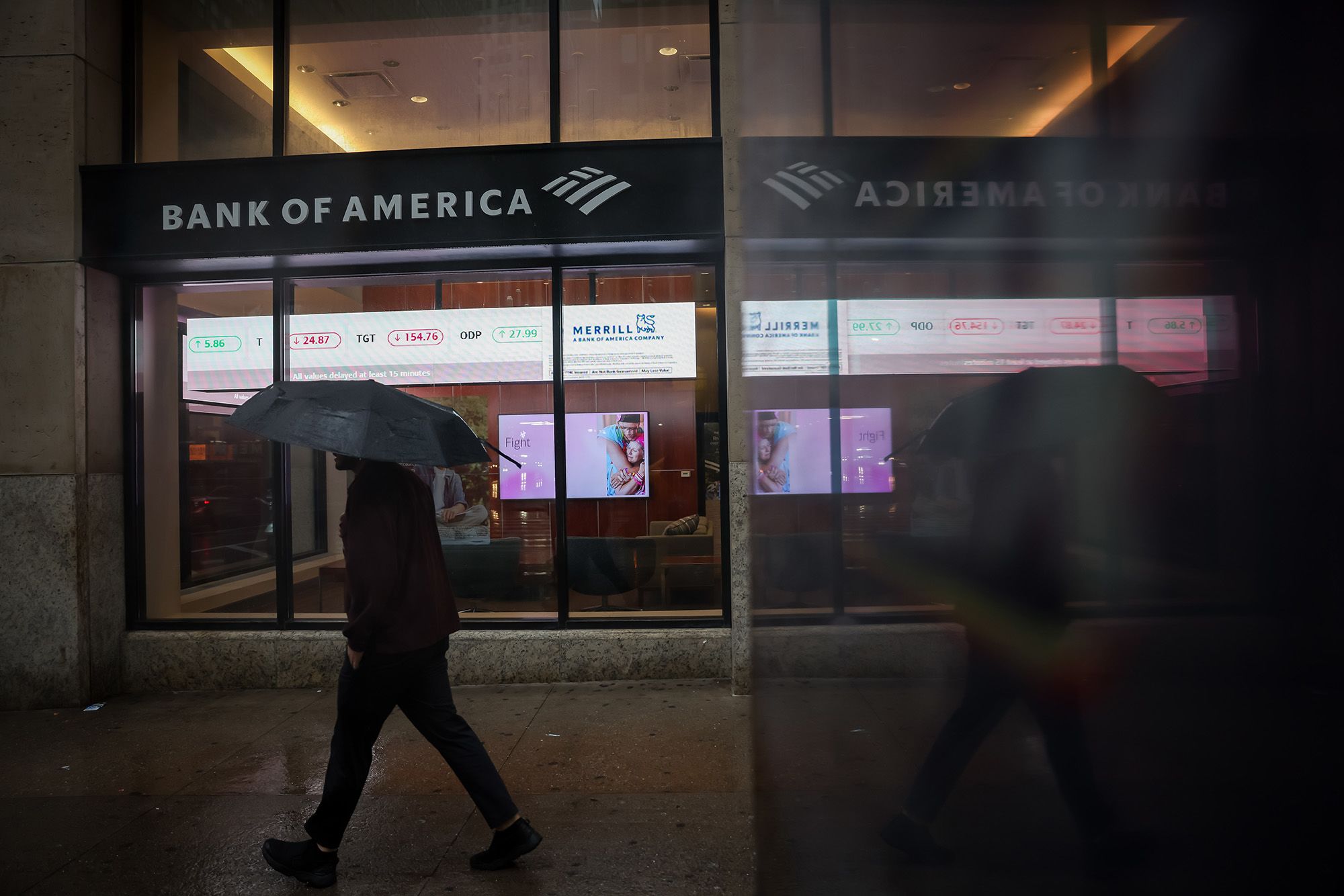
(CNN) — The US Treasury Department on Tuesday announced it was imposing a more than $1.2 billion fine on Bank of America, accusing the bank of violating anti-money laundering and sanctions laws.
The bank, which is the second-largest in the US, failed to mitigate and report “priority national security risks, including Chinese Money Laundering Networks and illicit finance along the southwest border,” the Treasury Department said in its announcement.
“When a bank of this size fails to meet its anti-money laundering and sanctions obligations, the consequences extend far beyond its own walls, exposing the entire U.S. financial system to significant illicit finance risks,” said Treasury Secretary Scott Bessent in a statement.
“Today’s actions send a clear message that even the biggest financial institution[s] are not above the law,” Bessent added.
In a statement, Bank of America said it was working with regulators to reach penalty resolutions.
“We have invested billions of dollars in technology and dedicated thousands of employees to combat financial crime, and our team is far along with and committed to completing the work required to address the issues raised by our regulators,” a Bank of America spokesperson said. “We will continue to support federal and local law enforcement across thousands of investigations and report hundreds of thousands of suspicious activity reports each year.”
The spokesperson also said the Treasury Department’s penalty will impact the company’s quarterly earnings results, which are expected to be released Wednesday.
“Our third-quarter results will include a non-tax-deductible charge of $1.2 billion impacting net income by approximately 17 cents per share. We have already dedicated substantial personnel and resources to our ongoing remediation efforts, and those costs are in the current expense base,” the spokesperson said.
The $1.2 billion fine is the third-largest ever imposed by the Treasury Department’s Financial Crimes Enforcement Network (FinCEN), following a record $3.4 billion fine against Binance in 2023 and a $1.3 billion penalty against TD Bank in 2024. Both of those fines were also accompanied by charges from the Justice Department, though there is no accompanying Justice Department action for the Bank of America fine.
The second Trump administration has taken actions against big banks for the practice of “debanking,” including through executive orders. Earlier this year, President Donald Trump also filed a $5 billion personal lawsuit against JPMorgan Chase, alleging that the country’s biggest bank closed his account for political reasons. However, the fine against Bank of America is the largest anti-money-laundering penalty the Trump administration’s Treasury Department has imposed on a major bank.
As part of the total fine, $750 million will go to the Office of the Comptroller of the Currency (OCC) as a civil penalty, making it the largest OCC penalty in history.
As part of the settlement, Bank of America admitted that it willfully failed to have proper safeguards in place and failed to report suspicious activity, the Treasury Department said.
Bank of America failed to respond in a timely and meaningful way to red flags involving suspicious customers, including those with ties to narcotics trafficking, even after compliance personnel escalated concerns, Treasury said. As a result, the bank, which processed more than $9 trillion in transactions last year, failed to report over $5 billion in suspicious activity.
CNN learned that Bank of America’s sanctions-screening filter had a design flaw that prevented it from appropriately prioritizing certain potentially prohibited transactions. Specifically, when a transaction matched an individual’s name and date of birth on the US Treasury Department’s sanctions list, the bank’s system did not flag the transaction as high priority. The Treasury Department maintains a list of thousands of individuals and entities, including terrorists, narcotics traffickers, and companies subject to sanctions, whose assets may be blocked and who are generally prohibited from conducting transactions with US persons or entities.
These breakdowns can cause harm to US sanctions programs, including the country’s Iran and counter-narcotics programs, which was the case with Bank of America, CNN learned.
Dennis Kelleher, the CEO of Better Markets, which advocates for tougher regulations against banks, said in a statement that the $1.2 billion fine was small compared to Bank of America’s revenue.
“Banks don’t break laws; people do, and until those people – including most importantly executives and supervisors – are personally and meaningfully punished by firings, prosecution, fines and being barred from employment in the industry, these crimes are not going to be stopped,” Kelleher said.
Bank of America’s stock (BAC) fell more than 2.5% in after-hours trading after the fine was announced.
“The OCC and FinCen are sending a message to BoA and to all banks — if you don’t fix the problem quickly they’ll be a big fine,” said Aaron Klein, the former deputy assistant secretary for economic policy at the Department of Treasury under President Barack Obama. “The OCC and FinCen have a lot of penalties they could impose beyond money — they can essentially fire people not just from BoA but from the entire business of banking.”
“Everything the OCC is asking BoA to do to have a stronger anti-money laundering compliance program costs money, reducing the banks’ profit,” Klein added.
CNN’s Matt Egan contributed to reporting.
The-CNN-Wire
™ & © 2026 Cable News Network, Inc., a Warner Bros. Discovery Company. All rights reserved.
