Families of Mexico’s disappeared hope World Cup draws attention to their plight

By Angelo Claure
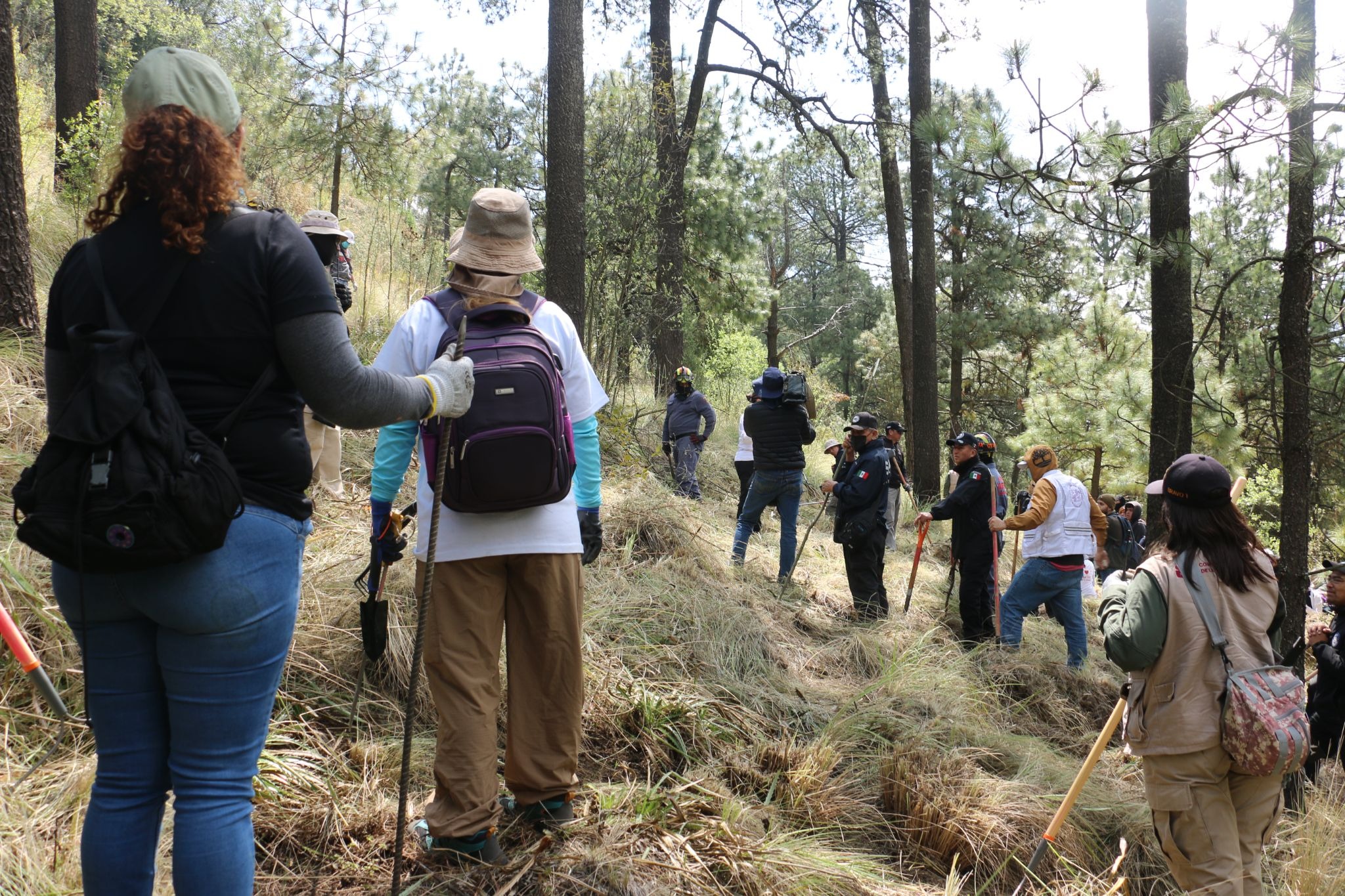
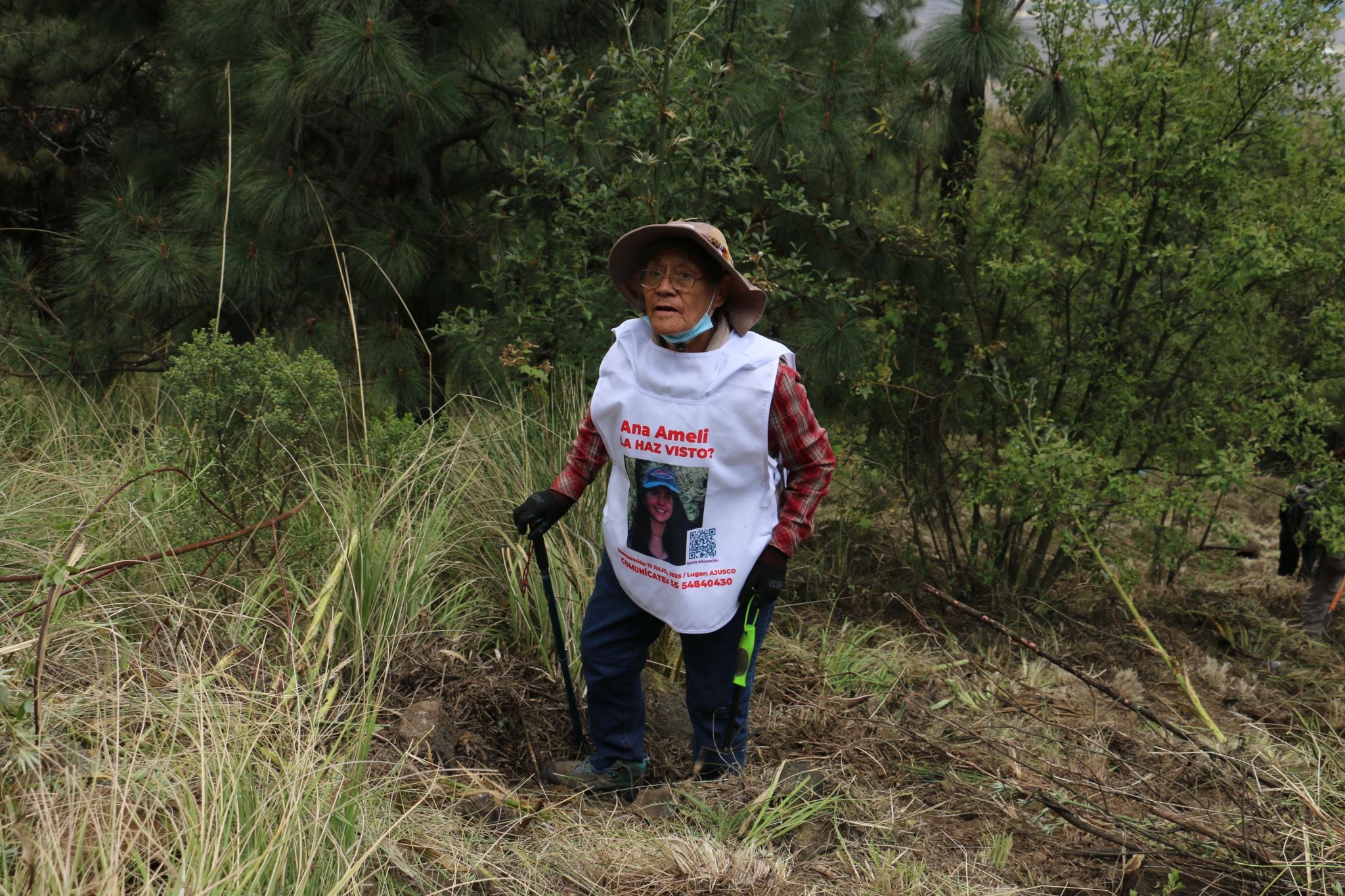
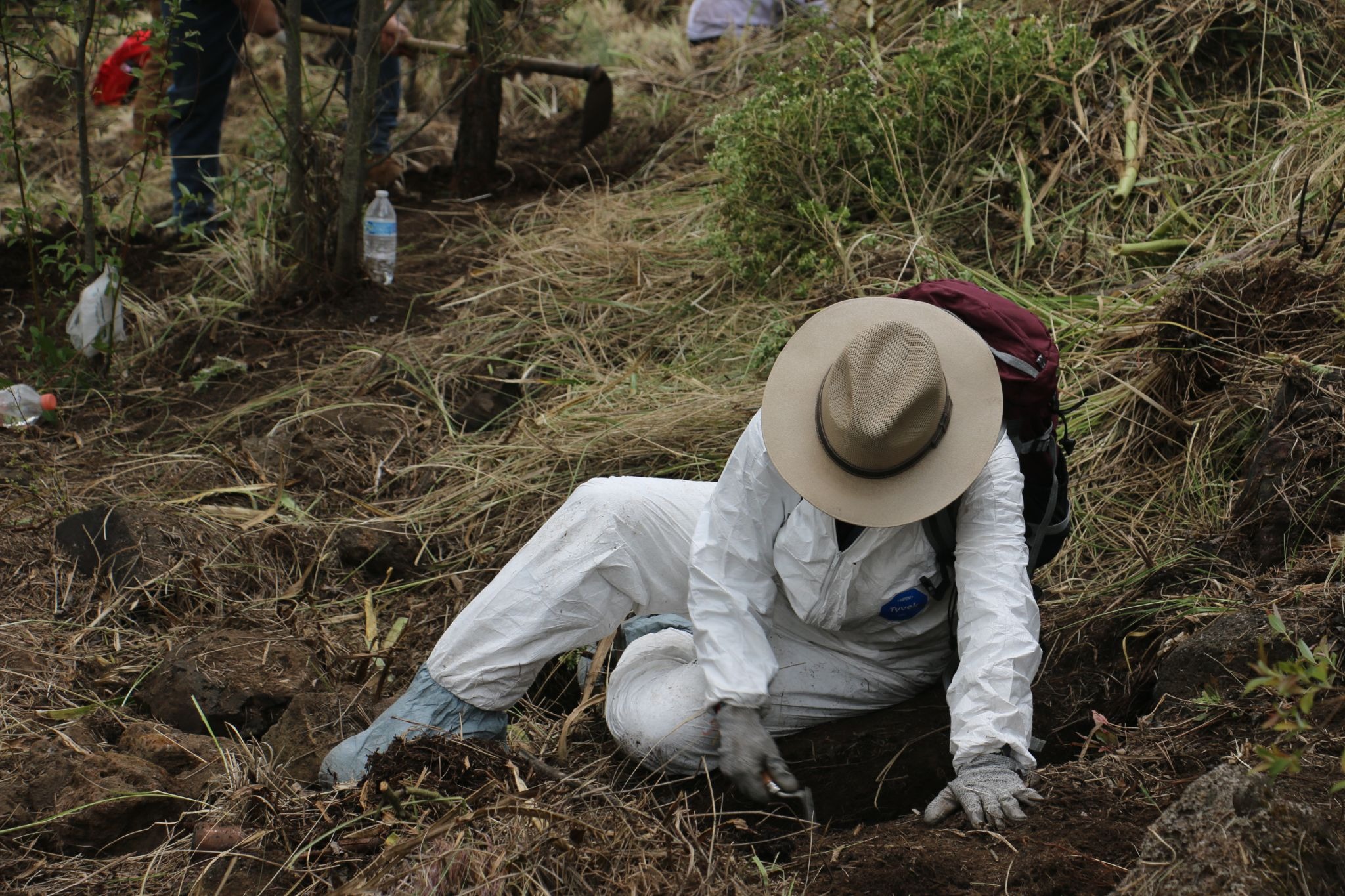
MEXICO CITY – On the outskirts of the Mexican capital, in the thick forests of the Ajusco mountain and the extinct volcano Xitle, Ana Ameli’s 75-year-old grandmother prepares for another painstaking search for her missing granddaughter.
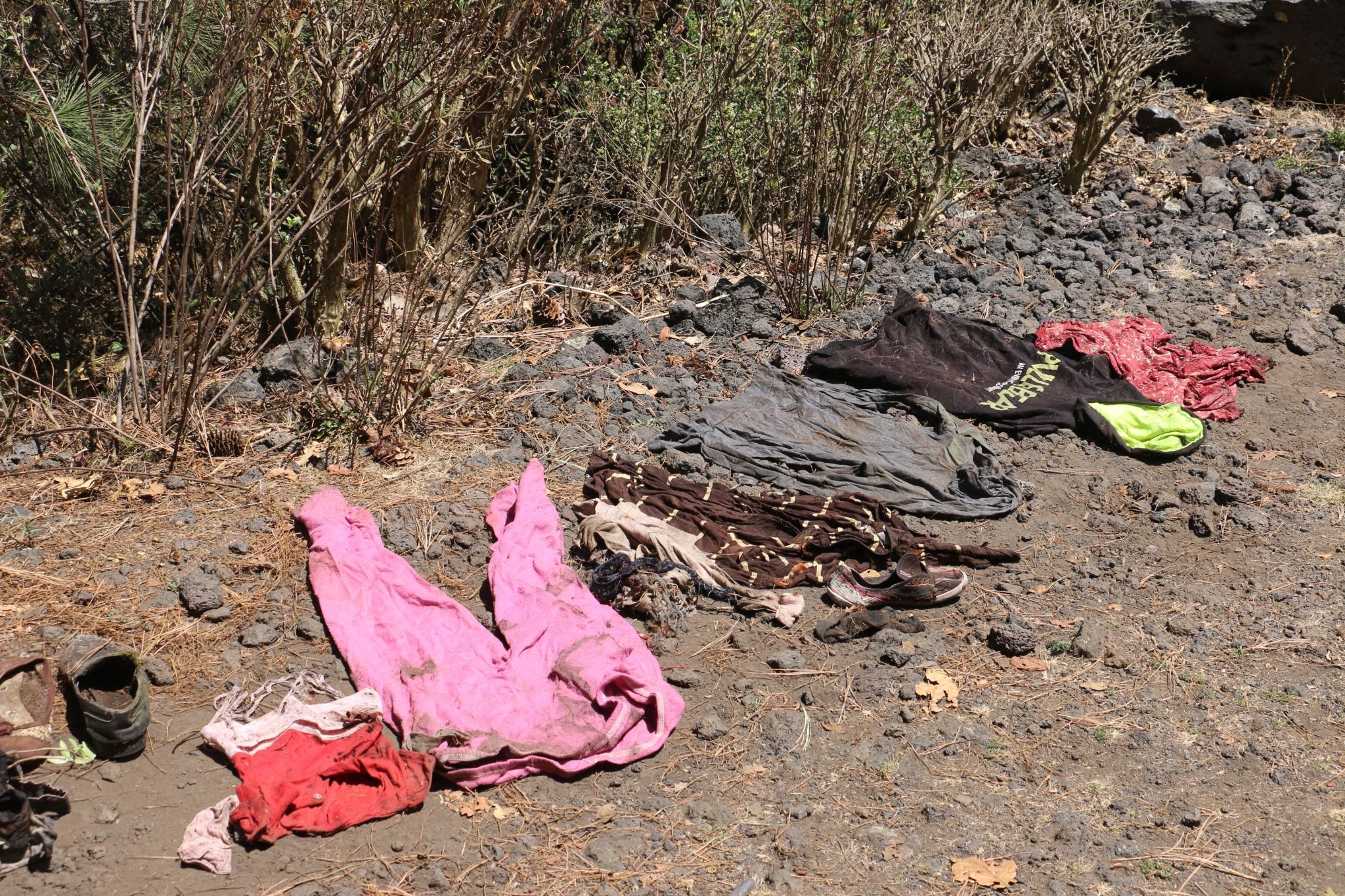
She will scratch and claw at the earth for hours, weeks, months — as long as it takes, she says. Through several long hours, her small hands will work tirelessly as she looks to uncover bones, fragments, clothing, anything that could reveal what happened to Ana Ameli.
“I can feel her nearby. I believe she’s still alive,” Lucrecia Franco Pavón says, looking up to the nearby hills. “I’ve had dreams of her alone in a corner, scared, but alive. I can feel her pulling on my backpack.”
Franco Pavón is among thousands of relatives searching for missing loved ones across Mexico. Since the government declared war on drug cartels in 2006, the number of the disappeared has reached 140,000 people, and counting. Families say authorities have not adequately acknowledged and acted, leaving them with nothing but grief, anger, and a deep sense of abandonment.
Nothing, that is, except the old shovels, picks, rakes, and rods that relatives bring to the searches. Searches that are becoming commonplace around the country. The families say they’ve been left to do this alone. They’ve all but given up hope that authorities will help.
“These disappearances shouldn’t exist,” says Vanessa Gamez, mother of Ana Ameli, who disappeared on July 12, 2025, while on a hiking trip. “We know that there is crime in any country. But a disappearance is one of the most terrible crimes imaginable.”
An uncomfortable reminder of the missing
As Mexicans throughout the borderlands and beyond look to their homeland as it hosts a series of public festivals and World Cup matches — an event drawing millions of fans from around the world — the mothers searching for their missing children say they won’t be forgotten or ignored.
Madres Buscadoras (Searching Mothers) – one of the 250 or so collectives of families – plan a mass protest outside Mexico City’s Banorte Stadium, the former Azteca Stadium, during the inaugural game on June 11.
In the run-up to the opening match between the Mexican and South African national teams, workers at Banorte Stadium and other key infrastructure projects — including Mexico City’s main airport — race to complete renovations funded by government and private investments.
Gamez, one of the protest organizers, expects thousands of demonstrators to gather outside the stadium, carrying placards and photos of their missing loved ones. She has spent almost a year searching for her daughter and demanding answers from authorities.
A void where there should be answers
Ana Ameli was a 19-year-old biology student at the Autonomous University of Mexico, the nation’s largest public university. She had recently decided to study physical therapy and fulfill a dream of helping people. According to her family, she vanished last year during a summertime hike up to the Pico del Águila, the Ajusco range’s dominant mountain, rising 12,800 feet above sea level. The peak’s sweeping views of Mexico City and the nearby Iztaccíhuatl and Popocatépetl volcanoes are irresistible to hikers.
Her friends were supposed to meet her at the mountain, but didn’t show up. Her family believes Ameli decided to ascend alone and eventually reached the summit, where she sent her father photographs of herself smiling, enjoying the view, and of people she had met along the way. She is thought to have descended alone. She has not been seen since.
“We don’t know if she’s being violated, we don’t know what conditions she’s in, if she’s dead or not, it’s terrible, it's inhumane,” Gamez says.
Left alone to search and grieve
One of Mexico City’s largest searching collectives, Una Luz En El Camino – A Light On The Path – was founded in 2021 by Jacqueline Palmeros, after the disappearance of her 21-year-old daughter, Jael Monserrat Uribe.
As she began searching, Palmeros says, she quickly realized the government’s support would be unreliable.
“There was a system that was negligent, omissive, indolent, and corrupt,” Palmeros says. “It didn’t work for the search and rescue of missing people in Mexico City, nor for the whole country."
After years of conducting her own investigation and participating in searches, Palmeros found her daughter. All that remained was her skull and two fragments of vertebrae, found in the same Ajusco range where Ameli’s grandmother and search collectives continue combing the terrain.
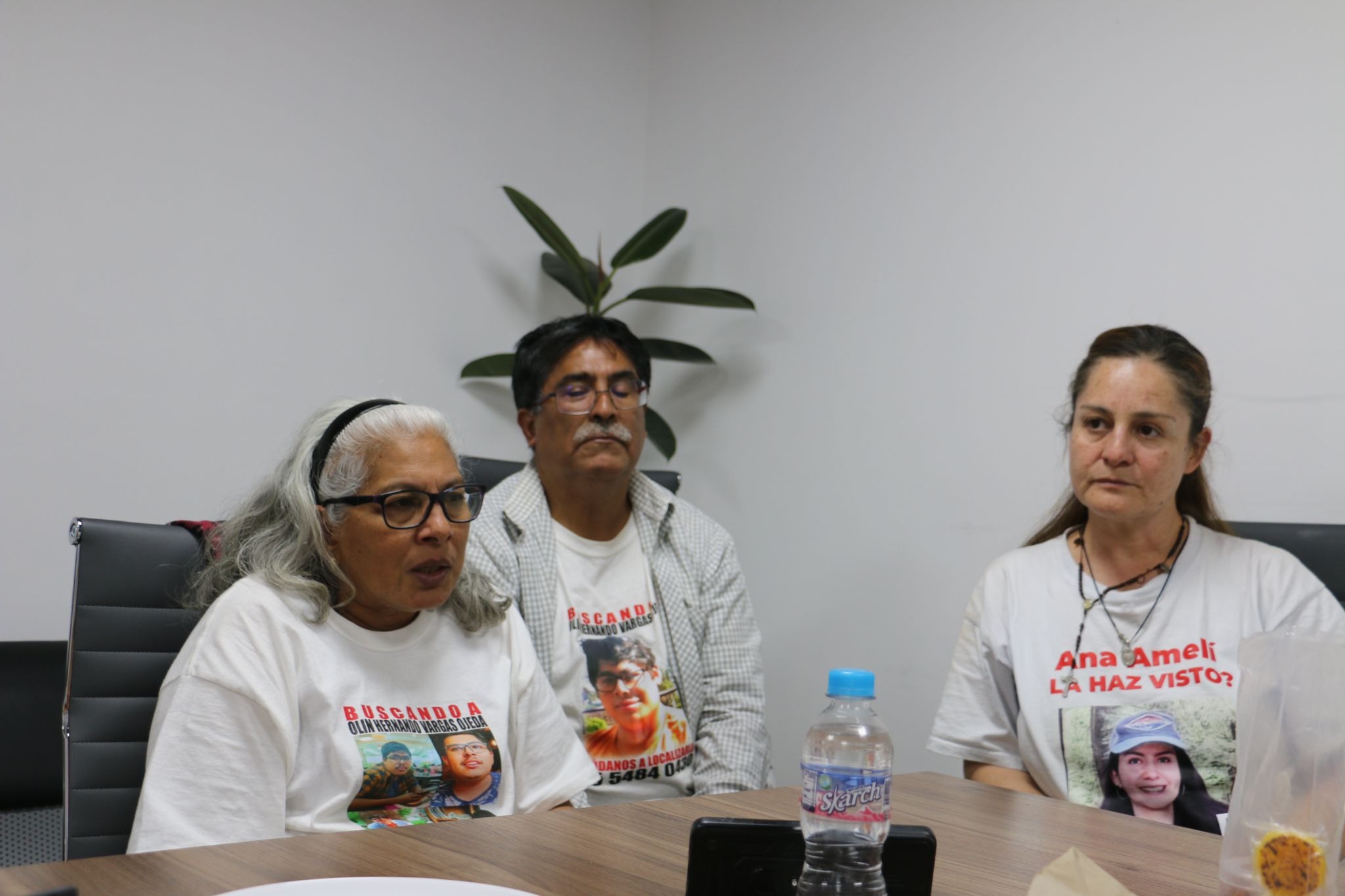
The parents of Olin Vargas Ojeda, who disappeared in Ajusco on Nov. 26, 2024, described what they call a maze of bureaucratic failures involving multiple levels of government. They say they were repeatedly sent from one office to another — from local authorities to federal agencies — while crucial information about their son’s case was missing or mishandled.
Police initially told the family they had found nothing in Vargas’s phone or laptop. But after his belongings were returned, the family hired an independent cybersecurity specialist who uncovered crucial conversations on both devices that they believe could have identified people connected to
his disappearance.
“What we find is that in every case the same thing happens,” Vargas’s father said. “We are left with police who have no investigative training and prosecutors who also aren’t prepared, unaware of the law and protocol of immediate searches.”
His family insists there were immediate signs of foul play in Vargas’ disappearance. He had driven to Ajusco to meet a friend he hadn’t seen in years. Investigators later found a blood-stained piece of his T-shirt and the family truck crashed against rocks. His parents believe he was lured to the mountainside and tried to escape.
According to the family, police told them someone had contacted them demanding six million pesos – US$350,000 – for his return. Eventually, they say, investigators claimed they lost contact with the kidnappers. That was that, the family says. The investigation went nowhere.
“The gravest part about this situation is that the police knew from the second day who was responsible and they didn’t act to save his dignity or his life,” Vargas’ father says. “Since then we knew nothing else.”
International scrutiny on Mexico
The crisis has generated international condemnation. The UN Committee on Enforced Disappearances warned the government’s failures could amount to crimes against humanity, citing what it described as widespread and systematic attacks against civilians all over the country.
Mexican President Claudia Sheinbaum has pushed back against calling the disappearances a national crisis, even though her administration has delayed releasing updated statistics on the disappeared.
Still, the Comisión Nacional de Búsqueda – National Search Commission – established in 2018 to coordinate search efforts, says there’s been some progress. The State of Mexico, which surrounds most of Mexico City but does not include the Ajusco mountain range, has the country’s highest number of disappearances – 14,666 recorded cases, followed by the northern state of Tamaulipas with 13,733, and Jalisco state with another 12,779.
“I think we are setting an example of a model that can work for the country,” says Luis Gomez, a senior official overseeing Xitle-area searches. “It’s a system where all institutions participate, families are involved, and searches can begin within hours of disappearances.”
Other commission officials declined to comment for this article, and referred to organized searches as the best available options for families at the moment. One employee, speaking unofficially, quietly mentioned the growing drug cartel presence in and around Mexico City may be behind disappearances near Ajusco.
Families searching for their loved ones say the system has simply failed, forcing them to go it alone.
During searches, local police, the military, and the National Guard are on hand but often remain at search perimeters, while relatives do the actual digging and searching. Authorities say the armed presence is necessary because organized criminal groups, including cartels, and illegal loggers operate in rural areas.
“Why are we the ones searching?” one mother asks during a recent operation. “The police and military stand around us while we do their job. We don’t want forensic searches; we want to find our loved ones alive.”
As the World Cup approaches, the collectives say they will continue pressing their demands.
“Don’t play with our pain,” Gamez says. “We are living through a human crisis, with forced disappearances and cases where the government is directly involved."
Organizers say their protests will not block access to the inaugural match or disrupt the tournament. They only want one thing: the eyes of the world to finally see what they have endured for years.
“People coming to the World Cup should know Mexico isn’t safe,” Gamez adds. “If you disappear or if something happens, they won’t look for you, they won’t find you.”
Angelo Claure is a graduate student at UC Berkeley Journalism.
