How to choose the best online school for your child’s needs


Are you evaluating online K-12 schools but not sure how to make the right decision? You’re not alone. Many parents want to find a suitable online school to supplement or replace a traditional brick-and-mortar school. The key to finding the best one is understanding your child’s learning style and support needs and finding an accredited school to match them.
Explore the top factors to consider when choosing an online school that suits your child’s goals, needs, and interests in this guide by Commonwealth Charter Academy.
Why Should You Consider an Online School?
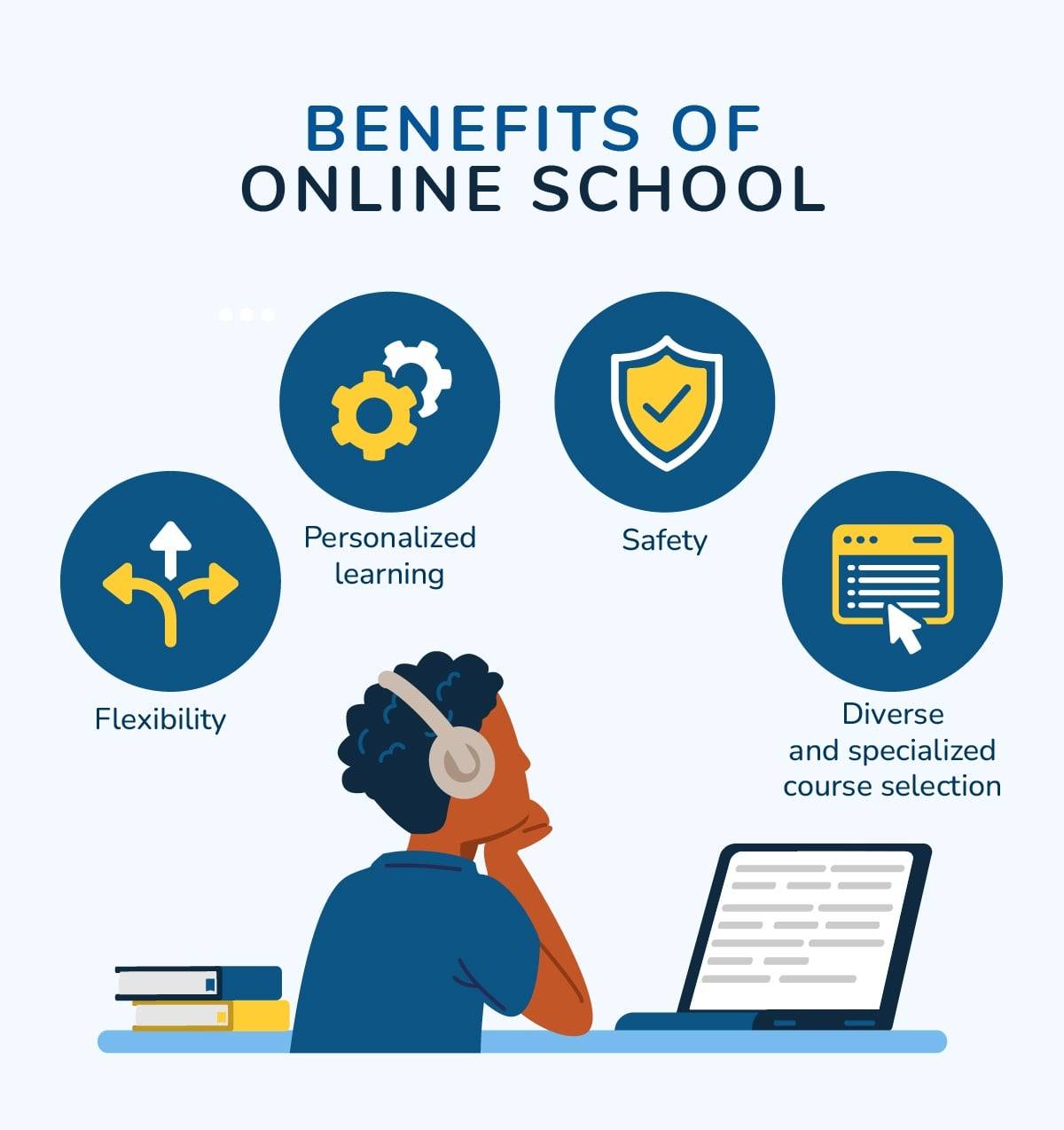
Online schools offer several benefits over traditional classrooms. Many parents choose them for the convenience, flexibility, and personal attention their children enjoy. Here are some of the reasons to consider an online school:
- Flexibility: Online learners don’t typically have the fixed structure of a traditional school day. The classes may still be scheduled, but the general learning structure is more flexible. Your child can work when they’re most productive and focused or can better balance extracurricular or other activities.
- Personalized learning: Online schools allow learners to progress at a comfortable rate while also pushing them to grow. For example, if a learner excels at a certain subject, they can move ahead without waiting for the rest of the class to catch up. If they find a particular subject challenging, they can spend more time on those topics.
- Safety: Concerns like overcrowded classrooms or bullying, which can make traditional schooling stressful, are not a problem with online learning. Online learning can provide a safe and supportive space where students can focus on their education without that kind of added stress or anxiety. Online schools may also be a more comfortable option for students who need mental health support.
- Diverse and specialized course selection: Online schools offer a wider variety of courses that can cater to students with specific interests or those looking to pursue personalized learning paths.
Factors to Consider When Choosing the Best Online School for Your Child
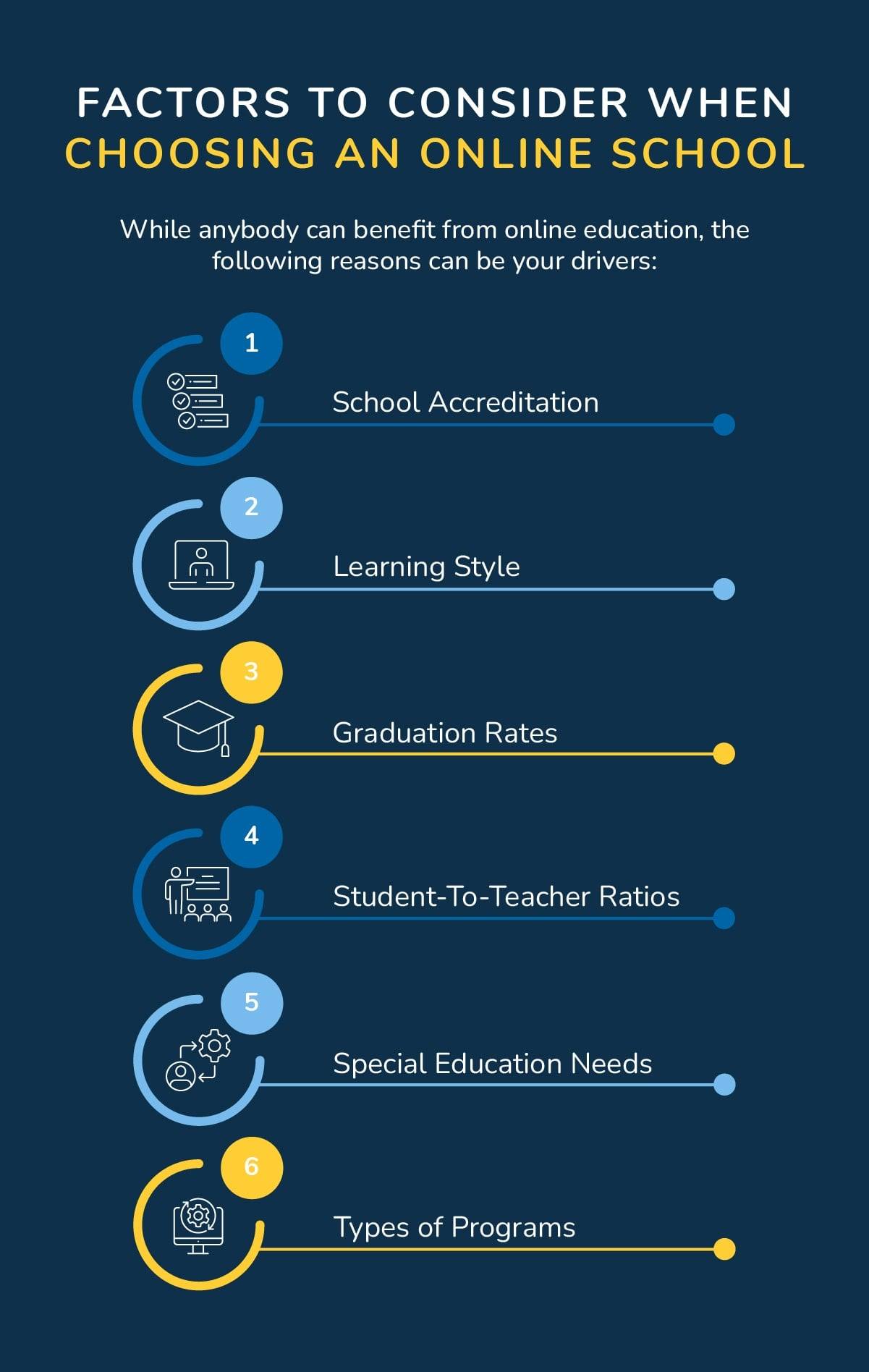
Not all online schools are equal. As a parent, you need to choose the one that will suit your child’s unique learning preferences and long-term goals. Consider the following factors to choose a good online school:
School Accreditation
Whether you’re looking for supplemental, fully online, or blended online schools, it’s important to check their accreditation. Accreditation shows that the school has the resources, curriculum, and teaching staff to establish credibility. As a parent, this accreditation gives you confidence that you’re giving your child a valuable educational experience.
Accreditation is also important when your child is applying to other schools or institutions. Some establishments may disqualify credits from schools that don’t have adequate accreditation. Parents should research whether the program credits will be accepted by the college or university their children wish to attend. Most states don’t require public schools to be accredited by outside bodies, so typically, the main accreditation parents should look for is a state-approved one.
Learning Style
Understanding your child’s preferred learning methods can help you find an online school that will keep them focused and make learning as fun as possible. There are typically four main types of learning that can help you choose the right online school for your child’s educational needs:
- Kinesthetic: Kinesthetic learners learn best through touch. They may have an aptitude for sports or physical activities and can appear fidgety or frequently use gestures when speaking. Some learning tools that tend to work for kinesthetic learners include tracing, tangible tools, and craft projects.
- Visual: According to one study, visual learning was the least common learning style, but it may also be easier to identify. Children who are visual learners may show an interest in illustrations and photographs and have a vivid memory of people, places, and names. Online schools that offer tools like flash cards, graphs, pictures, and videos can provide an engaging experience for visual learners.
- Auditory: Auditory learners find it easier to absorb information by listening and often tend to remember songs, verbal instructions, and stories more easily. They may have an aptitude for playing musical instruments or notice sounds that others might miss. These students benefit from auditory learning tools like rhymes and may enjoy more conversational formats.
- Reading and writing: Students who absorb information easily through reading and writing may enjoy taking notes and reading articles. They may also write things multiple times to remember them and enjoy writing stories. These students might appreciate the peace and quiet of online learning without the overwhelm of a busy class.
Graduation Rates
Graduation rates are a key statistic that can help you decide if an online school is right for your child. Higher graduation rates can signal an online school model that offers sufficient support and has top teaching talent. Parents should consider graduation rates because they reflect the school’s capability to support students in finishing their qualifications in a timely manner. This statistic holds the school accountable and helps parents make more informed decisions.
It’s crucial to consider the long-term graduation rate of online schools. Many students may start behind, which can result in lower short-term graduation rates, but it isn’t an accurate reflection of the school’s education quality. Parents should strongly consider the graduation rates but not make it the sole determining factor in their decision.
Student-To-Teacher Ratios
Traditional classrooms may be overcrowded, which can affect the attention that learners get from teachers. Online schools can take smaller classes and offer a more personalized experience. Student-to-teacher ratios matter because smaller classes can offer students a more supportive experience.
Parents should inquire about the typical class sizes before enrolling their children in an online school. Ask for specifics on the average ratio by grade or subject, the typical live session size, and any response time policies. Here are some ways that student-teacher ratios can affect the online learning experience:
- Student engagement: Online learning can offer learners a more interactive and engaging experience with digital tools. If the classroom is too big, the teacher won’t be able to keep students engaged with these tools. Large online meetings can also cause internet lag and make it difficult for students to access digital tools.
- One-on-one check-in: Online teachers can check on students individually throughout the session, ensuring that they’re following and clarifying any points of confusion. Smaller classes allow teachers to ensure that students are understanding the material, and they can build stronger connections with learners.
- Personalized learning: Online learning platforms allow students to learn with digital tools that resonate with their individual needs and learning styles. Overcrowded online classes can make it difficult for teachers to pinpoint the students’ unique learning styles, and the sessions can become watered down and generic.
Special Education Needs
Children with special education needs can benefit from the convenience of online schooling. Section 504 of the Rehabilitation Act of 1973 states that an individual living with a disability may receive reasonable accommodations or modifications if they have a physical or mental impairment that limits major life activities. In schools, this means that children living with disabilities may be eligible for reasonable modifications that make their learning process more accessible.
Online schools can remove barriers that may exist in traditional brick-and-mortar classrooms and create a more inclusive learning space for children of different abilities. Online learning is typically done in the student’s home, which is where they’ll likely feel comfortable and have access to the things they need. The flexible class schedules can also benefit learners with chronic illnesses who may have regular doctor’s appointments. It allows them to work at times when they have the best energy levels.
Students with special education needs enjoy a personalized learning path with a curriculum tailored to their unique interests. With online digital tools and flexible schedules, learners with special education needs can learn at their own pace and in a way that suits their learning style. Online learning also removes the distractions of traditional classrooms, which can help with concentration and comfort.
Types of Programs
Online learning can offer flexibility and convenience, allowing students to enjoy the type and duration of online learning that works for them. Here are some types of online learning programs parents can choose from:
- Supplemental: Supplemental online learning programs are ideal for students who are already enrolled in a local school and need additional support in certain subjects.
- Fully online: Fully online schools are a complete replacement for traditional schools. You’ll need to enroll your child in the school, and they’ll receive their grades, certifications, or diplomas from the online establishment.
- Blended: Blended programs include a mix of online work and in-person days at a school or learning center. This structure can work well for students who benefit from the socialization and routine of an in-person school while enjoying the flexibility and convenience of the online setup.
Common Pitfalls to Avoid When Choosing an Online School
Choosing an online school is a crucial decision, and it’s important to select one that suits your child’s needs. Here are some common pitfalls to avoid:
- Basing your decision solely on cost: A quality education is important, but you shouldn’t make a decision based purely on cost. A high price tag doesn’t necessarily equal a better experience. Some public cyber charter schools can provide an online education at no cost to families.
- Ignoring your child’s input: It’s important to include your child in the decision-making process so they feel empowered by the decision to join an online school. They can also help evaluate features that may be more suitable for their interests.
- Disregarding teacher qualifications: When looking for an online school, don’t overlook the importance of qualified teachers. Ensure they are certified by the state, hold a minimum of a bachelor’s degree, and are well trained in online instruction methodology.
- Forgetting long-term goals: When you sign your child up for an online school, ensure it has the capacity to contribute to their long-term goals. For example, if your child wants to get into a prestigious college, check that the online school credits are accepted.
FAQs
Finding the best online school for your child’s unique learning style, needs, and goals can feel challenging. Here are some frequently asked questions to clear things up:
How do you know if an online school is right for your child?
If you want to know if an online school is the right fit for your child, involve your child in the decision process. Get their feedback on what they need for support and academic success. Look at the school’s structure, support systems, and curriculum, and evaluate whether it meets your child’s needs and long-term goals.
What are common red flags in online schools?
Parents should look out for common red flags in online schools, including hidden fees, lack of accreditation, and no information on credit transfer. They should look for schools that are state-approved and offer credits that can be transferred to other accredited colleges and universities. Online schools should also offer support for parents and students looking to learn more about fees or the curriculum.
How do you choose a good online school?
Parents should consider factors like school accreditation, teacher qualifications and experience, fees and hidden costs, schedule flexibility, and available courses to choose a good online school. They should also think about their child’s unique learning style, goals, and any special education needs. They should evaluate whether the school will have the resources and expertise to meet those needs.
Find the Best Online School for Your Child
Choosing an online school isn’t about finding the perfect school — it’s about finding the best fit for your child. An online school, whether supplemental, full-time, or blended, can offer a valuable experience for all students. It can increase their knowledge and comfort around technology, give them a focus-driven environment, and allow them to learn in fun and convenient ways.
Remember to keep your child’s voice at the center of your decision and choose a school and curriculum they will enjoy. Always inquire about a school’s accreditations, teachers’ qualifications, and credit transfers to secure your child’s educational journey to meet their goals.
This story was produced by Commonwealth Charter Academy and reviewed and distributed by Stacker.
