Mexican drug lord ‘El Mencho’ killed in raid, security system including 400 gunmen revealed

By Steve Fisher
Puente News Collaborative
This article was co-published with Puente News Collaborative, a bilingual nonprofit newsroom dedicated to high-quality coverage from the U.S.-Mexico border, and the Los Angeles Times.
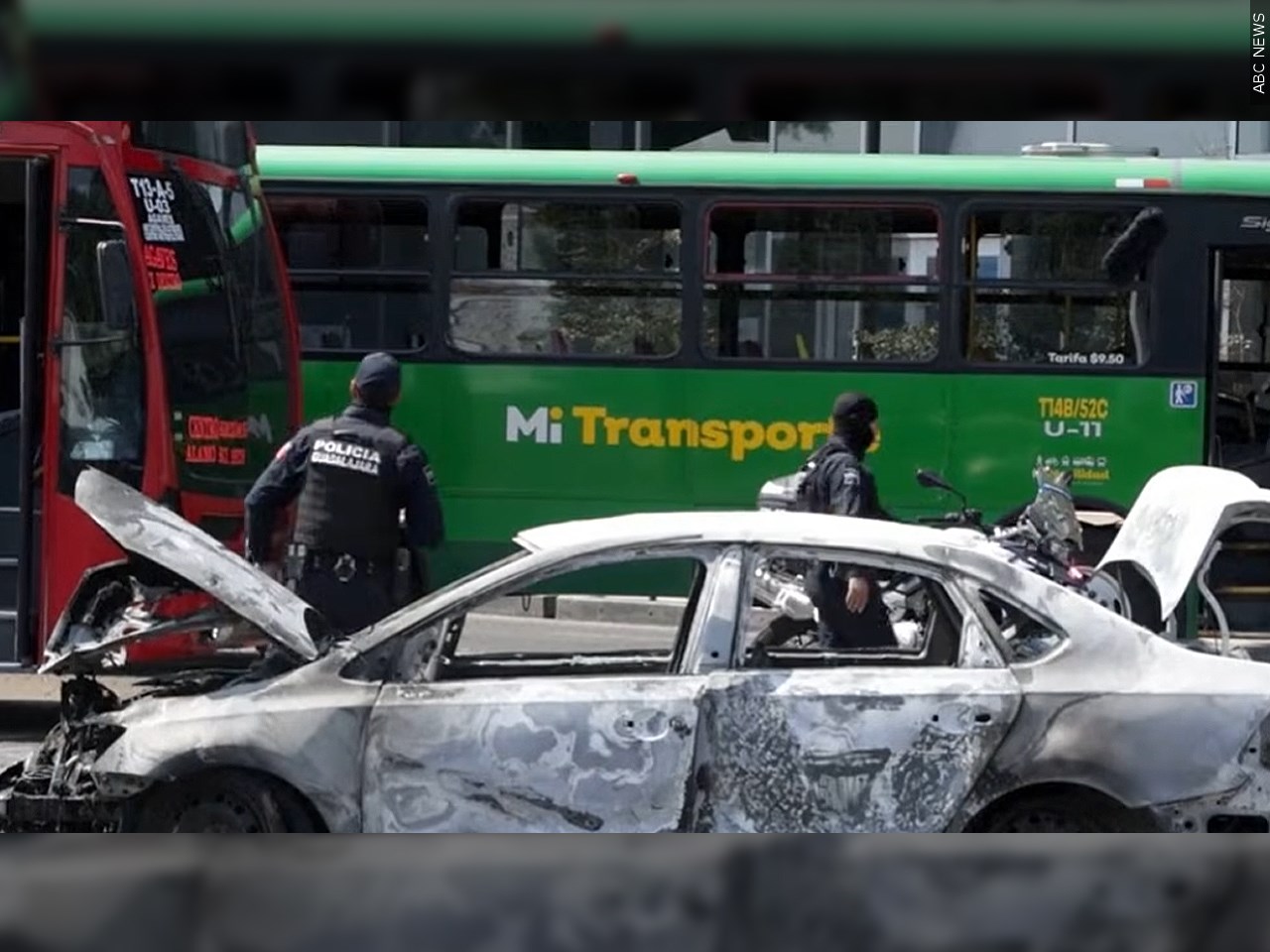
"El Mencho," the powerful drug lord the Mexican army killed in a daring raid Sunday, had created what security experts say was one of the most advanced security operations devised to protect a cartel boss. His system relied on high-powered weaponry, nearly 400 gunmen, bomb-delivering drones and, sometimes, landmines.
Nemesio Rubén Oseguera Cervantes, 59, who was fatally wounded when special forces stormed a hideout in Jalisco state, took extraordinary precautions, according to sources familiar with his operations who requested anonymity because they were not authorized to speak publicly. Oseguera rarely allowed a phone near him because he feared a GPS signal might reveal his location.
Though Oseguera still had bodyguards with him who exchanged fire with the Mexican army on Sunday, it appears that he was somewhat outside his usual protective bubble that night, the sources said.
He was tracked down with the help of U.S. intelligence obtained, in part, through Predator drone surveillance, the sources said.
Oseguera was an elusive capo, and considered the most feared and powerful drug lord in Mexico. Few photos of him circulated publicly, and he had a security apparatus modeled after military special forces teams. Highly trained forces moved with him wherever he traveled, according to people familiar with his operations.
“He lived so incognito that outside his circle, few knew what he looked like,” said Arturo Fontes, a former FBI agent who spent decades tracking down some of Mexico’s top narco traffickers, including Oseguera.
The founder of the Jalisco New Generation cartel had fleets of reinforced, tank-style vehicles equipped with six-barreled Gatling guns capable of destroying a small car and shoulder-fired rocket launchers that could down helicopters.
The Jalisco cartel is known for its terror tactics. Last year, cartel forces drone bombed a prosecutor’s office in Tijuana and shot dead Carlos Manzo, a prominent mayor in Michoacán state who spoke out against cartels. And in 2020 they attacked then-Mexico City police chief Omar García Harfuch, who is now minister of security.
For protection, sources say, Oseguera had acquired counter-drone radar scramblers and employed a bank of young computer hackers to infiltrate military mainframes to keep track of military and Mexican government intelligence.
Hundreds of gunmen controlled every route leading to Oseguera’s main compound in Jalisco state, making concentric circles of protection around his hideout. The routes were lined with landmines for miles around, according to people familiar with his activity. The personnel in each circle only knew the layout of the land mines in their area–they did not know where the next round of landmines started or stopped.
For months, Mexican Cabinet officials had discussed the challenges of capturing Oseguera and weighed the likely violent fallout from his arrest, said a person familiar with the talks who requested anonymity to discuss internal matters. Officials believed that if the administration of President Claudia Sheinbaum didn’t act, President Trump might launch a unilateral raid on Mexican soil, that source said.
Sheinbaum and other Mexican officials have called such a raid unacceptable and a violation of Mexico’s sovereignty. But U.S. experts have for years been involved in providing Mexican authorities intelligence and have trained Mexican personnel. Now, the threat of an incursion by U.S. forces pushed Mexican authorities to take action, the source said.
Over the past six months, during routine training of Mexican soldiers by U.S. special forces, the capture of Oseguera was one of the high priority scenarios, a person familiar with the exercises said.
Sources described a series of steps that led to Oseguera’s capture. The sources spoke on condition of anonymity to share sensitive information.
In early February, Mexican law enforcement arrested a public official who allegedly had close ties to the Jalisco cartel.
He provided leads on people close to the capo and Mexican law enforcement did a flurry of raids based on information he provided, according to people familiar with the operations. It helped intelligence officials circle in on Oseguera’s location, those people said.
Where other capos would rarely sleep in the same place twice, to stay ahead of the law, Oseguera had a late-stage kidney disease and needed daily dialysis, limiting his movements, people familiar with his activity said.
In the days leading up to the raid, a Predator surveillance drone flew at 20,000 feet over the southwestern states of Colima, Nayarit and Jalisco gathering intelligence on cartel operatives and circling in on Oseguera.
Mexican intelligence officials located Oseguera’s lover two days prior to the raid and began tracking her, Mexican Defense Minister Ricardo Trevilla said in a news conference Monday.
They tracked her to a location in central Jalisco, about two hours south of Guadalajara. The CIA and FBI provided Mencho’s precise location to Mexican military intelligence, one person familiar with the operations said. A day later she left and Oseguera stayed.
A Predator drone, used in the early 2000s to bomb ISIS fighters in Iraq and Afghanistan, hovered nonstop above the location tracking Mencho’s activities and the movement of his forces, a person familiar with the operations said.
Then, before sunrise on Sunday morning, an army helicopter dropped more than a dozen Mexican special forces near Oseguera’s hideout in the town of Tapalpa, according to sources familiar with the operations. He had hosted a party at his home that night, those people said, and his security team was not on high alert. This home was not his main compound, sources said, and the area was not studded with landmines.
Special forces closed in on Oseguera’s home and a firefight ensued, Trevilla said. The Mexican military said the operation involved six planes, including warplanes capable of carrying missiles.
Oseguera had a small, tight security team with him at his home that night, and he had a host of military-grade weapons, including two anti-tank rocket launchers with him, Trevilla said. But he was no match for the army’s air assault.
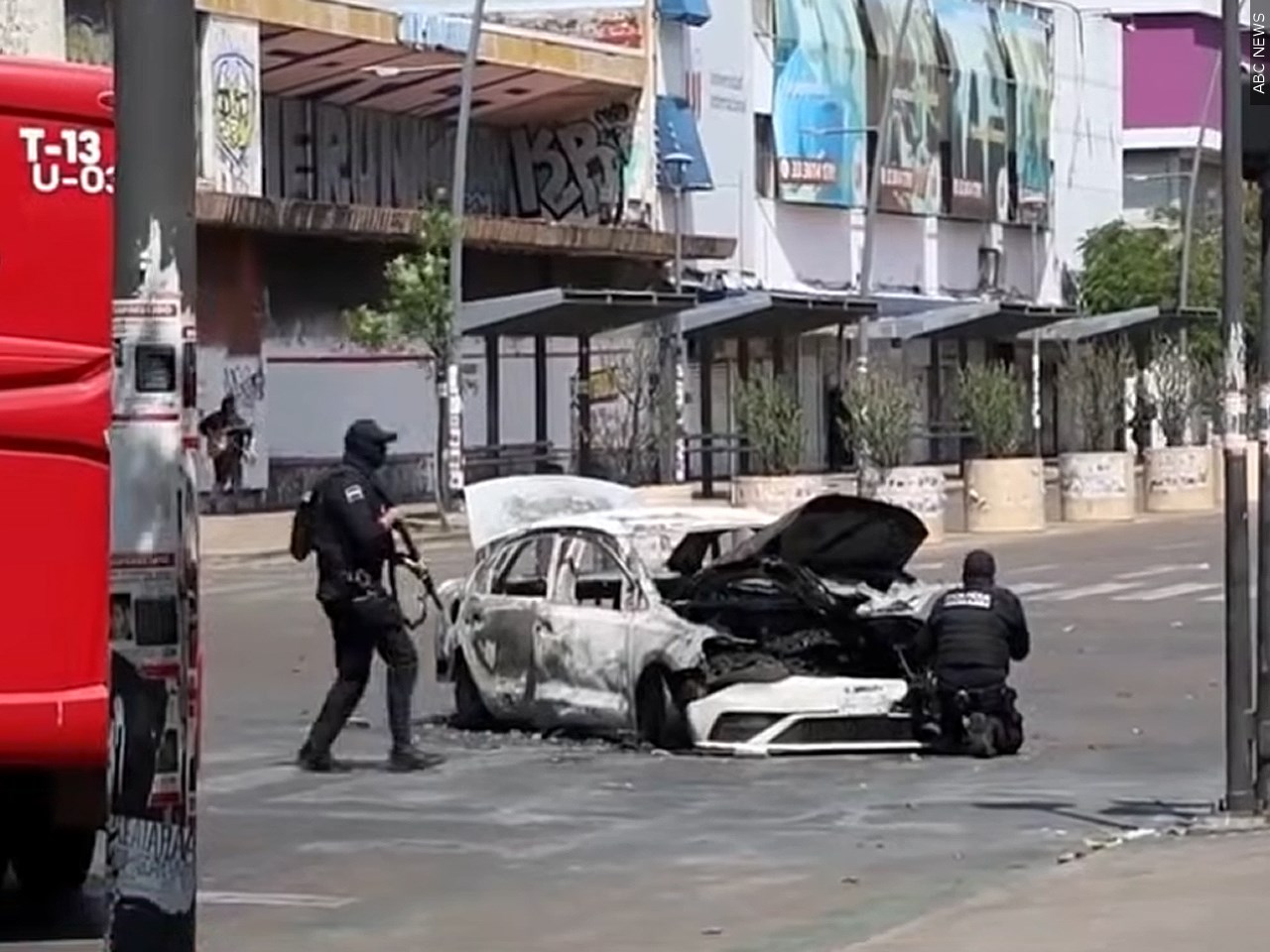
Mencho’s inner circle of security, known for their elite training by ex-Colombian special forces, fired on a helicopter providing air support, forcing it to make an emergency landing at a nearby army base. Just over a decade earlier, in another raid to capture Oseguera, his men downed an army helicopter using a shoulder-fired rocket launcher, killing nine people onboard.
The special forces killed eight gunmen as they rushed Oseguera’s home early Sunday morning.
He fled into the woods with two of his security team, Trevilla said. Special forces found Oseguera hiding in undergrowth, badly wounded along with two of his team, he said.
An army extraction team landed in a helicopter, picked up Oseguera and his two sicarios and was airborne within minutes, according to a person familiar with the operation. The chopper headed to a medical center in Jalisco. Oseguera died enroute.
Fisher is an independent journalist based in Mexico City. He work appears in for several publications including the Los Angeles Times, The Wall Street Journal and Puente News Collaborative.
This story was edited by Steve Padilla, column one editor for the Los Angeles Times
