US annual inflation cooled to 3.4% in July as gas prices ease

By Alicia Wallace, CNN
(CNN) — Annual inflation slowed for the second month in a row, cooling to 3.4% in July as prices at the pump and the grocery store delivered less of a bite, according to new data released Wednesday by the Bureau of Labor Statistics.
The latest Consumer Price Index showed that prices rose 0.1% on a monthly basis, in line with economists’ expectations.
Wednesday’s CPI report could offer price-weary Americans some relief after inflation hit a three-year high just two months ago. However, economists caution that might not last.
And with the accumulated toll of five-plus years of high inflation, for many Americans, even a good CPI report isn’t good enough for their stretched budgets.
“The economy isn’t out of the woods from the threat that inflation poses for everyday Americans, but price pressures aren’t hot to the touch either,” Christopher Rupkey, chief economist at FwdBonds, wrote in a note on Wednesday.
Monthly economic data can be quite volatile, and that’s especially been true lately as prices – particularly energy and gas prices – have yo-yoed because of a monthslong war in Iran.
Those prices, as well as inflation, have eased in recent weeks as some peace talks appeared to progress. However, those negotiations remain quite choppy; plus, plenty of inflationary risks are in the pike as higher oil and fertilizer prices work their way through the economy in the coming months.
And while US inflation moved in a welcome direction, some cost-of-living concerns persist: The latest jobs report showed that Americans’ pay gains, at 3.2%, aren’t keeping up with the pace of price hikes.
A tamer July for some products
Gas prices fell 2.9% in July from the month before, helping to keep a lid on inflation last month.
One of the biggest reasons for the cooler July CPI readings was the continued slowing of price hikes in housing (captured in the broad “shelter” category). The shelter index, which accounts for about one-third of the overall CPI basket, rose just 0.1% in July as prices fell at hotels, motels and other away-from-home accommodations.
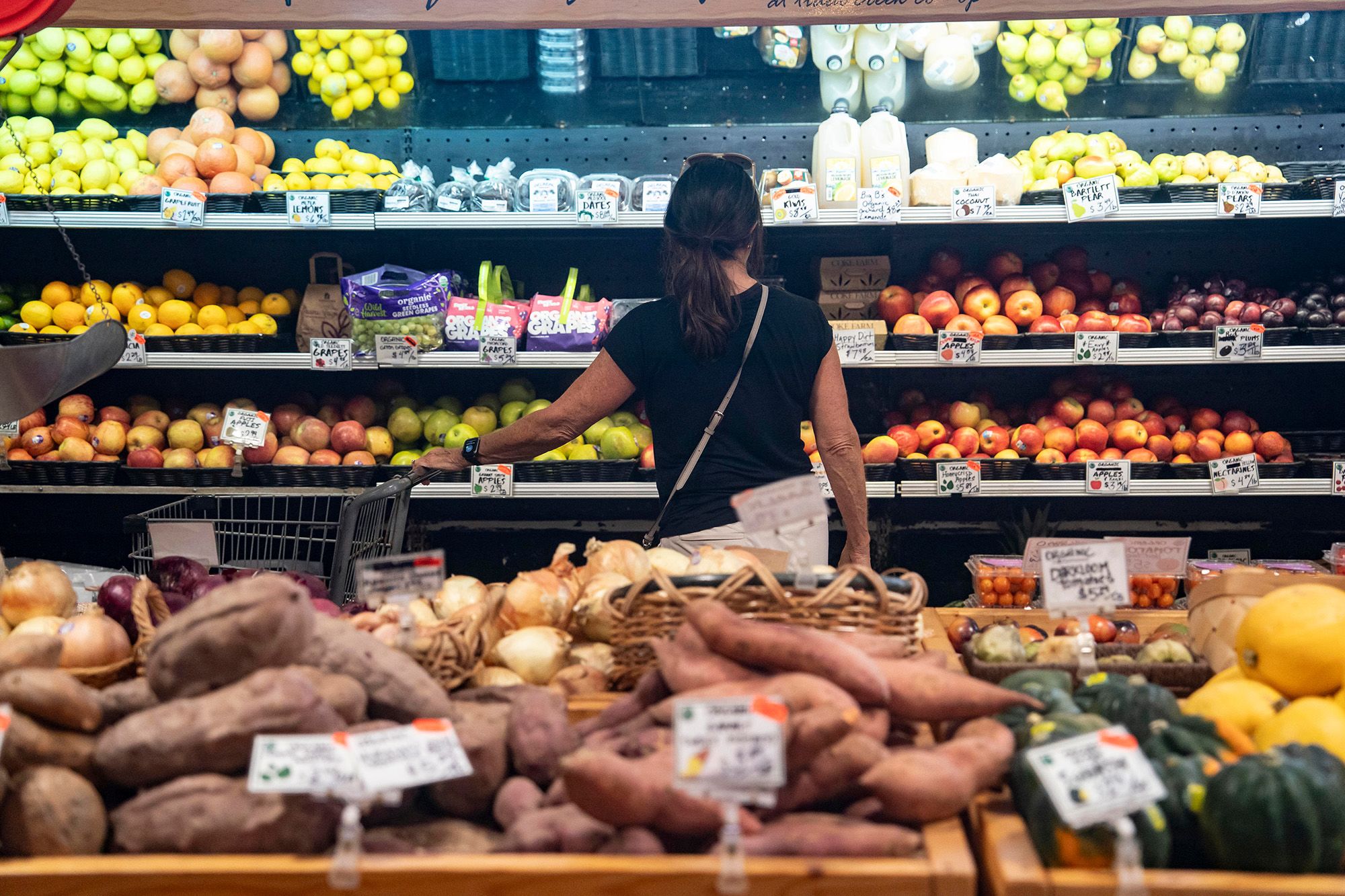
Food inflation slowed as well: Grocery prices fell by 0.1% in July and are running below overall annual inflation at 2.7%.
“There was a major effort by big-box discounters and grocery chains to roll back some of their prices,” Diane Swonk, chief economist at KPMG, said in an interview. “They said they would hold that this summer. The problem is, the upward pressure on prices once the fertilizer and energy costs start to filter in as we get into the fall harvest and into 2027.”
Many food prices edged lower on a monthly basis. Lettuce prices saw their largest-ever decline at 16.4% as a cyclosporiasis outbreak tied to some Taylor Farms products resulted in consumers pulling back from the category more broadly.
Energy prices (and gas prices with them) have been especially volatile since the Middle East war disrupted the critical shipping passageway of the Strait of Hormuz, so “core” gauges become an even more important window into the trajectory of inflation.
Core CPI, which strips out food and energy costs, rose 0.2%, bringing the annual rate of inflation to 2.5%. That matches a rate last seen in January and February of this year (which at the time marked a nearly five-year low).
Price pressures persist
Wednesday’s report also showed that some underlying price pressures continue to simmer.
KMPG’s Swonk highlighted services-related inflation, particularly the brisk pace of price hikes seen for categories such as medical services, airfares and car repairs.
Andreas Hauskrecht, a clinical professor of business economics at Indiana University, flagged heightened energy prices as a concern for months to come, as much of those higher costs could filter through other areas of the economy.
He likened it to President Donald Trump’s sweeping round of tariffs last year; some of those costs are now baked into retail prices.
“The longer you have an elevated price such as a tariff… it’s more and more handed over to the consumer,” Hauskrecht told CNN. “I can give you this argument for energy prices.”
US stocks rose slightly Wednesday morning after the inflation report. The Dow was up 50 points, or 0.1%. The S&P 500 rose 0.3%, and the Nasdaq Composite gained 0.6%.
US Treasury yields fell. The US dollar index fell 0.15%. Odds for a Fed rate hike in September fell to 38%, down from 48% a day ago, according to CME FedWatch.
The slowdown in price increases could also allow the Federal Reserve to be more patient when it comes to considering interest rate hikes, noted Gary Schlossberg, global strategist at Wells Fargo Investment Institute. Chairman Kevin Warsh has said the bank is committed to bringing down inflation, which has run above the 2% target for years.
“However, we remain guarded on the near-term outlook for inflation amid volatile oil prices tied to the ongoing Middle East conflict along with lingering core price pressures from a strong economy and the AI boom,” Schlossberg wrote in a note to investors on Wednesday.
CNN’s John Towfighi contributed reporting.
The-CNN-Wire
™ & © 2026 Cable News Network, Inc., a Warner Bros. Discovery Company. All rights reserved.
