The 8 Texas weeds behind your itchy eyes and patchy lawn this fall


Across Texas, September is prime time to fight weeds — those appearing in your lawn now and those that will surface in winter.
Weed control is a big part of lawn care in Austin, Houston, Dallas, and across the Lone Star State. Removing ragweed now will ease allergy symptoms, and laying down pre-emergent herbicides will keep henbit, chickweed, and annual bluegrass from crowding out your grass in the months ahead.
In this article, Austin-based LawnStarter details what you need to do this month and profiles some of the most common weeds bedeviling Texas lawns this fall.
What to do now: Apply pre-emergent herbicides to deter cool-season grassy weeds like annual bluegrass (Poa annua) and broadleaf weeds like dandelions, chickweed, and henbit, says gardening expert Neil Sperry, of McKinney, in Neil Sperry’s E-Gardens newsletter.
How to deter weeds year-round: Thick, healthy grass is the best way to keep weeds from growing in your yard. That means regular mowing and fertilizing, aerating, and overseeding as needed, based on your grass type.
1. Ragweed
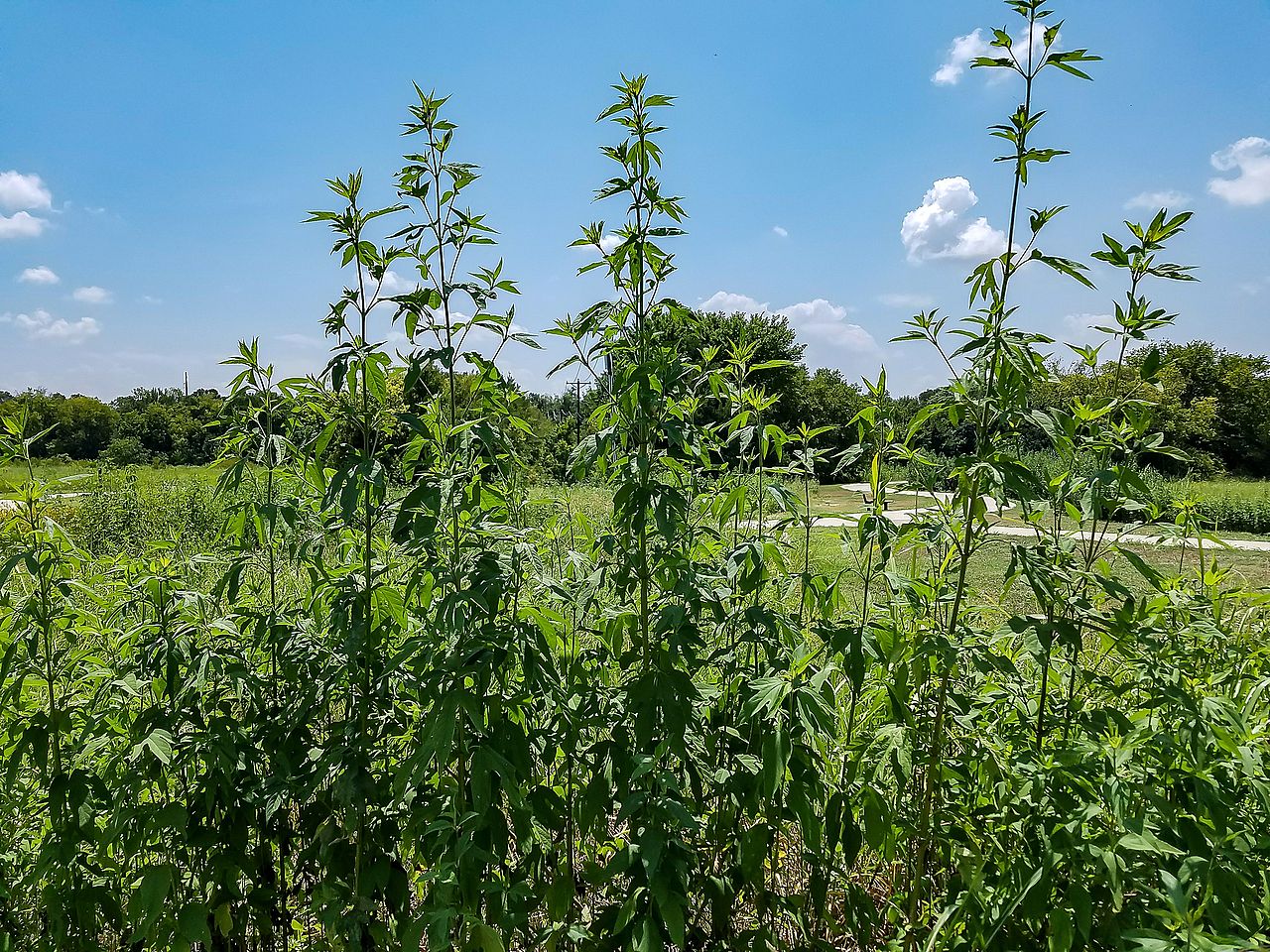
Ragweed varieties thrive across Texas, and ragweed allergy season peaks in mid-September and can run through November. The first hard frost kills the plants. Here’s why ragweed is the leading cause of fall allergies in the United States: Just one ragweed plant can release up to 1 billion pollen grains during a single season, and the grains can travel hundreds of miles.
The Dallas-Fort Worth area is often cited as one of the most challenging places to live for people with ragweed allergies, according to the North Texas Allergy and Asthma Center. Blame the Texas heat and an extended growing season. These allow ragweed to produce pollen for longer periods than in many other parts of the country.
- Life cycle: Summer annual/perennial (common ragweed is an annual, western ragweed is a perennial, both are found in Texas), according to Texas A&M’s AggieTurf.
- Weed type: Broadleaf
- Where it thrives: Dry, hot, arid areas. Ragweed is often found along roadsides, fence lines, drainage areas, and open fields, and thin or stressed lawns.
- How to identify ragweed: Common ragweed can range from 1 to 4 feet tall, has fern-like leaves, and produces small green flower spikes at the tops of its stems, according to Green Gate Turf and Pest. Western ragweed can range from 1 to 6 feet tall, and its leaves are thick, gray-green, and hairy or bristly, according to the Texas A&M AgriLife Extension.
- How to control ragweed: Use pre- or post-emergent herbicides and mow before ragweed flowers. You can also pull the plants out by hand (wear gloves) when the ground is still wet. Make sure you get rid of the full root so it doesn’t grow back. Throw pulled ragweed plants in the trash: do not compost.
Trivia: There’s also a Texas giant ragweed that can reach 12 feet tall (but is often shorter). According to The Foraged Foodie, Texas giant ragweed is edible.
2. Henbit
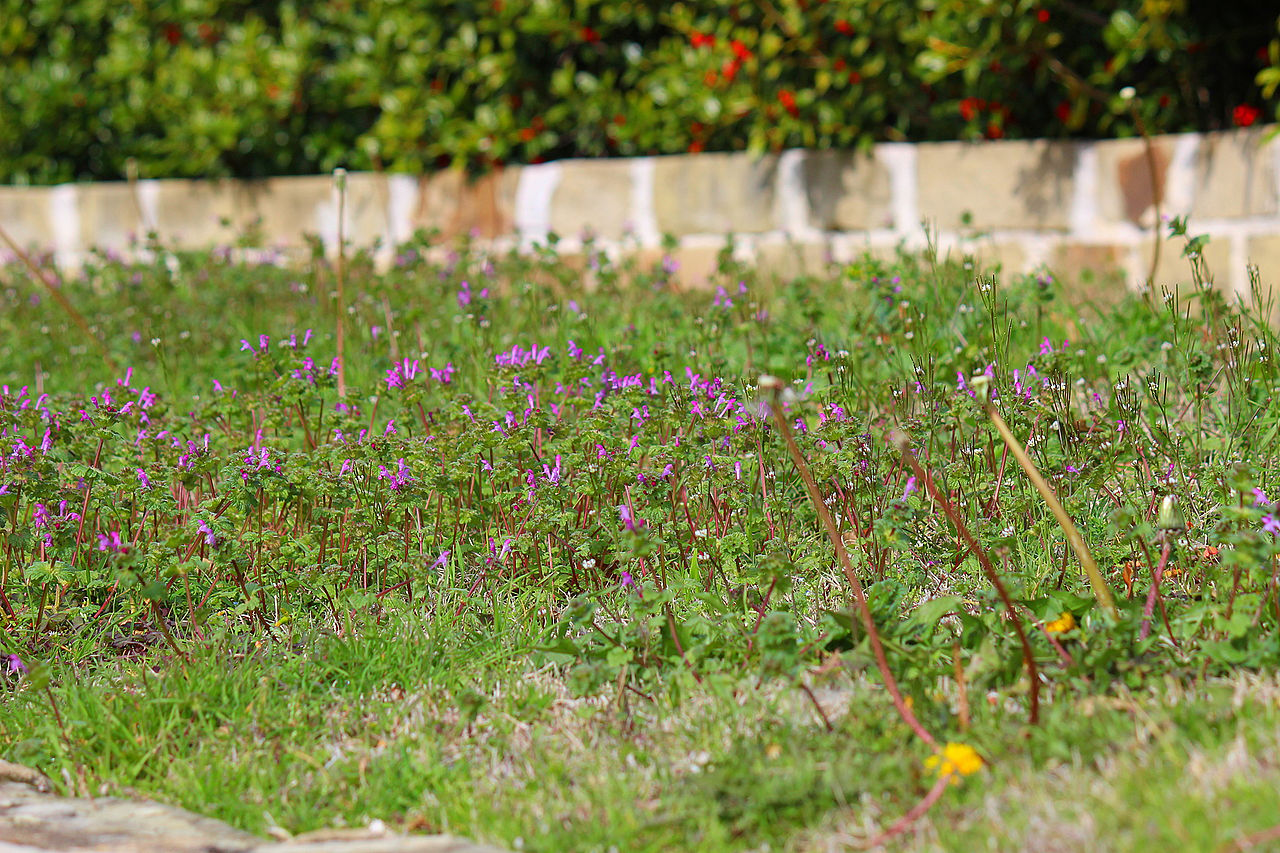
Henbit is a weed commonly found in Central Texas that belongs to the Lamiaceae (mint) family.
Henbit can be recognized by its upper leaves that wrap around the stem to form a rosette. It is also used as a medicinal herb and is frequently eaten as a snack by chickens, hence its name.
- Life cycle: Winter annual
- Weed type: Broadleaf
- Where it thrives: Moist, cool areas, but tolerates full sun
- How to identify henbit: Henbit has small pink to purple flowers and square stems. It grows, on average, 6 to 8 inches tall, but it can reach up to 16 inches.
- How to get rid of henbit: Use post-emergent herbicides to control henbit, but follow instructions carefully to avoid damaging other native Texas plants and your grass. Regular mowing and maintenance can also help prevent the growth and spread of this herb.
3. Chickweed
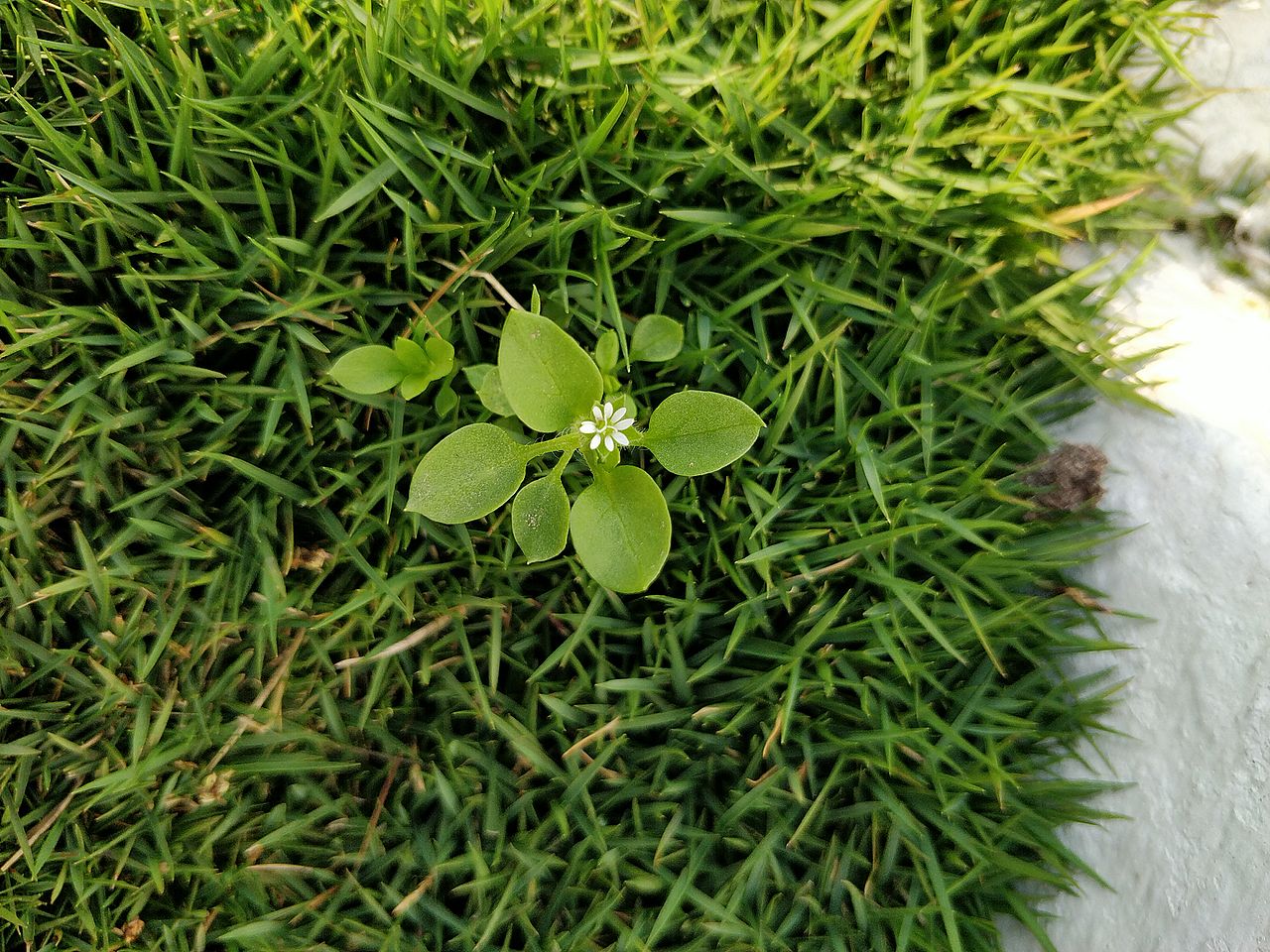
A winter annual, common chickweed is a widespread broadleaf weed that thrives in Texas’s damp, shady, and rich soil into late winter. It stands out with its tiny white blossoms and is frequently seen in sparse or bare patches of grass.
Chickweed develops in the fall, becomes mature during the winter, and produces seed heads in the spring through the first few months of the summer.
- Life cycle: Winter annual
- Weed type: Broadleaf
- Where it thrives: In moist, shaded areas with rich soil
- How to identify chickweed: Chickweed has small, oval-shaped leaves that grow opposite each other on the stem. The leaves have a pointed tip and a smooth margin. The stem of the chickweed is thin and green, and it produces small white flowers.
- How to get rid of chickweed: Hand-pulling is a simple and practical approach. To prevent weed seeds from germinating in ornamental bed areas, apply a 2- to 3-inch layer of mulch. Pre-emergent herbicides are available. The optimal timing to apply post-emergent herbicides is mid-fall.
4. Annual Bluegrass (Poa annua)
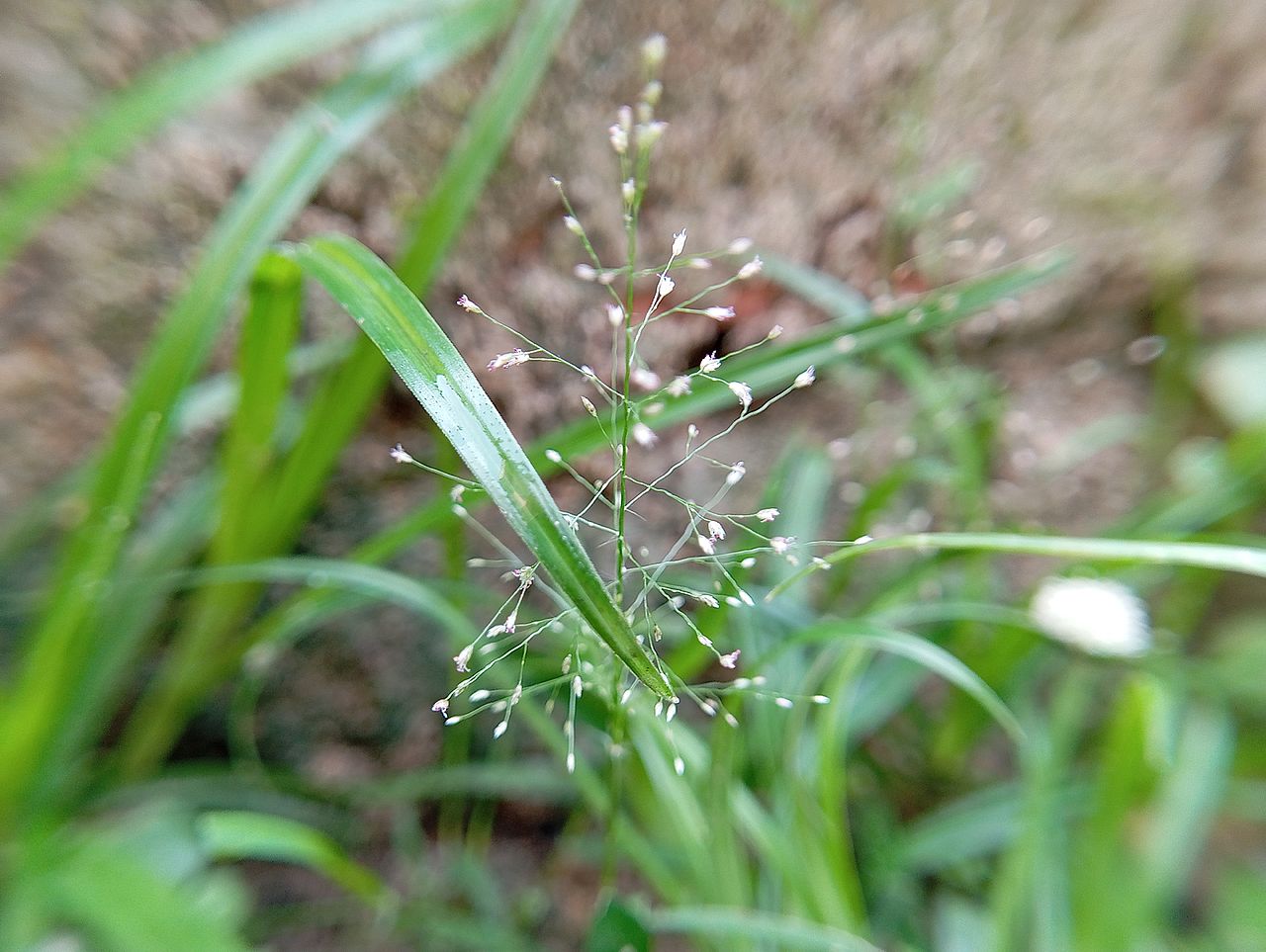
Annual bluegrass is one of the most widespread cool-season grassy weeds across Texas lawns. Annual bluegrass germinates in the fall as temperatures drop below 70 degrees, grows through winter, and produces seed heads in spring. That is why applying pre-emergent in the coming weeks is so important to keep annual bluegrass in check.
- Life cycle: Winter annual
- Weed type: Grass weed
- Where it thrives: Moist, compacted soil; common in thin grass, shaded areas, and along walkways
- How to identify annual bluegrass: Light green, boat-shaped leaf tips and a bunching, low-growing habit. It produces small, whitish seed heads that can appear even when mowed short, giving lawns a patchy, pale look in fall and winter.
- How to get rid of annual bluegrass: Apply pre-emergent herbicide in early fall before germination. Post-emergent options exist but are less reliable once the weed is established. A dense, well-fertilized lawn going into fall gives annual bluegrass less room to take hold.
5. Dandelion (and Texas’s Look-Alike)
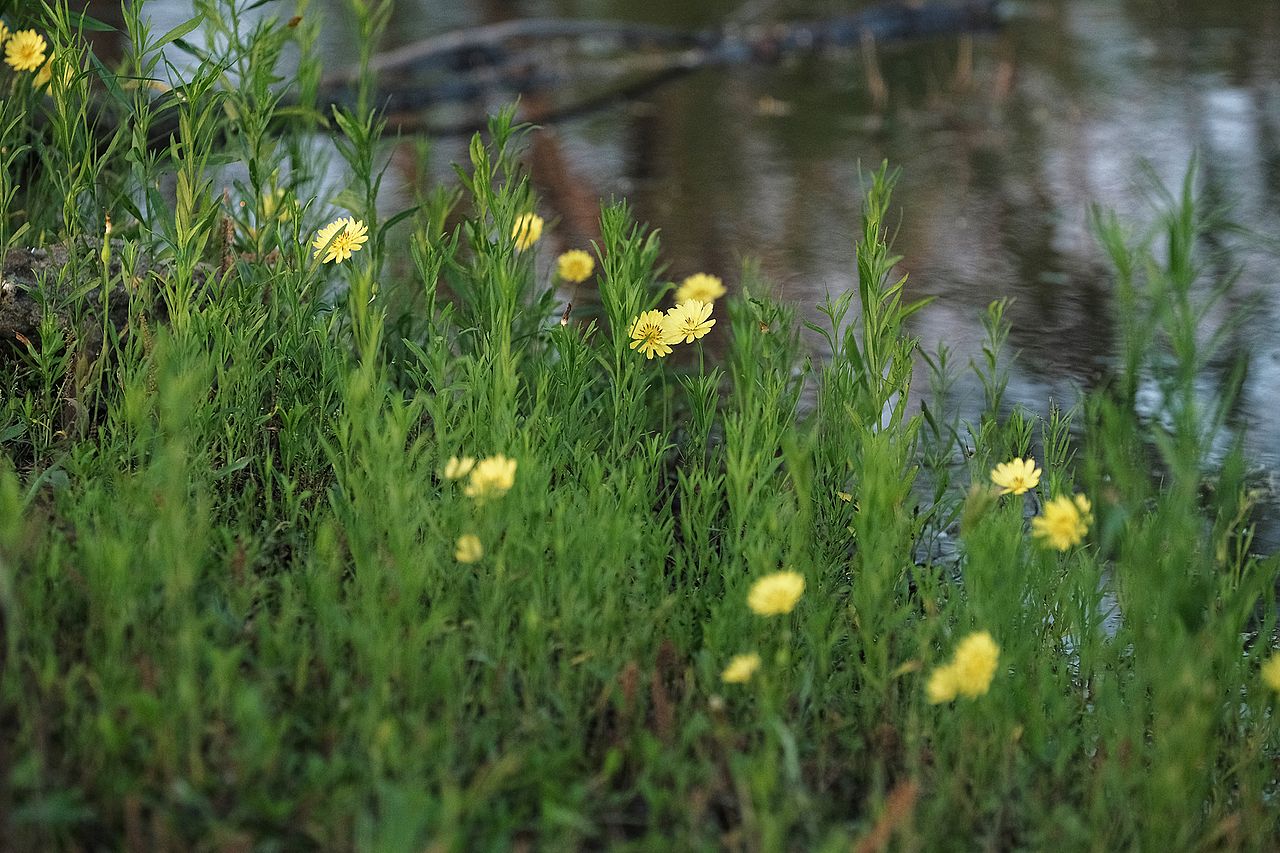
Dandelions are a familiar lawn weed in Texas, and homeowners get rid of dandelions because the weeds can form thick mats of leaves that crowd out grass.
The most common type of dandelion nationwide is the true dandelion (Taraxacum officinale). However, most of the “dandelions” homeowners spot in North Texas lawns are actually a different, closely related plant: Texas dandelion (pictured), also called false dandelion (Pyrrhopappus pauciflorus).
- Life cycle: True dandelion is a perennial; Texas dandelion is a winter annual.
- Weed type: Broadleaf
- Where it thrives: True dandelion and Texas dandelion prefer full sun to partial shade and tolerate most soil types.
- How to identify dandelions: True dandelion has a bright yellow flower atop a single leafless stalk, with deeply notched leaves up to 12 inches long. Texas dandelion looks similar from a distance but has branched, leafy flower stems and slightly smaller blooms.
- How to get rid of dandelions: For true dandelion, remove the entire taproot with a dandelion digger or by hand because any root fragment left behind can resprout. For Texas dandelion, hand-pulling before it sets seed is usually enough since it won’t regrow from the root the way true dandelion does. Post-emergent herbicides control mature plants of either type, while pre-emergent herbicides prevent new seeds from germinating.
Trivia: Dandelions can be beneficial: Dandelion leaves are often used in salads and teas for nutritional value.
6. Crabgrass
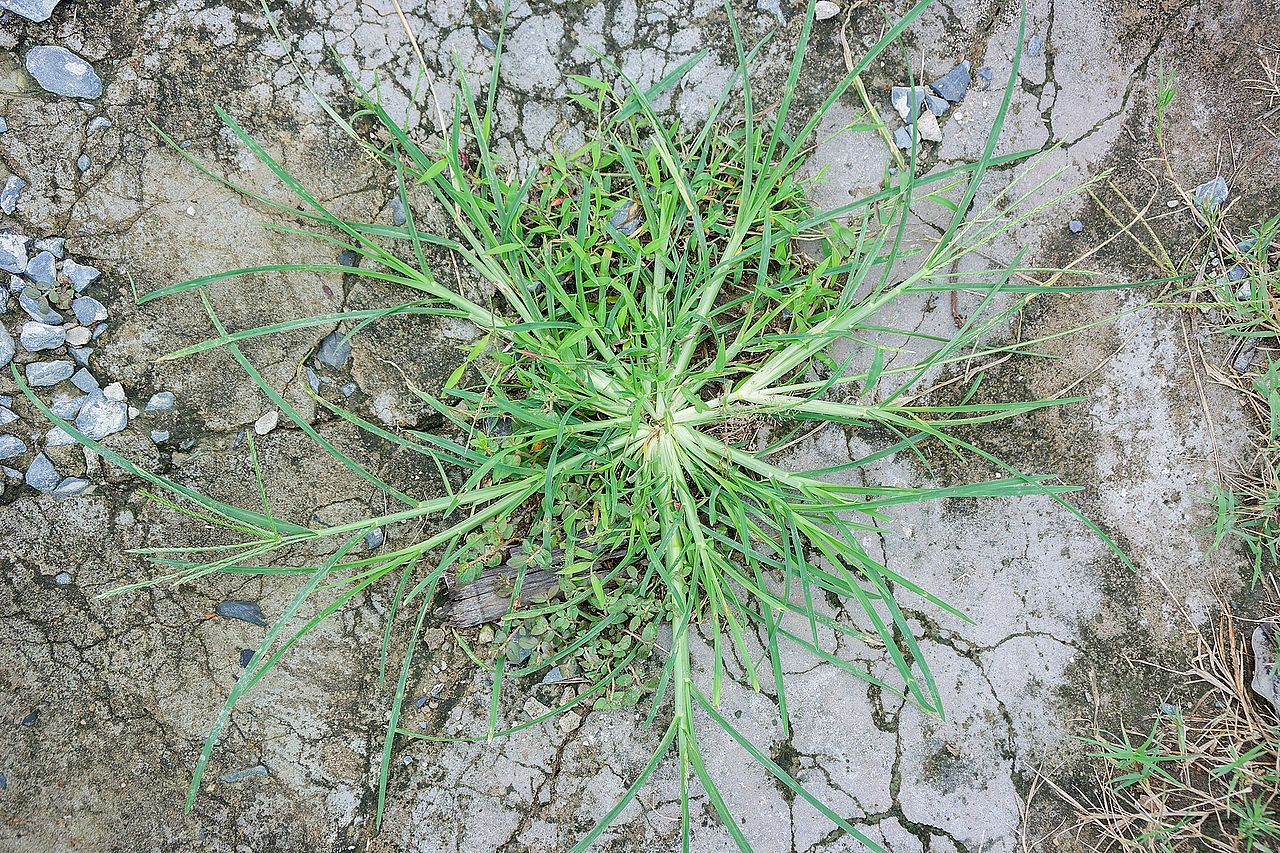
Crabgrass can quickly take over your Texas lawn and flower beds. It thrives in hot, dry conditions and typically grows in compacted soil with plenty of light.
Crabgrass grows in the spring and dies in the fall, but only after producing up to 150,000 seeds per plant.
- Life cycle: Summer annual
- Weed type: Grass weed
- Where it thrives: Compacted soil with full sun
- How to identify crabgrass: Long, finger-shaped leaves that can grow up to 6 inches long. They are light green to yellowish-green with a prominent midrib. The stems are flat and can grow up to 2 feet long, with a low, spreading growth pattern.
- How to get rid of crabgrass: Prevent crabgrass growth with pre-emergent herbicides in early spring. Use post-emergent herbicides to get rid of existing crabgrass. Hand-pulling is also effective if done early. A healthy, dense lawn helps deter regrowth.
Trivia: Texas crabgrass (Latin name Digitaria texana) blooms from September through January, according to the Lady Bird Wildflower Center in Austin. It can grow up to 32 inches tall.
7. Goathead (Puncturevine)
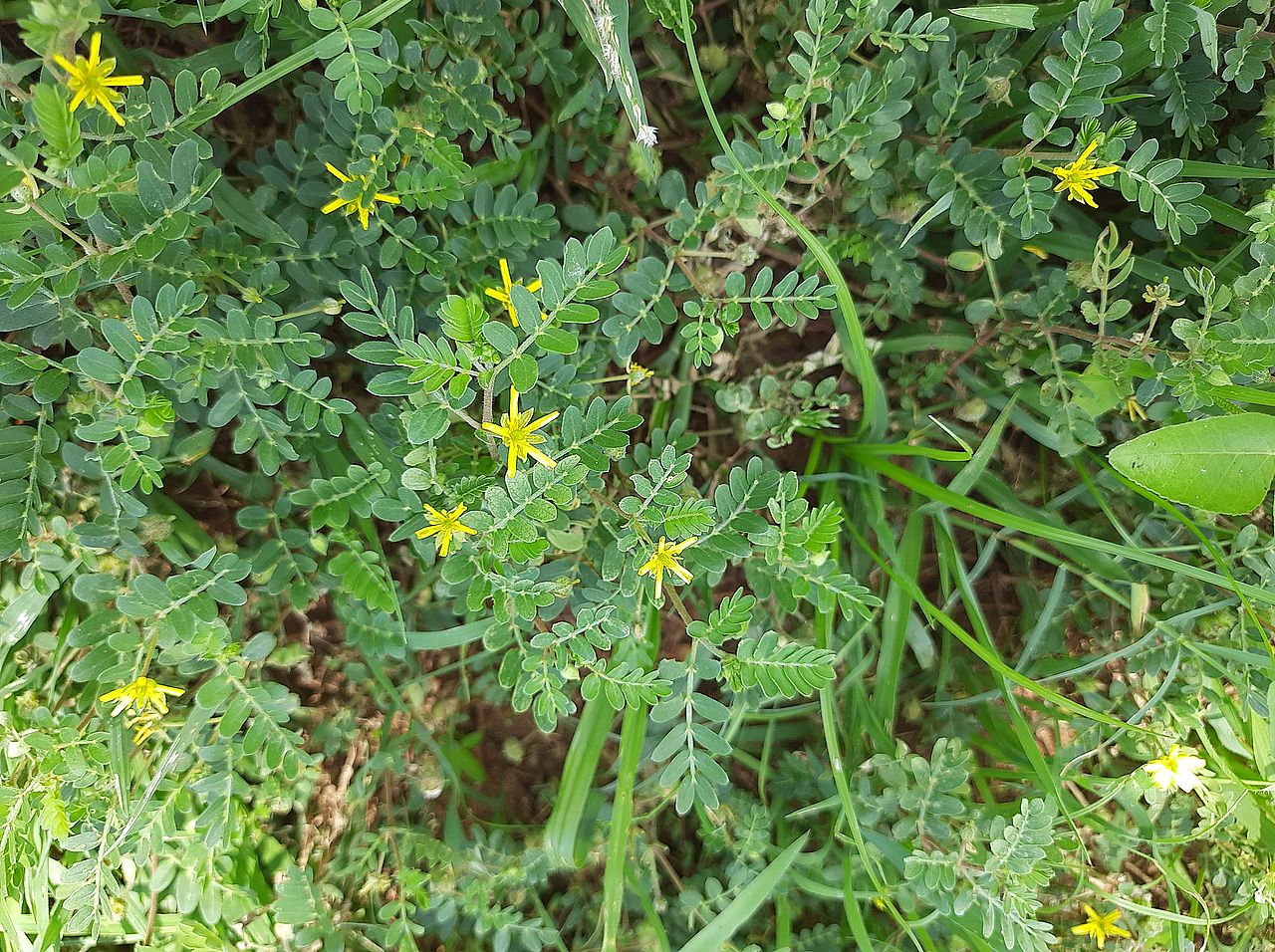
Goathead, also known as puncturevine, is a plant that grows in a mat-like form during early summer and stays active well into fall. It has large leaves and widespread roots.
Many Texans know the sharp spines of the dried bur resemble a goat’s head and can cause injury to people and pets, as well as puncture bike tires. The plant’s leaves contain saponins, a substance toxic to cats, dogs, and sheep.
- Life cycle: Summer annual
- Weed type: Broadleaf; mat-forming
- Where it thrives: Hot, dry areas with compacted soil and disturbed areas, such as fields and pastures
- How to identify goathead: Little yellow flowers bloom from July through October. Its fruit bears sharp spines and resembles a goat’s head when dried out.
- How to get rid of goathead: Uproot plants by hand or with a hoe, taking care not to transfer burs on shoes, tools, or tires. Use natural or synthetic mulches that block light to restrict seed growth. Apply pre-emergent weed killers in mid-spring or winter for the best results; post-emergent herbicides are effective for young plants.
8. Goosegrass
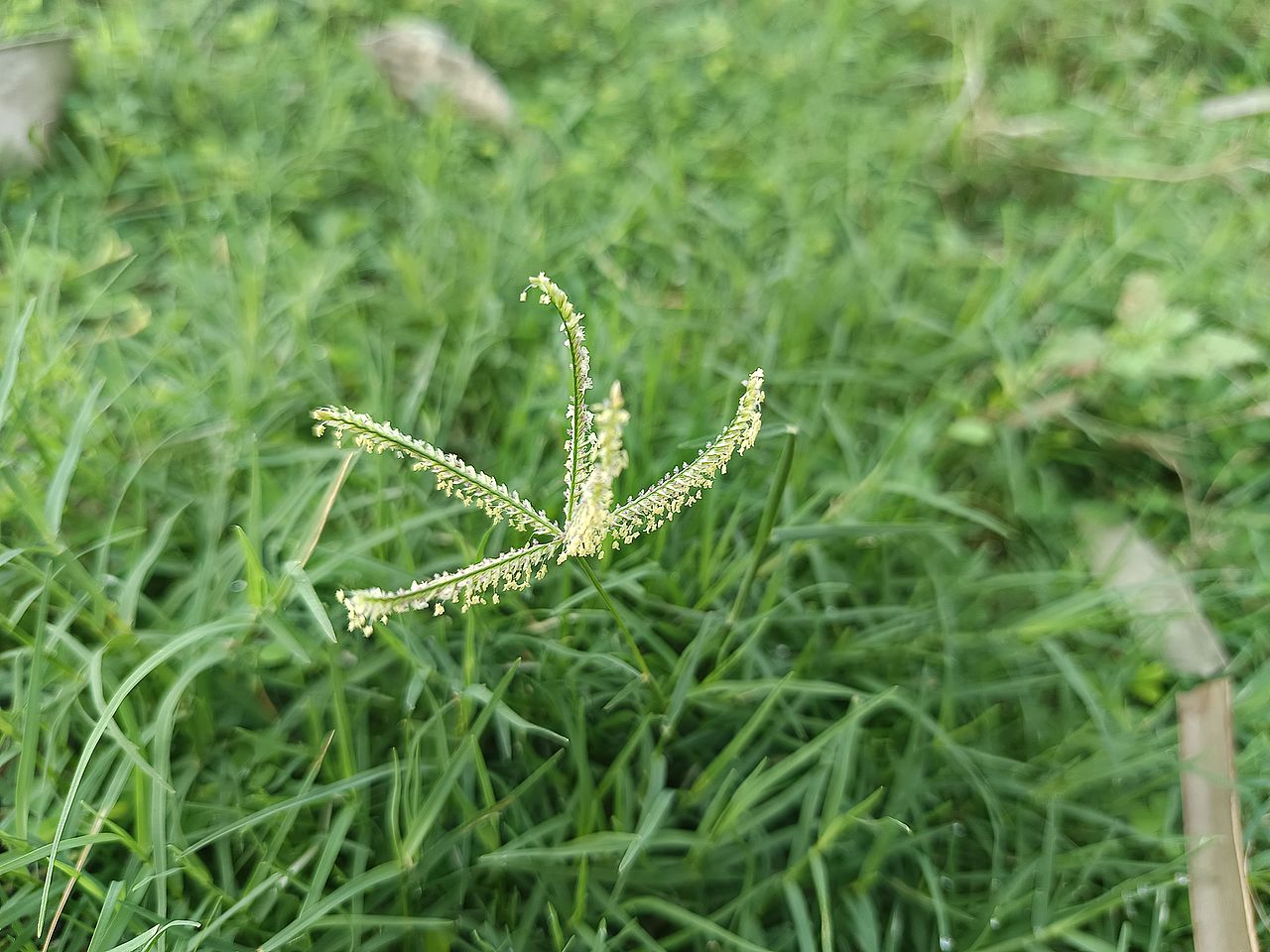
Goosegrass, also known as wiregrass, silver crabgrass, and crowfoot, is a common type of summer annual that invades the warm-season grasses that grow in Texas. This clumping grass has flat stems and is frequently found in lawns with sparse grass coverage, particularly in areas with a lot of foot traffic.
- Life cycle: Summer annual
- Weed type: Grass weed
- Where it thrives: Compacted soil and lawns where turf is thin
- How to identify goosegrass: It grows in clumps and has flat stems ranging from white to silver at the center.
- How to get rid of goosegrass: Start by implementing good lawn care practices. Then, use pre-emergent or post-emergent herbicides to address outbreaks of goosegrass. Aerating your Texas lawn reduces soil compaction and improves turfgrass root growth, leading to a fuller, thicker lawn that helps your grass to outcompete against this weed.
Trivia: Goosegrass is mentioned in the Season 2 finale of “Young Sheldon,” which is set in the fictional town of Medford in East Texas.
FAQ About Weeds in Texas
1. How can I get rid of weeds without killing my grass?
Hand pulling is the most effective method for small lawns with minimal weed growth, especially for annual broadleaf weeds. Pre-emergent and post-emergent herbicides should be used cautiously, as they are often formulated for specific situations or weed types.
2. Can I use weed and feed on my Texas lawn?
Herbicides and fertilizers are often combined in weed-and-feed products. However, the recommended timing and rates for fertilization do not coincide with the best time for weed control, which increases the risk of herbicide overdose when using these products.
A safer alternative to weed-and-feed products is corn gluten mixed with organic fertilizer.
What To Do About Weeds in Fall and Year-Round
Weed control can be a pain, but it is the surest way to keep dandelions, henbit, chickweed, and other weeds from sprouting in your lawn.
Don’t wait. September is the ideal time to prevent future weeds in your Texas yard. As a headline on Sperry’s newsletter says: “Apply pre-emergents now … or wish you had by the spring.”
This story was produced by LawnStarter and reviewed and distributed by Stacker.
