The strange math that shows how Trump got Venezuela to ‘gift’ oil to the United States

By David Goldman, CNN
(CNN) — President Donald Trump made an extraordinary announcement this week: Venezuela had gifted the United States 1 million barrels of oil – and it didn’t cost American taxpayers a dime.
Tuesday’s announcement apparently surprised one important party to the deal: the producer of the Venezuelan oil.
North American Blue Energy Partners, the US government’s partner in a major Venezuelan oil investment, initially announced Tuesday that the United States had purchased the 1 million barrels of oil, albeit at a substantially reduced price. After Trump said the oil was free, NABEP changed its statement to echo the president: The oil would arrive at a Texas port at no cost to the US taxpayer.
The statements were both technically accurate: Venezuela is giving the United States a big gift of oil.
The gift is even bigger than the 1 million barrels of “free” oil.
What Trump said
Trump made the oil-gift announcement on the way to a political rally in Corpus Christi, Texas, where he would show off oil tankers arriving at port with the first proceeds of NABEP’s partnership in Venezuela.
“We took over Venezuela very successfully, and they’ve sent me as a gift a boatload of a million barrels of oil, and I’m giving that to the United States of America,” Trump told reporters.
It wasn’t a figure of speech. The oil would be free for US taxpayers, Trump later wrote in a Truth Social post.
“Thanks to our renewed relationship with Venezuela, which has turned out to be a truly excellent one, the Oil is being provided to the United States at NO cost to the American Taxpayer,” Trump wrote.
At a rally on Tuesday evening, Trump said the United States’ January military operation in Venezuela that ousted President Nicolás Maduro represented “the greatest oil victory in history.”
“See that little ship out there? It’s got 1 million barrels of oil on it from Venezuela, and we’re celebrating,” Trump said. “To the victor belong the spoils, right?”
How the math works
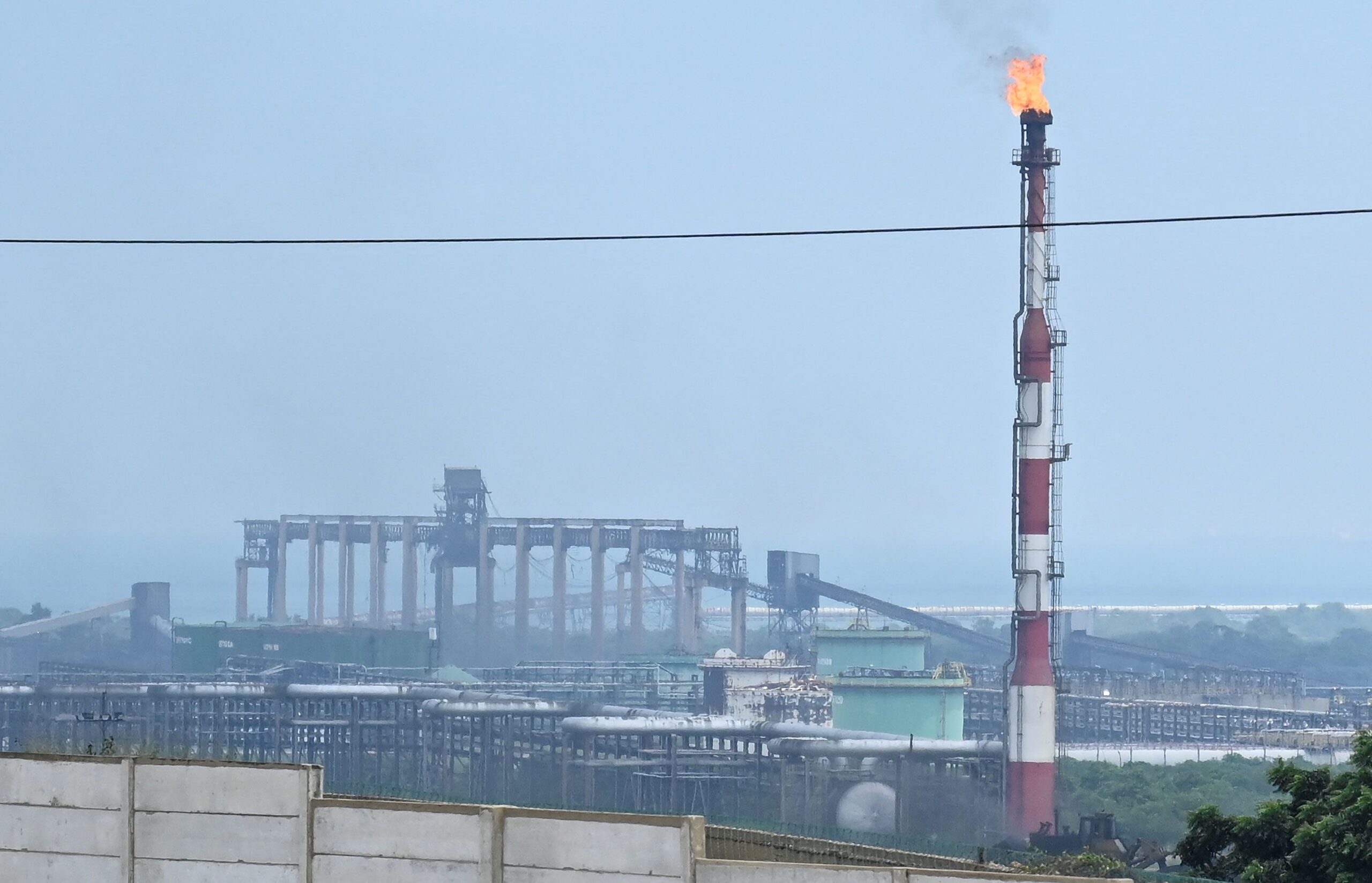
In an August agreement that the White House called the “biggest oil deal in world history,” the Pentagon took an equity stake in the company that owns NABEP, the second-largest private oil producer in Venezuela. NABEP’s owner is controlled by the family of Alejandro Betancourt López, a controversial international businessman based in the United Kingdom.
As part of the deal, the US State Department has the right to purchase the first 20% of the Venezuelan oil produced by NABEP at $30 a barrel – the cost of production. That’s significantly lower than the price it could fetch on the open market.
NABEP announced Tuesday that the first proceeds of its joint venture with the US government would arrive on two tankers in Corpus Christi.
“The cargo is part of the U.S. government’s right to purchase 20% of NABEP’s production at cost, with no markup, a provision of the company’s August agreement with the U.S. Departments of State and War,” NABEP said in a statement.
Later that day, NABEP updated its statement.
“To recognize the historic nature of the agreement between NABEP and its new anchor buyer, the United States government, NABEP delivered the first million barrels of oil at no cost to the U.S. taxpayer,” the company added in its amended press release.
How is that possible?
NABEP agreed to deliver the 1 million barrels of oil for no up-front cost. It would make up for it by charging the government more for the oil in subsequent deliveries.
“The cargo is being delivered pursuant to a commercial arrangement under which its value is settled through adjustments to future offtake pricing, rather than an upfront cash payment,” a person familiar with the deal’s terms said.
In other words, the first million barrels were sold to the United States for $0 a barrel. The company will recoup those costs via deferred payments. For example, the next million barrels could be sold to the United States for $60 a barrel. Those shipments would even out to $30 a barrel.
A spokesperson for the White House acknowledged that only the first shipment from NABEP would come at no cost to the US taxpayer.
So everyone was truthful: The oil delivered to the United States this week was technically provided at no cost to the US taxpayer. And it was part of a previously arranged (and, on Tuesday, slightly amended) purchase agreement with NABEP.
The actual ‘gift’
Even at $60 a barrel, the oil technically will arrive at no cost to the taxpayer.
That’s because Venezuelan oil is selling for $80. So Venezuela will be sending the United States oil at a greatly reduced price from what it could fetch on the open market.
The Trump administration argues that without foreign investment, the country could not take advantage of its oil riches. And the deal, regardless of the price of oil, will support Venezuelan jobs.
That may be true. Venezuela’s socialist regimes left its oil infrastructure to decay over the past several decades, reducing its capacity to produce oil to around 1.2 million barrels per day, down from more than 3 million barrels in the 1990s.
But the US extracting oil for cheap and selling it for a large profit is at best a bad look and at worst exploitative, critics say.
“President Trump has purposefully covered up the details of his Venezuela oil scheme,” Illinois Democratic Rep. Dan Casten, a fierce critic of the administration’s Venezuela policy, told CNN. “We still don’t know exactly how much money is involved or where that money is going.”
But Trump has always said Venezuela’s oil was for America’s taking.
On January 3, when announcing the capture of Maduro, Trump said the military operation was about securing Venezuela’s resources, which are key to making America rich.
“The future will be determined by the ability to protect commerce and territory and resources that are core to national security,” Trump said. “These are core to our national security. Just like tariffs are, they’ve made our country rich and they’ve made our national security strong, stronger than ever before. But these are the iron laws that have always determined global power. And we’re going to keep it that way.”
The-CNN-Wire
™ & © 2026 Cable News Network, Inc., a Warner Bros. Discovery Company. All rights reserved.
