Explosions heard as more than 400 WWII shells found in village at center of France’s wildfire crisis

By Billy Stockwell and Camille Knight, CNN
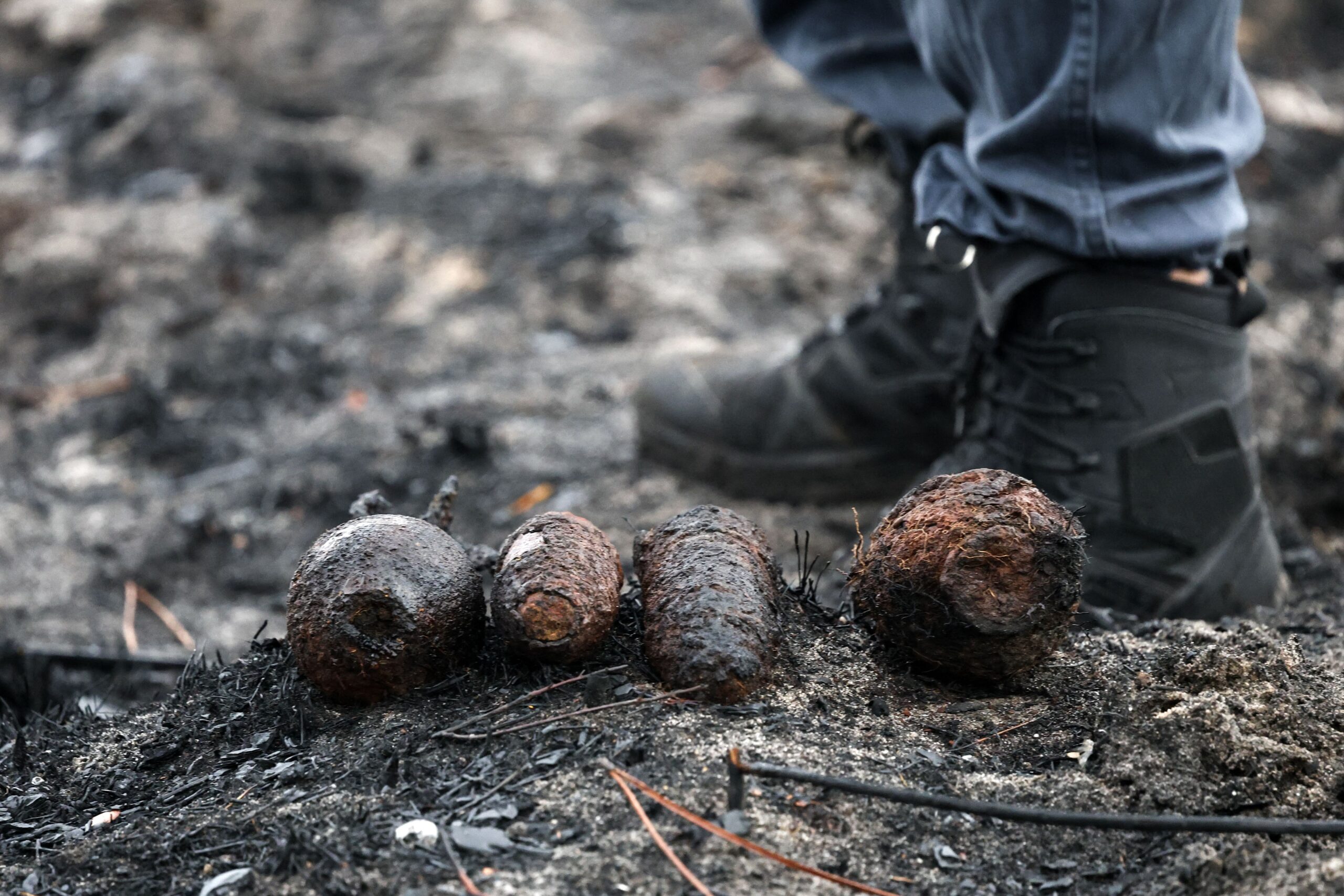
(CNN) — Hundreds of World War II shells and munitions have been discovered in the French village of Le Porge, as residents return to the ravaged community in the wake of last month’s blazes, according to local authorities.
Explosions were heard near the village in France’s Gironde region following the devastating fires, which swept through the country’s southwest.
“A bomb disposal operation was carried out today with Civil Protection specialists, recovering more than 400 shells and munitions,” a statement from the local authority said Monday.
As the flames approached the community in July, the majority of the village’s 3,500 residents were forced to flee their homes, as hundreds of firefighters were deployed to tackle blazes more violent and unpredictable than in previous years.
Temperatures in Central and Eastern Europe are soon expected to be 10 to 15 degrees Celsius (18 to 27 degrees Fahrenheit) above normal, as fires continue to spread in Greece and Italy. In Hungary, the country’s sole nuclear power station was “millimeters” away from shutting down early Tuesday due to low water levels in parts of the Danube River, Prime Minister Péter Magyar said. Elsewhere, Austria recorded its highest ever temperature on Tuesday at 40.8 degrees Celsius (105.4 degrees Fahrenheit), the country’s weather service said, citing a provisional measurement.
Europe has always experienced wildfires, but scientists are clear that climate change is making them increasingly extreme. The fires in France have so far burned more than 160,000 hectares (about 617 square miles), making them the largest on record for the country.
Upon returning to the scorched community, officials in Le Porge made a startling discovery. Despite World War II ending more than 80 years ago, unexploded munitions are still littered throughout the continent and frequently discovered or unearthed decades later.
French President Emmanuel Macron said last month, “The situation we are dealing with today is the most severe we have ever recorded, the toughest since the Second World War.”
“Following the fires, explosions were heard, and we responded last week, and we found this field and removed 75 shells,” commandant Philippe Delemotte, head of the Bordeaux bomb disposal unit, told French outlet France Info in an interview Monday.
“Here, for instance, you’ve got two mortar shells, a French mortar shell and some German 5 (centimeter) shells,” he said.
It is unclear why the munitions went undetected for so long, but Delemotte said the heat caused several of the buried shells to explode, alerting authorities to their location.
Officials quickly established an exclusion zone due to the risk to the public, with Delemotte saying an explosion could potentially send “lethal fragments” flying several hundred meters through the air.
‘Everything burned’
On Monday, Gironde region’s prefect Sophie Brocas authorized residents to return to affected neighbourhoods after a safety assessment was conducted. Fires are still active in nearby coastal areas but remain “contained,” according to officials.
Asked about the discovery of the wartime ammunition, Delemotte said authorities do “sometimes come across this, but it’s rare because here they’re scattered pretty much everywhere.” The French official said he believed the munitions were from historic demolition pits.
Photos taken on Monday showed residents returning to the charred village and sifting through the remains of their burnt-out houses. A local resident told CNN last month that he lost his home and pets when the wildfire tore through Le Porge.
“It was the apocalypse,” the resident said. “Everything burned, even the animals.”
Across Europe, other historic objects have also been revealed this summer due to the record-breaking heat and crippling droughts hitting the continent’s waterways.
Some of Europe’s rivers have shrunk to such a great extent that long-submerged relics from ancient bones to century-old shipwrecks have been revealed.
In Hungary too, where the heat crisis is severely straining the country’s energy supply, the receding water levels of the Danube River exposed several bombs, likely from World War II, a local official said last week.
Temperatures in the country are soon expected to reach 40 degrees Celsius (104 degrees Fahrenheit).
The Hungarian Meteorological Service is forecasting Budapest to top out at 40 degrees Celsius for three consecutive days, something that has only occurred once before in the city’s recorded history, earlier this summer during the major European heatwave in late June.
Magyar said Tuesday that Hungary may need to consider a different type of cooling system for the country’s Paks nuclear power plant, instead of relying on the Danube, Reuters reported. Water from the river is used to cool the plant’s reactor core and other crucial components.
The-CNN-Wire
™ & © 2026 Cable News Network, Inc., a Warner Bros. Discovery Company. All rights reserved.
CNN’s Taylor Ward, Monica Garrett and Ivana Kottasová contributed reporting.
