Anti-drone weapons in development for years in Borderland by military, contractors

EL PASO, Texas (KVIA) -- Directed energy weapons may sound like science fiction, but systems like lasers and microwave beams are very much becoming a reality to counter threats like drones on the battlefield and beyond.
Officially, there has been no word from federal officials at any agency about what exactly happened here in El Paso that led to the temporary flight restrictions beyond a tweet by Transportation Secretary Sean Duffy claiming cartel drone activity. But ABC News sources briefed on the matter point to a dispute over the testing and use of anti-drone laser weapons in the El Paso area in the days leading up to the shutdown.
The U.S. military and contractors have been developing the kind of tech sources point to being used for years, and testing them at nearby White Sands Missile Range. Defense contractor RTX, formerly Raytheon Technologies, has released a line of modular kilowatt-scale laser systems able to be mounted on a range of civilian and military ground vehicles and even aircraft. The company reports it has delivered at least four such systems able to be carried in the bed of a pickup-truck to the U.S. Air Force in recent years.
And the use of such technology and weapons could be ramping up.
Specifically, the Trump administration has made protecting the country from drone attacks a key defense and funding priority this year.
Exactly one month ago on January 12, 2026, the Department of Homeland Security opened a drone executive office focused on finding and deploying so called "Counter-UAS" technology (C-UAS). UAS is the acronym for Unmanned Aircraft Systems, also known as drones.
The drone office is investing $115 million to protect the skies over U.S. host cities during this year's FIFA World Cup. Texas is also one of 11 states to receive funds from the Trump Administration's Big Beautiful Bill for C-UAS investment; in December 2025, Texas was awarded $23.6 million to help protect the skies over Dallas.
The Department of War (DoW) has also identified C-UAS technology as a key defense priority. An unclassified version of the Department's 2026 National Defense Strategy states that it "will prioritize efforts to develop President Trump’s Golden Dome for America, with a specific focus on options to cost-effectively defeat large missile barrages and other advanced aerial attacks. In addition, DoW will develop and deploy capabilities and systems to counter unmanned aerial systems."
Lasers are among the technologies being integrated into C-UAS weapons, and while most of the technology is classified, ABC-7 has uncovered two examples of how the technology works released by the military.
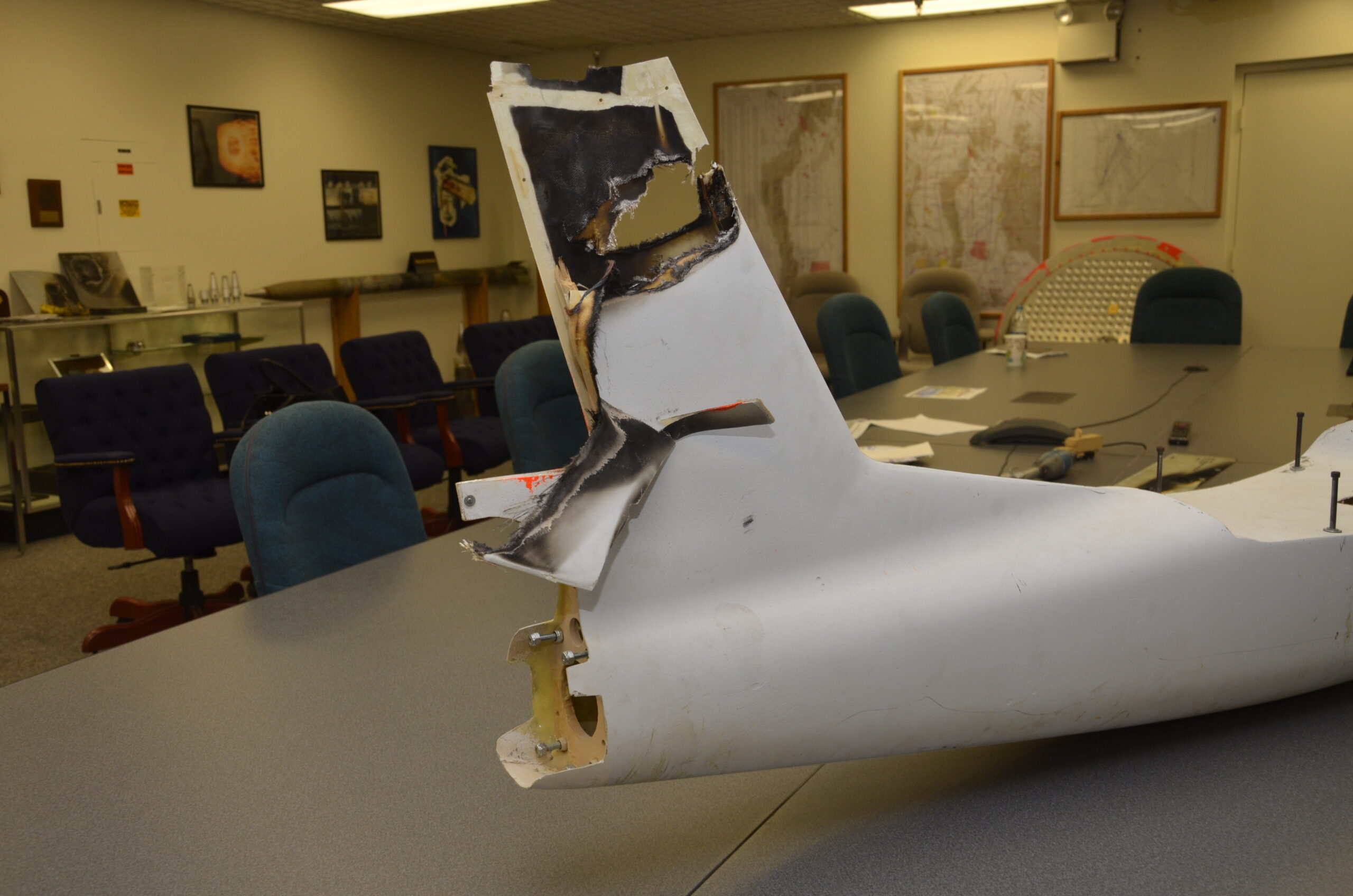
In 2012, the U.S. Army and Boeing released details on testing of a High Energy Laser Mobile Demonstrator (HEL MD) at White Sands Missile Range, NM. In 2014, the White Sands Missile Range Public Affairs office released the following photo of damage to a drone that was targeted by the HEL MD laser.
The Naval Postgraduate School (NPS) in Monterey, CA runs quarterly Joint Interagency Field Experimentation tests of emerging technologies, including lasers. In October 2025, NPS releases the following photo from a laser weapon test.
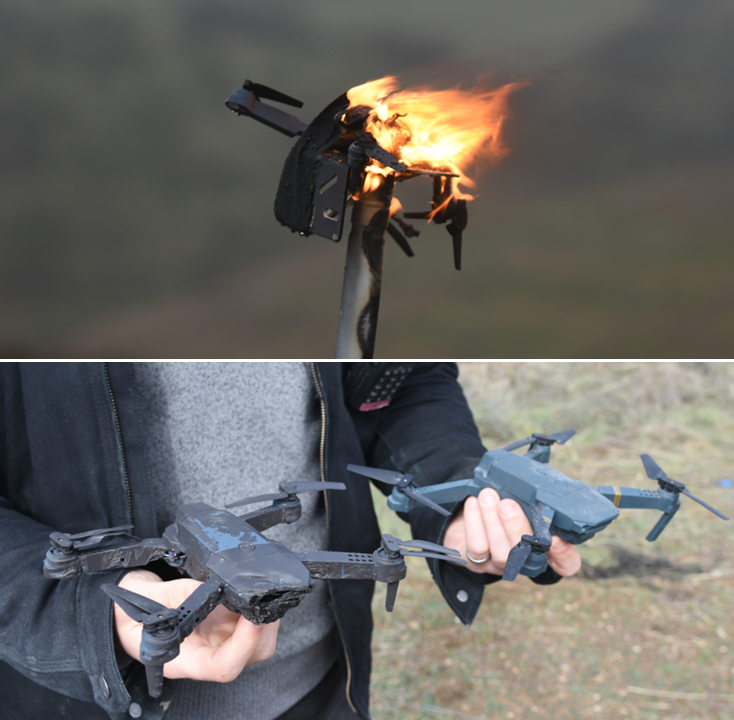
Bottom: quadcopter drones with and without laser damage.
Photo: Daniel Linehan, Naval Postgraduate School
