UTEP researchers launch program to improve stroke survivors’ daily activity
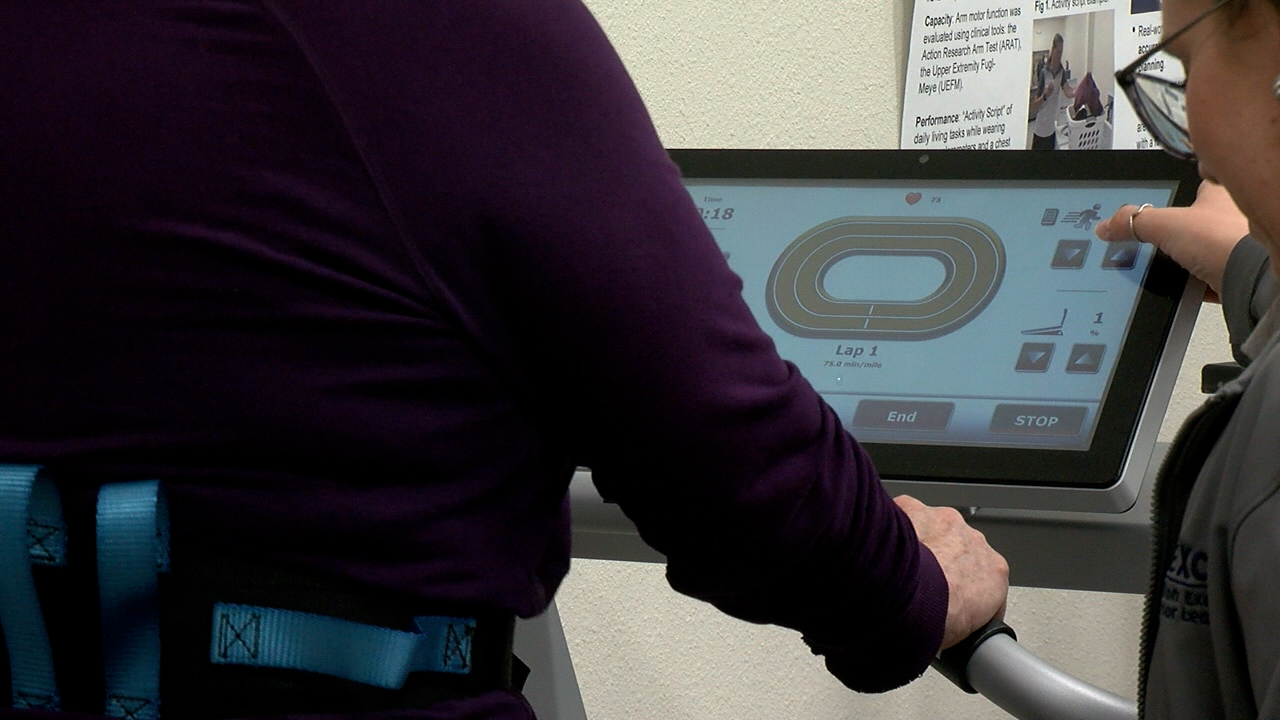

EL PASO, Texas (KVIA) – Researchers at the University of Texas at El Paso are working to better understand how daily habits affect recovery for stroke survivors, with a focus on reducing sedentary behavior and improving long-term health outcomes.
At the Neurorehabilitation, Exercise Science and Motor Learning Laboratory, known as the Neuro EXCEL lab, scientists are studying how physical activity and inactivity shape the lives of people recovering from neurological conditions.
“Our goal is to understand how lifestyle and especially sedentary behavior can take a role in the health status of survivors,” director Dr. Camila Torriani-Pasin said.
The lab focuses primarily on stroke survivors, a population that often experiences reduced mobility and increased time spent sitting or lying down. Researchers say this pattern can have serious consequences for recovery and overall health.
Torriani-Pasin said stroke survivors in their studies average about 5,000 steps per day, significantly fewer than healthy individuals, who often reach 7,000 steps or more.
“We have been seeing more than 11 hours in sedentary behavior,” Torriani-Pasin said. “This is much higher than the national average.”
To better understand patients’ daily routines, researchers use smartphones and wearable sensors to track movement outside the lab. The technology allows them to measure steps, posture changes, and how participants move in their homes and communities.
“We cannot do this in the lab,” Torriani-Pasin said. “We want to understand how their performance in the lab can be translated to real life.”
The findings are helping researchers design interventions aimed at reducing inactivity. A new four-month educational program will provide stroke survivors with group sessions and individualized coaching to address barriers such as lack of family support, limited education about stroke recovery, and social challenges.
Participants will meet twice a month and receive personalized strategies, including reminders through mobile devices, educational materials, and activity tracking tools.
“It is not a matter to change them for four months only,” Torriani-Pasin said. “We want to change their behavior lifelong.”
The program is free and open to stroke survivors in the Borderland.
Researchers say even small increases in activity can lead to meaningful health improvements. Adding 2,000 steps per day can significantly reduce the risk of cardiovascular disease, according to findings cited by the lab.
Torriani-Pasin emphasized that preventing sedentary behavior is as important as structured exercise.
“You can do physical exercise 30 minutes every day and still you can be sedentary,” Torriani-Pasin said. “It is more about what you do during the rest of the day.”
Beyond physical data, the lab is also conducting interviews with stroke survivors and their caregivers to better understand the social and cultural factors that influence recovery. Early findings highlight both barriers and motivators, including gaps in medical guidance after hospital discharge and the role of family and community support.
“We have been identifying psychosocial factors that can play a role in their lifestyle choices,” Torriani-Pasin said.
Researchers noted that community ties, including religious involvement and family encouragement, can help motivate patients to stay active and regain independence.
Ultimately, the lab’s work centers on empowering individuals to take control of their health through everyday choices.
“Sedentary behavior is one of the most important modifiable factors,” Torriani-Pasin said. “It is in your hands.”
Stroke survivors interested in participating in the research or educational program can find more information through the lab’s website here.
