Justice Department uses Maduro case to defend Trump’s use of Alien Enemies Act for deportations

By Devan Cole, CNN
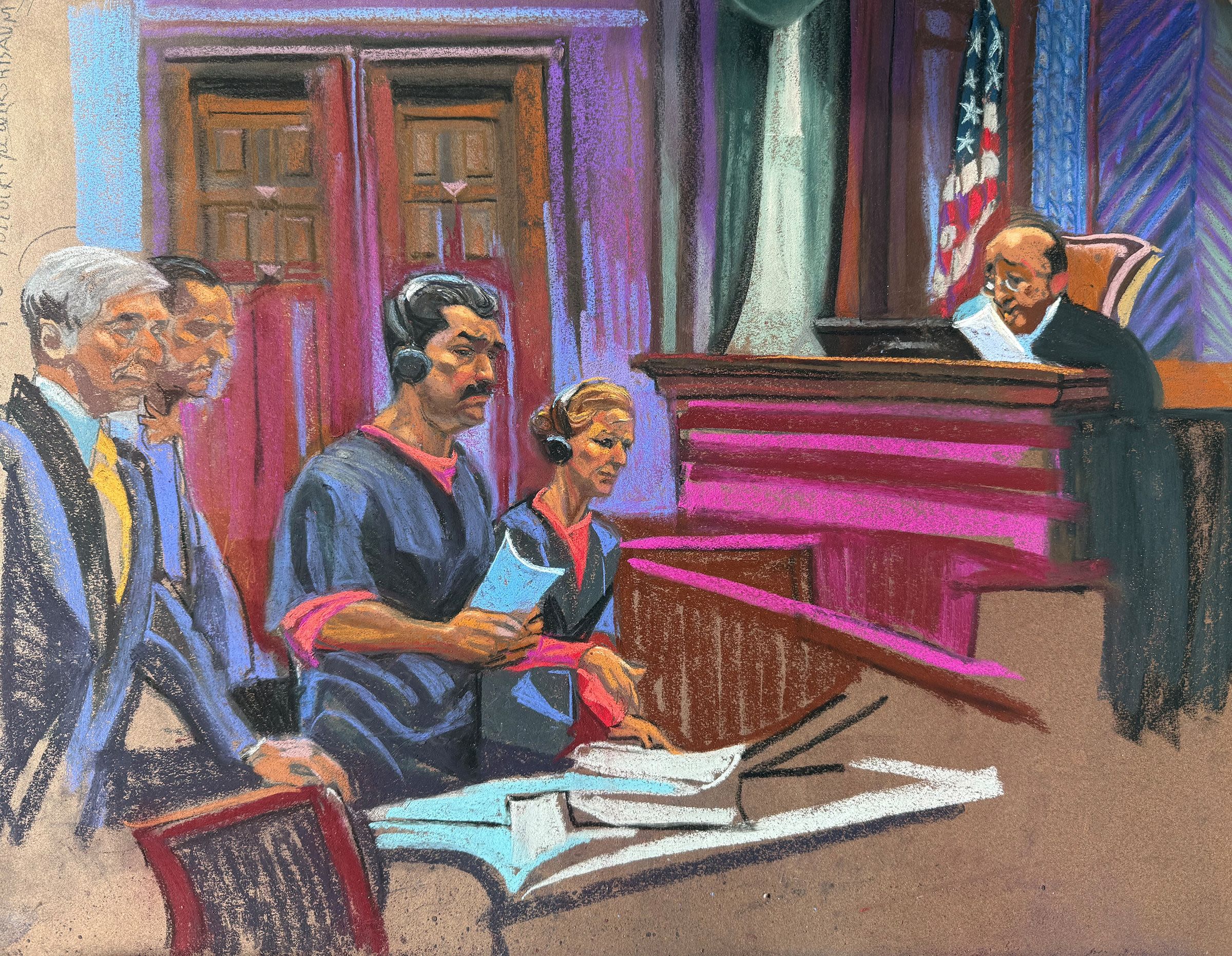
(CNN) — Hours after ousted Venezuelan leader Nicolás Maduro was formally charged with narcoterrorism and other offenses in New York, the Justice Department used the indictment at a federal courthouse 1,300 miles away in its effort to defend President Donald Trump’s ability to use a wartime authority to speed up some deportations.
The president invoked the 18th century Alien Enemies Act last March to rapidly deport alleged members of Tren de Aragua, a Venezuelan gang he designated as a foreign terrorist organization that was acting in concert with Maduro’s government to harm the US.
Pointing to Trump’s comments announcing the arrest of Maduro in Caracas, DOJ lawyers told the 5th US Circuit Court of Appeals that the dramatic developments “underscore the Maduro Regime’s control over TdA and TdA’s violent invasion or predatory incursion on American soil.”
“As a result, it is even clearer that the President’s invocation of the Alien Enemies Act was part of a high-level national security mission that exists outside the realm of judicial interference,” they wrote in a letter to the appeals court.
The New Orleans-based appeals court is set to hear arguments later this month in a major challenge to Trump’s use of the law.
In invoking the Alien Enemies Act last year, Trump pointed to the US’ yearslong criminal pursuit of Maduro and others, and claimed that the then-Venezuelan leader’s government was directing Tren de Aragua to conduct “irregular warfare” against the US.
It’s unclear what impact, if any, Maduro’s criminal case could have on the Alien Enemies Act challenge pending before the appeals court, legal experts told CNN.
“The allegations in the indictment against Maduro don’t provide any further proof that we’ve been ‘invaded’ by Venezuela or subject to a ‘predatory incursion’ than President Trump’s initial proclamation last March,” said Steve Vladeck, CNN Supreme Court analyst and professor at Georgetown University Law Center.
The 5th Circuit case has long been viewed as the vehicle by which Trump’s use of the Alien Enemies Act will make it before the Supreme Court for final review.
Last summer, a three-judge panel at the court ruled that Trump was unlawfully using the law, concluding that a “predatory incursion” or “invasion” by members of Tren de Aragua had not occurred in the US, as Trump claimed in March.
At the time, the two judges in the majority said the court did not have the power to review Trump’s claims about Maduro directing the gang’s activities in the US, but rejected the very kind of argument made in Monday’s filing: that federal courts had absolutely no role to play in scrutinizing Trump’s use of the law.
But the panel’s decision was quickly wiped away by the full 5th Circuit when the court, which is stacked with conservative jurists, agreed to take another crack at the case – this time with all the active judges on the bench.
In mid-March, Trump deported scores of Venezuelans under the law, but has been unable to carry out more deportations due to a series of fast-moving legal challenges, including the one arising from Texas that is now being weighed by the 5th Circuit.
In similar challenges brought in other courts around the US, trial-level judges said Trump was not giving migrants enough due process before deporting them under the law.
The administration had been drawn to the wartime authority because it initially contended that officials could use the law without having to give migrants advanced notice of their designation as alien enemies or the opportunity to mount legal challenges prior to their removal. But the Supreme Court — without officially deciding whether Trump was lawfully using the law — said last year that such due process needed to be afforded to migrants targeted under it.
Among the group of jurists who frustrated the administration’s ability to swiftly use the law is Alvin Hellerstein, the federal judge in Manhattan who is also overseeing Maduro’s criminal case.
The appointee of former President Bill Clinton blocked the administration in May from using the law against migrants in the Southern District of New York, and, like the 5th Circuit, rejected the arguments that were reiterated in Monday’s filing to the appeals court.
The-CNN-Wire
™ & © 2026 Cable News Network, Inc., a Warner Bros. Discovery Company. All rights reserved.
