US announces next phase of Gaza ceasefire plan as committee is formed to run battered enclave

By Jennifer Hansler, Ibrahim Dahman, Tal Shalev, CNN
(CNN) — The US announced the start of the next phase of the Gaza ceasefire plan on Wednesday as a new committee was formed to run the battered enclave.
US Special Envoy Steve Witkoff said the second phase of the 20-point-plan would focus on “demilitarization, technocratic governance, and reconstruction,” but his statement lacked key details about how to carry out some of the most difficult issues stipulated in the agreement.
“The US expects Hamas to comply fully with its obligations, including the immediate return of the final deceased hostage. Failure to do so will bring serious consequences,” he said in a post on X.
The US moved to the second phase of the ceasefire deal despite Israeli opposition over the lack of progress on Hamas disarmament and the remains of one hostage, Ran Gvili, still being held in Gaza. In response, Israel has refused to open the Rafah crossing between Israel and Egypt.
The Hostages and Missing Families Forum called on Prime Minister Benjamin Netanyahu to prevent the start of the second phase. “Until Ran returns, the State of Israel cannot close its deepest wound, nor begin the healing and recovery it so desperately needs,” the forum said in a statement. Netanyahu, who did not address Witkoff’s announcement directly, said in a statement that Israel still demanded the return of Gvili’s remains.
A US official said Wednesday that efforts continue to recover Gvili’s body, noting that “there still is a very good channel of communication that is operating” and “there are several different potential sites where it’s located.”
Eager to advance what is arguably President Donald Trump’s biggest foreign policy accomplishment in his second term, the US announced the transition into the far more difficult next phase of the deal.
The second phase requires the creation of an International Stabilization Force (ISF) to deploy to Gaza in order to support a Palestinian police force and allow Israel to begin withdrawing from the territory it still occupies. Yet few countries have been willing to commit personnel to the ISF, without which much of the second phase of the ceasefire agreement becomes even more challenging.
The US official claimed Wednesday that there are “a lot of countries that are involved in the force, and we’ll announce them all at the appropriate time.”
The official noted that they expect much of the work inside Gaza to be done by the local Palestinian police forces, which they called “the most important element of this plan.”
On one of the thorniest issues facing the second phase – Hamas’ demilitarization – the US official said they want to see the destruction of “the terror infrastructure that’s been built in Gaza.” They also said “heavy weaponry like RPGs and rocket launchers and missiles” must be “put in a place where they’re not being used to defend against Israel or to do offensive raids or attacks on Israel.”
“We do believe that there is a good chance that everyone will try to keep their word in the agreement, and we will be able to move things forward,” the official told reporters.
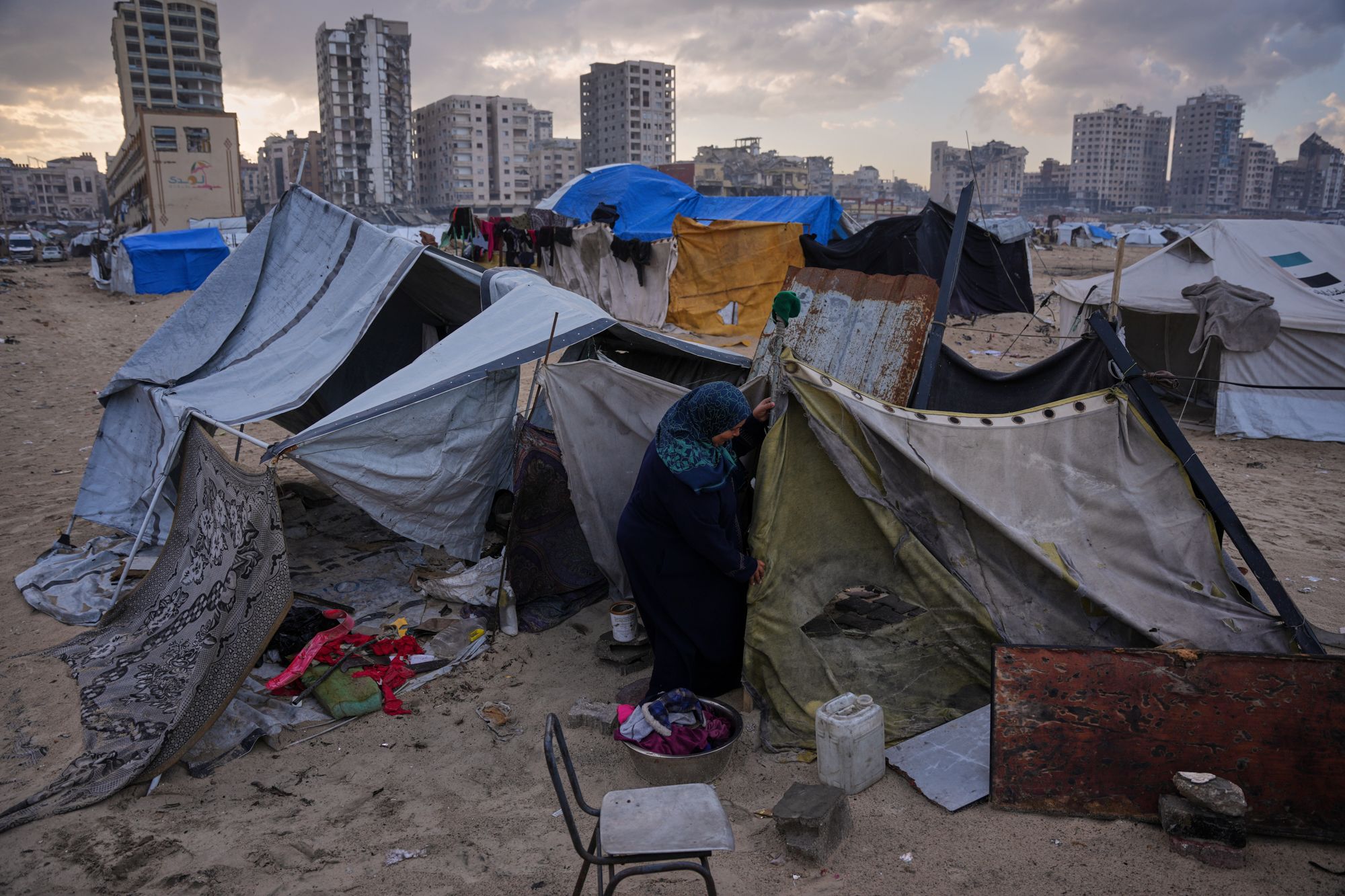
The announcement of a transition to phase two coincided with the formation of a committee of Palestinian technocrats to handle the daily governance of Gaza as the US tries to move forward with its plans for reconstruction and the demilitarization of the territory. Under the US-brokered agreement, the committee is supposed to run Gaza until a reformed Palestinian Authority can take over, which could then lead to what the plan calls a “credible path to Palestinian self-determination and statehood.” Netanyahu vociferously objects to Palestinian Authority involvement in Gaza and to any notion of a Palestinian state.
The Palestinian Authority welcomed the announcement, thanking Trump for “efforts to consolidate the ceasefire and to move to the second phase of its implementation, including reconstruction.” The so-called Palestinian factions, an umbrella organization of militant groups led by Hamas, also hailed Trump’s efforts “while affirming the factions’ full commitment to continuing the implementation of the ceasefire agreement and the remaining stages” of the plan. Earlier this week, Hamas said it had “issued directives” to cede power from its government agencies to the committee.
George Zeidan, the director of Israel and Palestine at the Carter Center in Jerusalem, said the newly formed committee cannot replace “accountable political leadership,” even if it has a temporary role in shaping the immediate future of Gaza.
“Efforts to establish a functioning administrative body could help ease daily suffering, restore basic services, and facilitate humanitarian access,” Zeidan told CNN. “What is needed now is a clear path toward ending the occupation, reconstruction, and lasting peace, and to restore political leadership that is accountable to the Palestinian people.”
The Palestinian technocratic committee, formally called the National Committee for the Administration of Gaza, is meant to be overseen by the Trump-led Board of Peace.
The US has not publicly identified the members of the committee nor the Board of Peace, but the US official said the names for the former would likely be announced in the coming days. CNN has reported Nickolay Mladenov, a Bulgarian politician and diplomat who previously served as the UN special coordinator for the Middle East peace process, will serve as director of the panel. On Wednesday, Egypt’s Ministry of Foreign Affairs said Ali Shaath, a Palestinian from Gaza who in the past held a number of positions in the Palestinian Authority, would be the head of the committee.
The US official said invitations to join the board were sent on Wednesday “to a lot of countries,” noting that President Donald Trump “was personally selecting who he would like to be on it.” This official claimed there has been “a very overwhelming response” but would not say to whom the invitations had been sent.
Israel effectively had veto power over the members of the committee, demanding that no members of Hamas or the Palestinian Authority, which governs parts of the occupied West Bank, be allowed to join. According to an Israeli official, the head of the country’s internal security agency, known as the Shin Bet, told the security cabinet on Tuesday that the agency had approved the 15 names on the committee.
This story has been updated with additional reporting.
The-CNN-Wire
™ & © 2026 Cable News Network, Inc., a Warner Bros. Discovery Company. All rights reserved.
