Heavy manufacturing turns to rooftop solar to cut costs and carbon

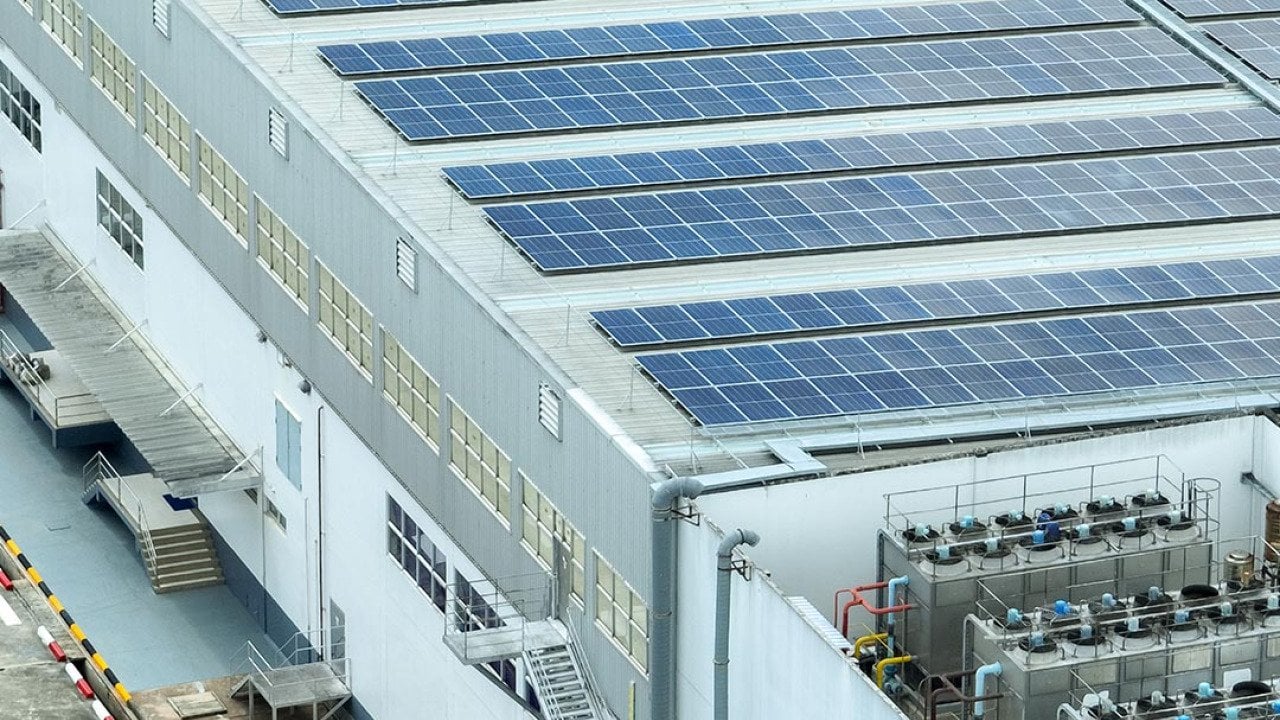
Fahroni // Shutterstock
As Deloitte states in its report Boosting Industrial Manufacturing Capacity for the Energy Transition, the manufacturing sector has a pressing need to reduce its reliance on fossil fuels, both as a means of minimizing operational costs and shrinking its carbon footprint. The capabilities of renewable energy sources continue to evolve, and upfront installation costs are consistently declining.
For heavy manufacturing facilities managing multi-megawatt energy profiles, the decision to install on-site generation has historically been hindered by high capital expenditure (CapEx) and long return-on-investment (ROI) horizons.
However, the convergence of plummeting photovoltaic (PV) hardware costs and federal incentives has fundamentally altered this calculus. According to the Solar Energy Industries Association (SEIA), the cost to install solar has dropped by more than 40% over the last decade. For industrial facilities with available roof space exceeding 50,000 square feet, this price compression creates a specific economic tipping point where self-generation moves from a sustainability initiative to a core operational expense (OpEx) reduction strategy.
The Rise of Rooftop Solar in Heavy Manufacturing
While residential solar demand has fluctuated — McKinsey & Company notes a flattening in domestic installations in 2024 after a prior surge — the industrial sector is decoupling from this trend.
Projections from Grand View Research in their Rooftop Solar PV Market Summary indicate the industrial segment will account for 40.1% of revenue growth through 2025. This divergence is driven by two key financial levers: energy independence and tax equity.
- Grid insulation: Heavy manufacturing operations rely on consistent uptime. On-site arrays reduce exposure to grid volatility and peak-demand pricing.
- Tax incentives: The Investment Tax Credit (ITC) and Production Tax Credit (PTC) remain primary drivers. The Congressional Budget Office, in its Business Tax Credits for Wind and Solar Power Report, estimates that without these subsidies, renewable energy spending would be roughly 33% lower. These mechanisms allow facilities to offset significant portions of the initial CapEx, accelerating the break-even timeline.
Solar panel costs have also dropped by 99% in the past 50 years. The long-term operational value of rooftop solar now outweighs the initial installation burden.
More rooftop solar projects are underway in heavy manufacturing at the moment, with many recently completed. Emergent Solar Energy notes that this includes projects for the likes of Toyota Material Handling, as well as work backed by the USDA Rural Energy for America Program (REAP) to support pork farming in Indiana.
As more pressure is applied to businesses in this sector to encourage a reduction in Scope 2 emissions associated with off-site energy generation, rooftop solar could become more attractive for businesses.
Key Structural Factors To Consider Before Installing Rooftop Solar
Before a heavy manufacturing facility commits to rooftop solar, it’s important to examine the building itself. Large industrial roofs might seem like an ideal candidate for big solar arrays, but not every structure is ready to support the weight, layout, or long‑term demands of a full photovoltaic system.
The primary variable is structural integrity. Many manufacturing buildings were designed decades ago, prior to the standardization of rooftop equipment. According to the NREL Solar Ready Buildings Guide, a standard PV array adds a static dead load of 3–6 pounds per square foot.
Engineers will usually start by checking load capacity, roof age, and any signs of wear. If the roof is nearing its replacement cycle, it’s almost always more prudent to address it upfront rather than retrofitting panels and removing them later.
Roof design also dictates successful implementation. Flat roofs offer flexibility for mounting angles, but they also require careful drainage planning to avoid pooling under or near mounting hardware. Older sloped roofs introduce different challenges, like limited usable surface area or materials that are difficult to penetrate safely. Roof obstructions are another factor; vents, ducts, skylights, and mechanical equipment can interrupt panel layout, reducing total capacity or complicating installation.
Electrical integration also presents a logistical hurdle. Solar systems require space for inverters, disconnects, and wiring routes. Under National Electric Code (NEC) Article 690, disconnects must be “readily accessible,” often requiring reorganization of electrical rooms or main switchgear upgrades to handle the backfeed.
Finally, long-term access matters. Maintenance crews must be able to reach panels without interrupting production or compromising worker safety. This often necessitates the installation of permanent walkways and guardrails to comply with OSHA standard 1910 for walking-working surfaces.
The Future of Heavy Manufacturing’s Relationship with Rooftop Solar
Heavy manufacturing prioritizes ROI on any new tech or solution it invests in, so the cost-effectiveness of rooftop solar makes it easy to justify as a priority project. Coupled with the selling point of energy independence and the adjacent upside of improving operational resilience that this brings, it’s possible to envision a point at which every facility has such a setup in place.
The challenges of retrofitting rooftop solar notwithstanding, it’s also an element that gives manufacturers the chance to showcase their green credentials to customers and clients, whether or not these are actually central to their overarching mission statement.
What may hold back this trend is changes to government incentives, such as the availability of ITC and PTC. Given how much these are catalyzing investment at the moment, if they are reduced or removed, the industry’s current growth trajectory could be curtailed.
This story was produced by Emergent Solar Energy and reviewed and distributed by Stacker.

