Former Eastlake High coach files discrimination charge under the Americans with Disabilities Act

EL PASO, Texas (KVIA) -- Former Eastlake High School Coach Matthew Taylor has filed a charge of discrimination with the EEOC and intends to pursue his claims, according to the Baeza Law Firm. The firm is representing Taylor in this case.
In addition to the charge of discrimination, Taylor has also filed a grievance seeking immediate reinstatement as head basketball coach at Eastlake.
ABC-7 initially reported last month that Taylor had been relieved of his coaching duties. At that time, Socorro ISD did not explain why Taylor had been relieved from coaching. The district described it as a "personnel issue."
Taylor was named head coach of the boys basketball team in 2023. According to Socorro ISD, Taylor is a Kentucky native and Army veteran who was previously served as the associate head coach at Clint High School.
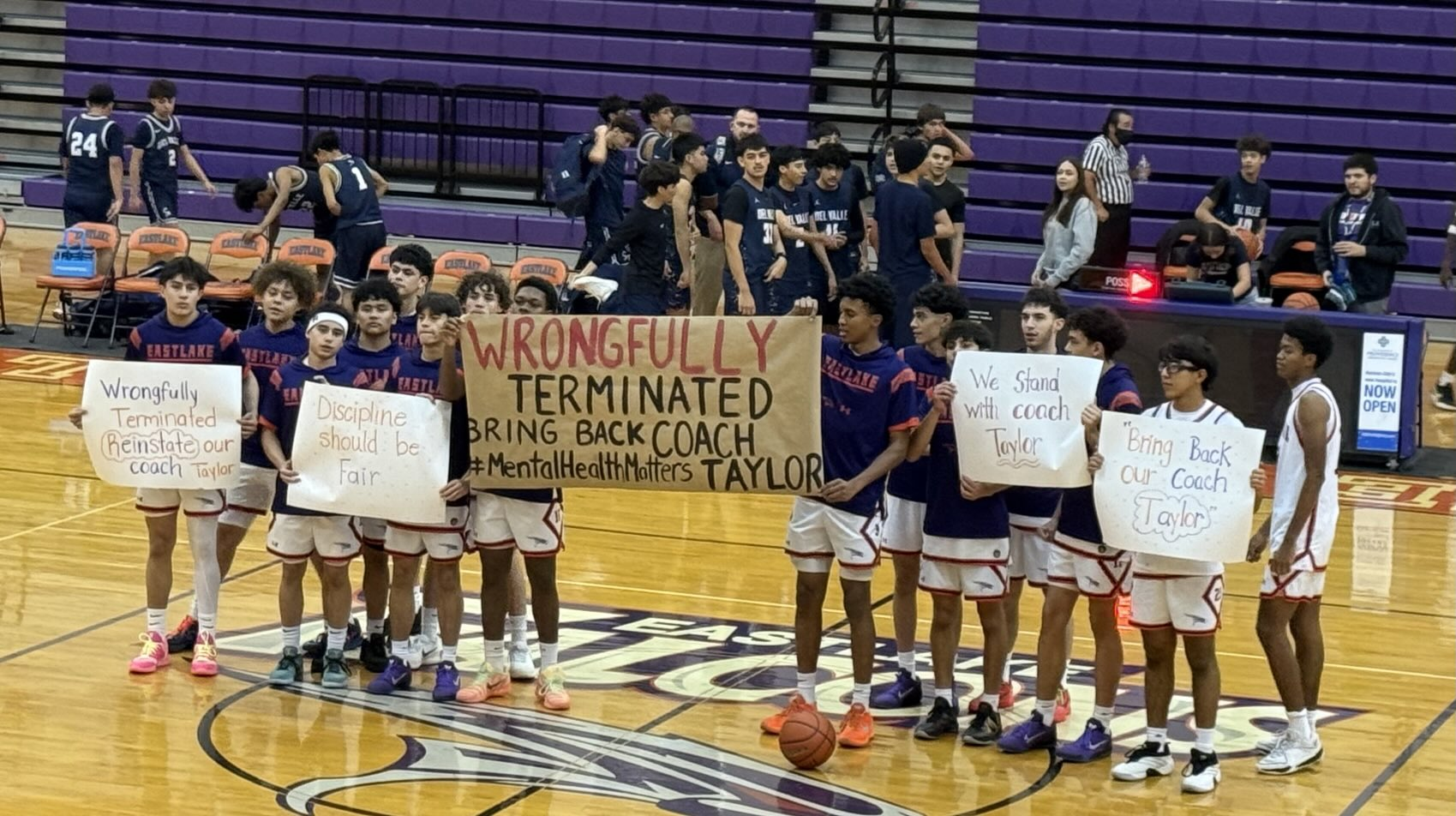
After he was relieved, his team was photographed at a game holding posters that read "Wrongfully terminated... bring back Coach Taylor... #MentalHealthMatters."
Baeza Law Firm states that Taylor had experienced a medical episode related to a disability protected under the ADA. The firm says that PTSD and other mental health disabilities are covered under ADA. The law firm states that Taylor had been accused of posing a safety risk by leaving his students unattended during the medical episode. The firm argues that the students were properly supervised.
The law firm also argues that the ADA does not require employers to ignore safety, and calls for better support for people dealing with mental health challenges.
Upon receiving confirmation from Baeza Law Firm that Taylor had filed a discrimination charge, ABC-7 reached out to Socorro ISD for comment. The district said that it could not comment on personnel matters.
Read the full statement from Baeza Law Firm below:
"Our firm represents Matthew Taylor, a special education teacher and former head baseball coach at Eastlake High School here in El Paso. Mr. Taylor was recently removed from his coaching position. He has filed a charge of discrimination with the EEOC and intends to pursue his claims. He has also filed a grievance seeking immediate reinstatement as head basketball coach.
The allegations suggesting Mr. Taylor posed a safety risk and left students unattended are false. When Mr. Taylor experienced a medical episode related to a disability protected under the ADA, he handled it responsibly. At all times, students were properly supervised, and no students were ever in danger or left alone. Rather than receiving support for addressing a medical issue, Mr. Taylor lost his coaching position.
The Americans with Disabilities Act protects employees with physical and mental health conditions—including PTSD and other mental health disabilities. Workers have the right to ask for reasonable accommodations without being punished for it.
The ADA does not require employers to ignore safety—it requires them to rely on facts, not fear. In cases like this, the question is whether there was a real, objective safety issue or whether assumptions were made after a disability disclosure. That distinction matters under the law.
We need to do better supporting people dealing with mental health challenges, especially our veterans and teachers who give so much to our communities. No one should lose their job for asking for help.
There are legal processes underway, and those will determine appropriate remedies. More broadly, this case is about making sure employees know they can ask for help without punishment. We want educators, veterans, and workers in our community to feel protected when asserting their rights. Following the law ultimately protects everyone—employees, employers, and the community.
Cases like this can create a chilling effect if not handled correctly. The ADA exists so people don’t have to choose between their health and their livelihood. The right message is that our community supports educators and veterans, especially when they seek help. The law is there to encourage responsible disclosure—not silence.
We're confident the legal process will show the truth of what happened here."
